Children should get a say on Child Custody: Children’s Commissioner

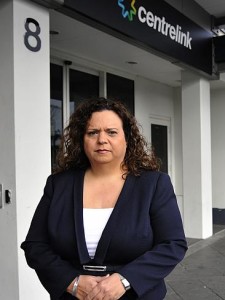
megan-mitchell-childrens-commissionerChildren should get more of a say during family law battles about who they live with after their parents split, says National Children’s Commissioner Megan Mitchell.

Ms Mitchell said children’s ­voices were often not properly heard during litigation, and many independent children’s lawyers — usually funded by Legal Aid — did not even meet the children they were appointed to represent.

She told a family law conference in Sydney that many lawyers sought the views of teachers, doctors and others to try to establish what was best for the child.

“While it is very important that family law professionals focus on what they believe is best for the child and take into account any risks associated with meeting with children, there is too often a presumption that meeting with children is not in their best interest,” Ms Mitchell said. “There is significant evidence that child participation is in fact crucial for child development and wellbeing.

“There is therapeutic value in giving children an opportunity to participate in decision-making processes because it empowers them to have a greater sense of control over their own lives.”

She said excluding them from such decision-making processes, including mediation, often had negative results, with children who were left out saying they felt “cranky and upset”, “sad and bad” and “left in the dark”.

Instead, Ms Mitchell said safe and appropriate spaces were needed so children of varied ages could express their views freely.

“Children who are shielded from the family law system are usually silenced, not saved,” she said. “We must find new ways of protecting children through participation, rather than through ­exclusion.”

Federal Circuit Court judge ­Michael Baumann told the conference that judges had the power to interview children directly but in his 14 years on the bench he had never done so.

“I think the reality is that we will probably see evolving in time a greater engagement of children with judges directly … but we are going to have to talk about how we then deal with the evidence that runs from that discussion,” he said.

Judge Baumann said in ­Germany, judges got down on their hands and knees and talked to children in a playground setting, and did not have to disclose to the parties what the children had said.

He said there was also work to be done to better explain judges’ decisions to children so that even if orders were not what they wanted, they could see their views had been taken into account.

“I think kids will find that more palatable than just being given the result,” he said.

Family Court Chief Justice Diana Bryant said the international jury was “very much out” on whether it was desirable for judges to interview children ­directly.

She said the court had set up a committee to determine whether the voices of children were being appropriately heard.

Ms Mitchell said many judges lacked the training to talk directly to children, with one Australian Family Court judge telling ­researchers: “To my mind (the prospect of meeting with a child) is just about as scary as handing me a scalpel and saying ‘just a bit of brain surgery before lunch please judge’ … I’m terrified of it.”

But she said lawyers who often consulted directly with children said the best interests of the child tended to be consistent with their views.

….

Prime Minister Julia Gillard announced the appointment of Megan Mitchell as Australia’s first National Children’s Commissioner in Canberra on February 25 2013, marking a significant step in the protection of children in Australia.

Having commenced her term on March 25 2013, Megan will focus solely on the rights and interests of children, and the laws, policies and programs that impact on them.

Megan has had extensive experience in issues facing children and young people, having worked with children from all types of backgrounds, including undertaking significant work with vulnerable children. She has practical expertise in child protection, foster and kinship care, juvenile justice, children’s services, child care, disabilities, and early intervention and prevention services.

Megan’s previous roles include NSW Commissioner for Children and Young People, Executive Director of the ACT Office for Children, Youth and Family Support, Executive Director for Out-of-Home Care in the NSW Department of Community Services and CEO of the Australian Council of Social Service.

Megan also holds qualifications in social policy, psychology and education, having completed a Bachelor of Arts from the University of Sydney (1979), a Diploma of Education from the Sydney Teachers College (1980), a Master of Arts (Psychology) from the University of Sydney (1982) and a Master of Arts (Social Policy) from the University of York (1989).

Inquiry to Consider Scrutinising Child Support Spending

Greenway-MP-Michelle-Rowland-on-Child-SupportA Labor MP is pushing for the Federal Government to examine whether separated parents should be forced to provide proof of how they spend their child support payments.

Labor’s Member for Greenway in Western Sydney, Michelle Rowland, has asked a parliamentary inquiry examining the child support system, to consider whether parents should be accountable for how they spend child support money.

“Many parents feel as though their child support is going toward items which provide no direct benefit to their children rather towards expenses which help maintain their former partner’s lifestyle,” Ms Rowland said.

The MP told News Corp Australia that one of her constituents had raised the controversial issue with her, complaining he was at a loss to understand where the child support he paid was going, because his child was dressed shabbily and needed serious dental work.

“Whilst I can understand that this may be challenging from an administrative perspective, many of these parents believe that there should be some accountability whereby parents receiving child support are required to provide evidence of the way in which the funds are being expended,” she said.

“This would help to allay these concerns that their children are being neglected or not properly provided for, despite the child support that they are providing,” Ms Rowland said.

Director of the Men’s Rights Agency, Sue Price, said non-custodial fathers often raise fears their child support is not being spent on their children.

“For a lot of them it isn’t, it funds the mothers’ lifestyle, and what adds insult to injury is they don’t get to see their children — that’s the worst offence.

But Ms Price said she did not think it was wise to introduce a system where the child support agency, or another body, scrutinised what custodial parents spent their child support on.

Instead she proposed all child support payments should be limited to “a reasonable amount” akin to the support provided through the Federal Government’s Family Tax Benefits.

Social policy expert Bruce Smyth, an Associate Professor at the Australian National University, also warned against the move.

He said attempts to police how child support payments were spent could end up becoming yet another lightning rod for tensions between former partners.

“This approach runs the risk of turning parents into petty accountants,” Professor Smyth said.

“You need to be careful in giving parents more ammunition against each other because conflict gets in the way of parents getting on with the job of being a good parent and raising and enjoying their children.”

Many father’s groups have however been arguing for placing child support in trusts, to be utilised on agreed expenses such as food, clothing, schooling, healthcare and other non-contentious expenses. This they argue would provide a lot of transparency on where the money is being spent, which many fathers argue is the real cause of much post-separation tension.

Professor Smyth, who was a member of the Federal Government’s last Ministerial Taskforce on child support, said the sad reality was that for many families in the child support system there was simply not enough money to go around.

Explainer: What is Sharia law?

what-is-sharia-law?What comes to mind when you hear the words ‘Sharia law’? Terrorism?

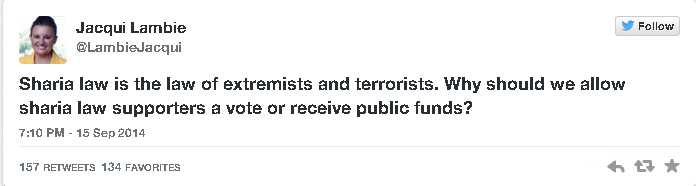
Extremism? Perhaps if you’re Palmer United Party’s Jacqui Lambie, who recently backed a campaign to ban burqas, linking Sharia law with terrorism and calling those who adhere to the Islamic code to “get out”.

“If you are not going to show your allegiance to our law, then get out,” Ms Lambie told ABC’s Insiders.

But the Tasmanian senator was tongue-tied when asked what she understood sharia to mean.

“Well I think, um, when it comes to, um, sharia law, um, you know to me it’s um … it obviously involves terrorism. It involves a power that is not a healthy power,” she said. “It is one law for all – that is the Australian law, full stop.”

So what exactly is Sharia law? Dr Jamila Hussain, a research associate at the University of Technology Sydney told SBS, Sharia encompasses all aspects of a Muslim’s life.

“The overriding principle of Sharia is justice. It’s very broad and includes ordinary ways of life, for example how you behave towards other people.

Religious duties like prayer and fasting and giving to charity – which is very important,” she said.

“It also includes how you behave towards other people. And it includes things like commercial law, inheritance law, family law.”

Sharia is the moral, legal and religious code followed by all Muslims, but made notorious by extremist groups like Islamic State wanting to implement hardline aspects of Islamic law.

In Arabic, Sharia means “the clear, well-trodden path to water” and is based on the teachings of the Koran, the life of Prophet Mohammed, and the expertise of Islamic scholars.

Islamic scholars form this code through ‘fiqh’ or Islamic jurisprudence, which is used when interpreting Sharia. While Sharia is enshrined in the Koran and unchanging, fiqh can vary according to the situation at hand, meaning Islamic law can adapt and remain applicable to modern life.

According to Massey University’s Christopher van der Krogt, Islamic law is elaborated by scholars, often as a critique of what the rulers are doing.

“Scholars (the ulama) claim to know best what God requires because they have studied the Qur’an and the sunna, as well as the works of their predecessors.

jacqui-lambie-tweet

Naturally, they often disagree with each other on matters of detail, and there are five distinct schools of jurisprudence in the Islamic world today. Four of them are Sunni and one is Shii (Shiite).”

Sharia criminal law is divided into three broad categories: hadd, qisas, and tazir offences.

Hadd, the most serious offences, have set punishments. According to the Oxford Islamic Studies, these Hadd offences include:

  • Theft (amputation of the hand)
  • Adultery or illicit sex (death by stoning or one hundred lashes)
  • Making unproven accusations of illicit sex (eighty lashes)
  • Drinking intoxicants (eighty lashes) Apostasy (death or banishment)
  • Highway robbery (death).

Qisas involve retribution crimes against a person who has inflicted physical harm (murder, manslaughter or physical injury). The family can waive corporal punishment in exchange for financial compensation.

Tazir are severe crimes that do not measure up to the strict requirements of Hadd offences. Punishment can range from the death penalty, fines, imprisonment and caning. The decision depends on the discretion of the judge at hand.

Dr Hussain explained that while punishments do happen, they are only carried out in conservative Muslim countries, and are not representative of what Sharia law is about.

“The criminal offences mentioned in the Koran which to our way of thinking today are very cruel and outlandish,” she said. “Those punishments are not enforced anywhere except in a handful of very conservative Muslim countries… Saudi Arabia is a very good example.

“The majority of Muslim countries do not enforce that kind of criminal law at all. And nobody is calling for it in Australia.”

Western media coverage of Sharia law has generally been associated with cruelty or oppression, including a report that Indonesia’s staunchly conservative Aceh province was proposing to punish gay sex with 100 lashes.

Earlier this year, the arrest of a Sudanese Christian woman sentenced to death for apostasy made international headlines, sparking mass outrage.

“It’s what people see on the TV, it’s what people hear on the news. It’s what people read in the papers,” said University of Sydney legal academic, Dr Ghena Krayem. “If your main source of knowledge or information about Islam or about Islamic legal principles is from the media, then of course you’re not going to know how it really operates.”

Coupled with recent Islamic State terror threats and Senator Lambie’s comments, it’s easy to see why Sharia law is often linked with terrorism.

“It has nothing to do with terrorism,” Dr Hussain said. “Some terrorists have hijacked Islam in order to explain their actions or to get more popularity among Muslim populations. But they’re not acting according to Sharia or according to Islam.”

Do Australian Muslims want Sharia law to be implemented into the Australian legal system? According to Dr Krayem, that answer is a resounding no.

“The current assumption that Muslims want a separate legal system that is called ‘Sharia’ – that’s simply not true,” she told SBS.

“What might surprise most Australians is that most Muslims live according to Sharia everyday of their lives. They live harmoniously. They’re not living in defiance of the Australian law. They’re not seeking to set up a parallel legal system.”

Dr Khrayem said the idea behind the desire to accommodate Islamic principles in the Australian legal system is so the system can be culturally appropriate for people with an Islamic faith.

“In 2012, there was a Family Law Council report about: how does the Australian family law system respond to the needs of a culturally and linguistically diverse communities. That’s what it’s about.

“How does the Australian legal system best serve the needs of its citizens? And I think that’s a fair enough question to ask.

“I don’t think anyone is standing there saying we want some special preferential treatment of setting up our own legal system or accommodating our own set of laws. No, the reality is that: we’re part and parcel with a multicultural society that is Australia. And it’s necessary for the legal system to think about how it responds to the people within it.

“It’s not imposing anything external; it’s not sacrificing Australian values. Not at all.”

Dr Khrayem added that under Islam, Muslims are obligated to “abide by the law of the land.”

“One of the first obligations that Muslims feel they have upon them as Australian citizens is to abide by the law of the land,” she said.

“And in the research that I’ve completed – in speaking to many of our Imams in Australia – when asking their views about the applications of Sharia in Australia, the first thing they often tell me is that as Muslims, we abide by the law of the land.”

Separated Couples Forced to Live Under Same Roof

divorced-but-living-under-same-roofHundreds of separated WA couples have to live together because Perth’s high rents mean neither can afford to move out.

Data released to The West Australian show about 280 couples classified as “separated but living under the same roof” sought Citizens Advice Bureau WA mediation in 2013-14.

CABWA chief executive Kathryn Lawrence said the phenomenon, often with higher levels of conflict and stress for children, was identified as a concerning trend in 2012-13 and continued to grow last year.

It now made up about 25 per cent of the not-for-profit group’s 1121 family law mediation cases.

In particular, parents had trouble proving their separation to courts and Centrelink. A couple must show they were separated for a year before they can divorce.

And when living in the same home, conditions included not cooking together, doing the other’s washing or having family outings. Finances must be separate and family and friends must regard them as separated.

“You can imagine how stressful that is on the children,” Ms Lawrence said. “We have had situations where, when it is dad’s turn to have the kids, mum locks herself in her bedroom.”

Ms Lawrence said about half of the families who contacted it were of fly-in, fly-out workers, some unable to afford a second household. She said issues facing FIFO families had existed for years but were only now gaining attention, especially the need for early intervention while the family was intact.

Despite big incomes, they often had big debts and then faced child support and a mortgage on a home where no one lived three weeks at a time.

The person who stayed at home often could not work because of the FIFO worker’s shifts and had no income when the relationship broke down.

Kylie Dunjey, of Relationships Australia, said the number of separated couples under the same roof spiked during the global financial crisis and had not abated, particularly as jobs and wages in WA’s mining sector declined.

Though separation sometimes eased tensions, more commonly one partner was “reeling with grief”. Ms Dunjey said the way a couple navigated such difficult circumstances was important.

Conscious Uncoupling To Help Divorcing Couples Stay Friends

Conscious uncouplingA northern beaches therapist is offering conscious uncoupling to help divorcing couples stay friends.

Hollywood actor Gwyneth Paltrow and her rock star husband Chris Martin made the phrase famous when they announced their separation by saying they were going to consciously uncouple.

Psychological therapist and counsellor Annie Gurton said many people mocked them after the announcement, but divorce or separation was a painful process and by achieving the split amicably it could help save a lot of heartache, especially if there were children involved.

She already has four couples undergoing the therapy and believes she is the first to offer this service in Australia.

“During separation and divorce even the most reasonable people can behave badly,” said Ms Gurton, 65, who teaches couples to talk and listen to each other.

“Conscious uncoupling offers the chance to air grievances, to be heard and to respect the love that brought the couple together in the first place. It is a powerful process that avoids hurt and helps healing.”

Ms Gurton, who has therapy rooms in Manly, Freshwater and Brookvale, said that couples needed an initial four to six sessions with top-up sessions when necessary.

She said while she also offered counselling to couples who wanted to remain together, her conscious uncoupling therapy was not in any way about trying to keep the couple together.

She added that by keeping the separation friendly they could save the children involved from needing therapy in the future.

“I see many adults in my therapy room who are the casualties of their parents’ acrimonious, hostile divorce, often many years previously. It can be so damaging and cause all kinds of deep problems down the line.”

The twice-married Ms Gurton, who now lives in a multigenerational house with her son, daughter-in-law and grandchild, said she wished she had known about conscious uncoupling when she separated from her former partners.

“It would have saved us all so much pain,” she said.

Why try conscious uncoupling?

  • It is an opportunity to air grievances
  • Each person is heard and acknowledged
  • Partners can bury old anger and move on without baggage
  • They can stay friends who are committed to caring for each other
  • It can help parents to be “in like,” if not “in love” which is a gift they can give their children

Couples Now Inserting Social Media Clauses into Pre-Nups

posting-about-your-divorce

Social media postings about ex-partners

“My ex-boyfriend was a pig” or “Here is a nude pic of my ex-girlfriend”. Not uncommon to see these posts on social media, right?

Well, so much so that some couples have taken pre-emptive measures in pre-nuptial agreements, in order to protect themselves from such posts in the event that their relationship fails in the future.

With over 1.23 billion users (approximately one sixth of the world’s population), Facebook and other popular social media sites such as Twitter and Instagram are a daily part of our lives whether we like (to admit) it or not.

When new relationships first begin to develop these social media sites can be great ways of learning more about your new partner and keeping connected. However, in America, some couples are starting to think about the ways in which these public forums may be used against them in the future if their relationships turn sour.

To prevent nasty or embarrassing media being aired, some American couples are now including “social media clauses” in their prenuptial agreements to prevent unwanted photographs, videos and even comments about them from being posted on social media sites by disgruntled ex-partners.

These pre-nuptial agreements can specify the websites concerned, the types of media that are relevant, what would be considered inappropriate or offensive and require consent before public posting. Some of these agreements go so far as to prevent spouses from communicating with new ‘friends’ online without the other spouse’s consent.

With content able to be accessed by friends, colleagues and even family (sometimes including children) it is understandable that parties might be worried about what is posted. So can we expect to see Australians locking down their future partners’ social media habits before agreeing to commit?

The short answer is no. Whilst it is possible to include provisions about almost anything in a binding financial agreement entered into before marriage (a ‘pre-nuptial’ agreement), this does not mean that every provision will be enforceable.

In Australia ‘pre-nuptial’ agreements relate to the substitution of the financial rights of the parties. Therefore, the inclusion of the type of injunctive relief sought by way of a ‘social media clause’ in a binding financial agreement is unlikely to be successful. Instead, a court will likely completely sever any such clause from the agreement, rendering it useless.

In Australia parties are able to enter into binding financial agreements before they get married or enter into a de facto relationship, whilst they are married or in a de facto relationship as well as after the marriage or de facto relationship has ended.  Agreements drafted before or during a relationship or marriage can be used to clarify financial matters whilst everything is still ‘Rosy’. In particular, ‘pre-nuptial’ agreements can be beneficial where parties have been married before and/or have accumulated substantial assets.

Related Family Law Judgments

Nick and Kathryn Greiner Divorce After 44 Years Marriage

Nick-and-Kathryn-Greiner

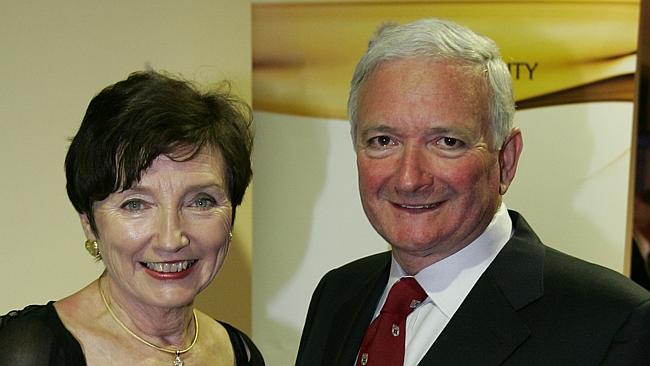
Nick and Kathryn Greiner separate after more than four decades of marriage.

Former NSW premier Nick Greiner and his wife, Kathryn Greiner, have agreed to separate after more than four decades of marriage.

Nick and Kathryn Greiner are the latest high-profile couple emerging from difficult negotiations which threatened to lay bare the personal wealth of the one-time premier of NSW.

Mr Greiner, the premier and treasurer of NSW between 1988 and 1992, married Kathryn Callaghan in 1970.

The couple have a son, Justin, and daughter, Kara, the latter of which was the subject of Mr Greiner’s recent public support of gay marriage, of which he said:

“I have a family member, a daughter, who’s in a gay marriage, or a gay relationship, so I could be said to have a bias. But I think the notion of not giving people a conscience vote on what is quintessentially a conscience vote issue is just bizarre.”

The Greiners have stated that the decision to divorce is mutual and amicable. “They remain good friends and are completely devoted to their family. They will not be making any further comment.”

It is not the first time the couple have separated. The couple, both 66, split up in 1996 with the Budapest-born businessman and politician admitting to having a marital affair.

They reconciled and were said to have reconnected over a healthy respect for one another and their commitment to their children.

A friend of the former Liberal Party MP said the couple had taken months to arrive at a settlement following their marriage breakdown last October.

Nick-and-Kathryn-Greiner

Nick and Kathryn Greiner.

“It has not been an easy settlement. She has hired an excellent divorce lawyer and has worked hard to try and ensure she is looked after. She did, after all, devote four decades of her life to supporting Nick, who rose to become a very wealthy man,” a friend said.

At a recent lunch, Greiner, who sits on a number of boards and owns a magnificent parkside mansion in Lang Rd, Centennial Park, was overheard apologising to a business associate as he rushed away to attend to the latest in a series of difficult meetings with the pair’s divorce lawyers.

Undoubtedly making the settlement a good deal trickier was the recent arrival on the scene of Greiner’s new lady companion, whose identity remains a mystery.

Judging by the success of some of Sydney’s top-notch divorce lawyers, Mrs Greiner might expect to leave the marriage with 60 per cent of the couple’s assets, which should leave her in good shape.

A great many Australian men have found that despite their power and authority in the boardrooms and halls of power, when their marriages go bust they can be reduced to rubble.

Word that Solomon Lew’s wife Rosie hopes to walk away from the couple’s 45-year marriage with a settlement worth $300 million made Paul Hogan’s $6.25 million settlement to Linda Kozlowski look meagre by comparison.

Not everyone can afford to be as generous as James Packer, who signed away more than $100 million of assets to his second wife Erica Packer — throw in the $50 million Vaucluse house and that’s $150 million — after only seven years of marriage.

For some, the threat of financial annihilation is enough to prompt them to delay divorce indefinitely in the hope that the primary breadwinner can build his wealth to a level that provides a better split for both parties.

One who is said to be using just such a strategy is Kyle Sandilands.

He and his estranged wife Tamara Jaber are yet to divorce, with sources saying the shock jock, whose value on paper appears substantial thanks to million-dollar radio contracts, is delaying formalising their split in the hope of building his personal wealth to ensure the divorce doesn’t wipe him out.

“Kyle has never been a savvy investor. Building wealth has never been as important to him as spending wealth,” said an observer.

Jaber has suggested as much in her social media posts.

Other high profile Sydney men who felt the pinch have included politicians Graham Richardson and Peter Collins and television executive Sam Chisholm while Russell Crowe and estranged wife Danielle Spencer seem to have found a happy still-married balance for the time being, though for what reason is unclear.

Protecting Gifts to Children in the Event of Divorce

gifting-propertyThe constant news of how unaffordable the Australian housing market has become is a major cause of concern for first home buyers and parents.

There are a number of ways that parents can help their children buy their first home. However, if the wrong method is used capital gains tax can be payable or the financial help can be wasted.

One resource that in most cases cannot be used is superannuation. This is because super must be used to provide retirement benefits and cannot be accessed unless a condition of release has been met, such as reaching 65 or retiring from full-time employment. Also a super fund cannot lend money to, or purchase a house for, members or their children.

Parents wanting to help children buy their first home, but who want to retain control, can buy a property in their name or that of a trust. The problem is at some point the property must be transferred into the son or daughter’s name. In this situation the child lives in the home and either becomes the owner upon the death of the parents or when title of the property is transferred to them.

Using this method can protect the parent’s investment in the event of a divorce, but when the house is transferred capital gains can be payable. Once ownership of a property transfers, either upon death or transfer, a capital gains tax event occurs. This results in the parents or their estate paying tax on the increase in its value.

Another method of providing financial assistance is for the parents to give money to assist with the purchase of the home. This could be an amount for the deposit, or it could be enough to fund the full purchase price of the property.

Using a gift can result in a transfer of wealth out of the family in the event of divorce. When parents make gifts to children the resulting asset, whether it is cash or property, becomes an asset counted by the Family Court in the event of a relationship breakdown. Parents can then see more than 50 per cent of the gift ending up in someone else’s hands.

The best way for most parents to help children, and not face the risk of their financial assistance going to their son or daughter’s ex-partner, is to treat the amount provided as a loan. For this to be effective it is vitally important that the loan be properly drawn up.

Neil Collins, a family law specialist with Westminster Lawyers, said, ‘‘Preferably the loan would be in writing with the document signed by all parties and setting out the terms of the loan, such as the interest payable and the mode of repayment. The loan may be repayable in full or in part on demand. Binding Financial Agreements, drawn pursuant to the Family Law Act, are also an excellent way to remove doubt as to the existence of the advance and how it is to be treated in the event of a separation’’.

As a part of drawing up a loan agreement the parent should also consider having some form of charge over the property. This could be done as a mortgage, if it will not affect the chances of getting a loan, or as a caveat.

No matter what choice of financial assistance will be used it is vitally important for parents to get professional advice before the funds are advanced.

How to Bring an Overseas-born Surrogate Child Back to Australia

gammy-surrogacyThe recent baby Gammy case has exposed the pitfalls of the international commercial surrogacy trade.

Gammy, a baby with Down syndrome, was left with his Thai surrogate mother while his healthy twin sister returned to Western Australia to live with her biological father and his wife.

Since then, two Australian couples have been temporarily stopped from leaving Thailand with their surrogate children. Thai authorities are considering draft legislation that may shut down the commercial surrogacy trade.

A Family Law Council report, recently released by Attorney-General George Brandis, says “a significant and apparently growing number of children are being born as a result of commercial surrogacy arrangements outside Australia (more than several hundred each year)”.

The spate of cases raises questions about the legal rights a child born to an overseas surrogate has in Australia, and what rights Australians who engage in surrogacy agreements have in Thailand and other countries.

Thai surrogate mums ‘not compelled to give up the child’

Thai parentage law does not mention surrogacy. In Thailand, a birth mother is considered the legal mother of the child. If a Thai surrogate mother is married, her husband becomes the legal father.

The Australian embassy in Bangkok says Thailand currently has no laws or published court decisions directly relating to the practice of surrogacy.

Dr Sonia Allan from Macquarie University says the surrogate mother “is not compelled to give up the child to the commissioning or biological parents”.

“Arguably, a child born in Thailand acquires Thai citizenship, due to the legal status of the mother,” she says. Gammy’s Thai birth mother has not given up her parental rights, and Professor Allan says citizenship is determined by the legal parents, not by the biological parents.

Putting a commissioning, and often biological, father’s name on the Thai birth certificate does not give rise to legal paternity, and does not give him an automatic right to custody, she says.

In the case of baby Gammy, Professor Jenni Millbank from the University of Technology Sydney told Fact Check: “There is no legislation in either country to compel her to relinquish – she is a legal parent in both jurisdictions.”

The Australian Department of Foreign Affairs and Trade says: “Current advice is that Thai authorities are enforcing documentation requirements upon exit of the country when they suspect a child has been born by surrogacy in Thailand.” It says required documents may include:

  • Child’s birth certificate;
  • Copy of birth mother’s ID card;
  • Copy of intended parents’ passport(s);
  • Surrogacy contract; and/or
  • A court order issued by the Thai Family Juvenile Court to confirm that the birth mother has given up her rights to custody of the child.

Inconsistency across jurisdictions

The Thai law that confers parental rights on the surrogate is not mirrored in India, where the surrogate mother is not viewed as the legal parent.

The inconsistency in the laws raises the vexed issue of who is ultimately legally responsible for a baby born to a surrogate across international jurisdictions.

Professor Millbank says: “In the absence of Australian parentage the child would, in some circumstances (such as birth in India), be both stateless and parentless; in others the child would have the citizenship of the birth country (United States, Thailand) but no parents (California, British Columbia); or only a mother there (Thailand).”

Dr Allan told Fact Check: “There is good reason to see the birth mother as the legal mother in the first instance”, arguing it is “a way of protecting the woman carrying the child if she does not want to relinquish it.”

Obtaining Australian citizenship

When a baby is born to a surrogate mother in Thailand or India, euphoria may be quickly overcome by the legal minefield that must be navigated to get the baby Australian citizenship, a passport, and eventually to achieve thelegal status having an Australian parent.

In order to obtain Australian citizenship for a child born to a surrogate overseas, the Australian parents need to lodge an application for Australian citizenship by descent.

If at least one person who was your parent at the time of your birth was also an Australian citizen at the time of your birth, you are eligible.

It is the same process any Australian parent needs to undertake when a child is born overseas.

In addition to the general documents required for Australian citizenship, the Australian embassy in Thailand says when a child is born as a result of a surrogacy arrangement there needs to be a certified copy of the agreement and evidence that the child is the biological child of the “commissioning” parent. The embassy says the commissioning parent and child “need” to undergo DNA testing.

The application is determined in accordance with the Australian Citizenship Act (2007) and citizenship is ultimately conferred by the Department of Immigration and Citizenship.

Professor Millbank says parents commonly misunderstand that the granting of citizenship – which applies only for that sole legislative purpose – is a grant of parental status under Australian state and federal law.

Would baby Gammy be eligible for Australian citizenship? “Technically it appears the answer would be no – citizenship by descent is determined by the citizenship of the legal parents (and not necessarily genetics),” Dr Allan says.

“I think that granting baby Gammy Australian citizenship would require making a special exception in this case.”

The Minister for Immigration has the ultimate power to confer citizenship.

A spokesperson for Immigration Minister Scott Morrison says: “The child may be eligible for Australian citizenship. The Australian Citizenship Act 2007 does not differentiate how a child came to be born. Any application for Australian citizenship by descent is predicated on the link between parent and child.”

Applying for an Australian passport

When a child born of a surrogate mother in Thailand applies for an Australian passport, the Department of Foreign Affairs and Trade recognises the legal rights of the Thai surrogate mother. She must consent in writing to the issue of an Australian passport to the child and explicitly consent to removal of the child from the country of birth.

“The written consent of all persons with parental responsibility for a child’s passport must be obtained for each new passport application until the child turns 18 years old,” the department says.

Earlier this year, there were reports that Israel refused to issue passports to children born to Thai surrogate mothers because it was concerned about Thai domestic law that stipulates that children born to surrogate mothers are Thai citizens and their mothers have full custody rights.

There was commentary suggesting the Israeli government was concerned about potential child trafficking or kidnapping.

Overseas commercial surrogacy on the rise despite state bans

While all states ban commercial surrogacy in Australia, NSW, QLD and the ACT also ban overseas commercial surrogacy, and people who engage in it can be subject to fines and prosecution.

According to a 2011 Family Court judgment, state laws “have aimed to protect women and children from what the legislature has seen as abusive practices which potentially surround the commercialisation of surrogacy”.

Although some states have banned overseas surrogacy agreements, the Family Law Council report notes “the number of children conceived as a result of overseas commercial surrogacy arrangements has increased dramatically in the past several years, despite the existence of laws prohibiting such arrangements, and that, to its knowledge, none of the intended parents in these cases has been prosecuted”.

Nonetheless, the bans on overseas surrogacy agreements in some states raise a number of questions for a couple returning with a surrogate child from Thailand or India.

While the federal Immigration Department may grant the child citizenship, the department warns commissioning parents that overseas surrogacy arrangements may not fulfil the requirements for a transfer of legal parentage under state law.

The department says this “may be because the arrangement entered into is commercial in nature and/or the parties may not have received counselling or independent legal advice”.

The Department of Foreign Affairs says “under Australian law, the surrogate mother may have parental responsibility for the child she gave birth to regardless of whether she has a biological connection, is listed on the child’s birth certificate or is considered to have parental responsibility under local law”.

The Family Law Council report says “a birth certificate that is issued in an international jurisdiction, or a parentage declaration made by a foreign court, is not binding on an Australian court”.

It warns that adoption of the children born from overseas surrogacy arrangements can also be difficult, and adoption – which is also governed by state law – is highly regulated.

It says “it would seem that a large number of young children are growing up in Australia without any secure legal relationship to the parents who are raising them”.

“Council notes the importance of protecting the child’s right to know of their birth parentage, the concerns expressed about the potential for exploitation of surrogates, and the need to ensure that children enjoy ‘the same status, protection and support irrespective of the circumstances of the child’s birth’,” it says.

The report recommends the introduction of a federal Status of Children Act, which would make orders about the status of children and legal parentage.

Dr Allan says: “The Australian approach to legal parentage is particularly complex in the context of trans-national surrogacy arrangements. Australian law does not recognise parental status granted in other jurisdictions unless specifically prescribed under legislation for particular purposes.”

Recent cases: Obtaining ‘parentage’ rights

There have been a number of cases in the federal Family Court in recent years which have involved surrogacy arrangements where applications for ‘parentage’ have failed to meet the requirements of state or territory law.

One case raised in the Family Law Council report involved a Queensland couple, Mr and Ms Dudley, and a Thai surrogate mother, Ms Chedi. In 2011, the Family Court heard an application by the intending father, who was the biological parent of twin children born to Ms Chedi. “The parents were not able to obtain a transfer of parentage order from the relevant state court as the commercial surrogacy arrangement used by the parties was not permitted by Queensland law,” the report says.

However, given the children’s need for a legal relationship of some kind with the intended parents, Justice Garry Watts made parenting orders giving the applicants parental responsibility for the children during their minority.

It should be noted that Justice Watts declined to make a finding that Mr Dudley in that case was a parent.

Dr Allan says: “When people have broken state laws, the Family Court may still have had to determine legal parentage of children born as a result. This may arguably be seen as a ‘conflict’ as it places the Family Court judges in a difficult position.”

The judgment noted that not having full parenting rights may have an impact in areas such as:

  • Medical treatment for the child;
  • Registering with Medicare and health funds;
  • Applications for passports or schools that require a birth certificate specifying the child’s parents;
  • Rights for a child arising upon the death of a parent, including rights to an intestacy and superannuation;
  • The ability of a child to be referred to as “a child” in a will; and
  • Complications in relation to recognition as to entitlements and liabilities under the child support regime and recognition of a child’s rights to entitlements on injury or death of a parent in schemes of workers’ compensation.

While it is not illegal for people from Western Australia to engage in commercial surrogacy overseas, baby Gammy’s parents, David and Wendy Farnell, said in an interview with 60 Minutes on August 8 that they are still not recognised as the parents of baby Gammy’s twin sister, Pipah, who is living with them in Bunbury, WA.

Mr Farnell told the program: “Everybody is saying we don’t recognise her, because she is not born in Australia, and she is not not under our name. So we are desperately trying to get her our name and be recognised as the parents.”

Sources

  • Department of Foreign Affairs and Trade, Thailand travel advice, August 2014
  • Family Law Council, Report on Parentage and the Family Law Act, December 2013
  • Department of Immigration and Border Protection, Application for Australian citizenship by descent
  • Australian Embassy Thailand, Children born as a result of a surrogacy arrangement in Thailand
  • Australian Citizenship Act 2007
  • Thailand Civil and Commercial Code Title 11 Parent and Child Chapter 1 Parentage Law Code
  • Australian Embassy, Thailand, Children born as a result of a surrogacy arrangement in Thailand
  • Department of Foreign Affairs and Trade, Applying for a passport for a child born through surrogacy
  • Professor Jenni Millbank, Resolving the dilemma of legal parentage of Australian engaged in International Surrogacy
  • Department of Immigration and Border Protection, Fact Sheet 36a – International Surrogacy Arrangements
  • Family Court of Australia, Dudley and Anor & Chedi, June 30, 2011
  • Department of Foreign Affairs and Trade, Birth of an Australian citizen abroad
  • 60 Minutes interview, David and Wendy Farnell, August 8, 2014
  • Australian Government, smarttraveller.gov.au, Overseas births, adoptions and surrogacies

Family Law Council Recommendations on Surrogacy Laws

Parentage-and-the-Family-Law-ActThe Attorney-General, George Brandis, has released the Family Law Council’s report on Parentage and the Family Law Act, which calls for a coordinated international response to the issue of overseas surrogacy arrangements.

The report, which the government has been in possession of since December last year, was commissioned by the previous Labor government.

Surrogacy has been thrust into the spotlight after a baby born to a Thai surrogate mother was allegedly abandoned by an Australian couple.

David and Wendy Farnell, from Bunbury in Western Australia, were accused of abandoning Gammy because he has Down’s syndrome, and keeping his healthy sister. They later told media they wanted to keep both children but were forced to leave Thailand with just the girl when the Thai surrogate threatened to involve police.

It was also revealed the Australian father has multiple convictions for child sex offences.

Following the international controversy, the Thai military government this week gave preliminary approval for draft legislation to ban commercial surrogacy.

The Family Law Council’s report on parentage and the Family Law Act, released by Brandis on Thursday, “considers whether the outcome of a family law matter is affected by the way in which a child’s family was formed and who is considered to be a ‘parent’ under the act.”

Included in the terms of reference was the request to explore “any amendments that would assist the family courts to determine the parentage of children born as a result of assisted reproductive technology, including surrogacy, where the state and territory acts do not apply.”

Hundreds of children have been born to Australian couples through commercial overseas surrogacy arrangements despite its prohibition, and are at risk of having no secure legal relationship to their parents, the report said.

The former department of immigration and citizenship told the council it estimated there were at least 100 cases each year.

Family courts have received applications for parenting orders from families in this situation because the surrogacy arrangement didn’t meet legal requirements for a “transfer of parentage.”

The report said there was a wide range of submissions received on the subject, including people calling for the law to stay as it is, and others proposing changes to allow the courts to give automatic effect to overseas birth certificates and surrogacy agreements.

“Council is conscious that the number of children conceived as a result of overseas commercial surrogacy arrangements has increased dramatically in the past several years, despite the existence of Australian laws prohibiting such arrangements,” read its executive summary.

“Council believes this issue requires a coordinated international regulatory response of the kind embodied in the Hague Adoption Convention.”

The Hague convention “protects children and their families against the risks of illegal, irregular, premature or ill-prepared adoptions” overseas.

In the meantime, it said the family courts should be assisted in “addressing the concerns that underpin current state and territory surrogacy laws (such as concerns about exploitation of surrogates and to protect children’s identity rights) whilst also recognising the need to ensure that children born of illegal surrogacy arrangements are not disadvantaged by a lack of legal status.”

Among its 19 recommendations covering multiple aspects of the Family Law Act, the council said there should be easier transfer of parentage from a surrogate and her partner to parents after the baby is born, as long as “safeguard criteria” is met.

“Council believes that a process of judicial oversight (rather than a contract-based presumption, or prescribing overseas jurisdictions) is necessary given the current, largely unregulated, circumstances of some overseas surrogacy markets. These unregulated markets give rise to concerns about the arrangements, including issues of full, informed consent of surrogate mothers and the (identity) rights of the child.”

It recommended new status of children legislation with requirements to ensure that any change to parentage was subject to the best interests of the child, including provisions for when parties change their mind, and the requirement of evidence of a surrogacy arrangement, including any payments made.

Requirements also covered a child’s access to information on his or her genetic or cultural origins, and that orders must be made in relation to all children in the case of multiple births.

“Consideration should be given to whether the intending parents have acted in good faith in relation to the surrogate mother,” it continued.

It also recommended that “The law should provide scope for the recognition of more than two people to have parental responsibility for a child where that reflects the social reality of that family.’’ This would allow children to have more than two parents.

It also found that  children born in overseas surrogacy arrangements are at risk of having “no secure legal relationship” to their Australian parents.

The Family Law Council also found that there is uncertainty about the parental status of known donors of genetic material in assisted reproductive cases, noting that when a single woman has a child through measures like IVF, the Family Law Act does not explicitly exclude the donor from being found to be a parent.

The Council also said the family courts should have a power to affect a post-birth transfer of parentage from the surrogate (and her partner) to the intended parents where certain safeguards had been met.

It said the grant of citizenship by descent did not mean the intending parents were considered legal parents in Australian law and this meant these children were vulnerable if there is no legally-recognised parent in Australia.