Australia: Pre-nuptial agreements – A Contract of true love?

binding-financial-agreementNo matter how you approach them, pre-nuptial agreements can’t ever be described as romantic. But an increasing number of couples are signing them, and it’s important not to regard them as a sign of distrust or a warning sign that a marriage is expected to end in disaster.

Research by a wedding website two years ago found 14 per cent of engaged couples sign prenups. Anecdotal evidence from family lawyers is that more and more couples are signing them – especially older couples who have already amassed individual assets, singles with children or people who are entering a second or third marriage.

These couples are committing to each other with their eyes wide open. It removes secrecy. They know one in three marriages end in divorce. They choose to take control of the separation process rather than having an expensive and bruising experience in the Family Court.

It’s best to look on prenups as insurance. You hope your house won’t burn down but you still take out fire insurance. And should the worst happen and the couple split, having a pre-nuptial agreement will save a lot of pain and expense in the separation process.

Prenups are properly called “binding financial agreement” and since 2000 have been legally recognised under the Family Law Act. They are enforceable by a court should the relationship end. They don’t have to be signed before a wedding. They can be signed at any time in the relationship. Couples don’t have to be married for such an agreement. De facto relationships and same-sex couples can also have them.

A prenup can set down anything the couple want, such as who gets what in the event of a marriage breakdown, protecting inheritance rights for children from a previous marriage or maintenance of either party after separation.

A few rules: A prenup has to be in writing, both partners have to sign it and each partner has to have independent legal advice. Those with uneven assets should be careful. A lawyer may warn a partner not to agree to a prenup that leaves them with little spousal maintenance or doesn’t include welfare of children. Each partner has to fully disclose all their assets. If they don’t, the agreement can be challenged on the grounds it was obtained by fraud.

A prenup can also be challenged if the care and welfare of a child will suffer in the separation. A court can also make an order for spousal maintenance if they are unable to support themselves.

It’s wise to review an agreement every five years to allow for changes in the marriage such as illness, children or career change.

The content of this article is intended to provide a general guide to the subject matter. Specialist advice should be sought about your specific circumstances.

Widow Jocelyn Edwards fighting to deliver her husband’s IVF baby

widow-jocelyn-edwardsA WOMAN fighting to have her dead husband’s baby has launched a new court battle to take his frozen sperm outside NSW for use in IVF treatment.

A Supreme Court judge will decide soon whether to grant Jocelyn Edwards possession of her husband Mark’s semen, which is held by IVF Australia.

Mrs Edwards, 40, wants to travel interstate to have treatment because NSW law prevents her having an IVF baby without written consent from the donor.

Mr Edwards, 39, died after falling from a balcony the day before the couple were to sign consent forms to undertake IVF treatment.

Mrs Edwards convinced Royal North Shore Hospital doctors, Westmead Fertility Centre, IVF Australia and a Supreme Court judge to take sperm from his body after his death on August 5 last year. But she has since had to apply to the Supreme Court to use the sperm in IVF treatment.

Her lawyers dropped attempts to have a court rule she can use the sperm in NSW because NSW law expressly bans such a practice without the donor’s written consent.

wedding-day-jocelyn-edwards-and-mark-edwardsInstead a Supreme Court this week heard an application from Ms Edwards’ legal team to make her husband’s sperm her property.

The court heard the NSW Assisted Reproductive Technology Act bans a reproductive technology provider from exporting sperm outside the state.

But it does not ban individuals from transferring sperm, the court heard.

Mrs Edwards’s lawyer Harry Freedman confirmed they believed IVF treatment could be undertaken legally by Mrs Edwards outside NSW.

It is understood Mrs Edwards, from Lane Cove, might attempt to take the sperm to the ACT or overseas.

“It’s a matter of the court’s discretion,” Mr Freedman said.

There are previous cases in which, in other states, sperm had been exported.

The Attorney-General’s Department is not opposing or supporting Mrs Edwards’s bid.

Ms Edwards refused to comment ahead of the judgment yesterday. But she said in October: “Mark wanted us to have a baby, regardless of what happened, regardless of if I passed away or he passed away. It’s our love, it’s our union, it’s our family.”

Justice Robert Allan Hulme reserved his decision but noted: “I appreciate Ms Edwards is undoubtedly keen to see a resolution and I will certainly bear that in mind.”

Free Family Law legal advice at Community Justice Clinic

Attorney_General_with_law_student_volunteers

AG with volunteers

When faced with troubling legal problems, sometimes it’s just about knowing where to turn. The University of Western Sydney’s Parramatta Community Justice Clinic initiative is helping the most vulnerable in our community with free legal advice and support when they most need it.

Located in the heart of the Parramatta Justice Precinct, the Parramatta Community Justice Clinic (PCJC) is run by UWS law students under the close supervision of practicing solicitors from Macquarie Legal Centre and is primarily utilised by disadvantaged members of the community who cannot afford legal representation.

Clients can choose to make appointments or simply drop-in to the PCJC, where the law students are available to assist on civil, criminal and family law matters ranging from traffic offences and motor vehicle accidents, home building and neighbourhood disputes, to family breakdown, divorce and child support.

Students also assist clients with the often daunting administrative side of the law – helping them to understand and complete the legal paperwork and helping them with court preparation – as well as providing referrals to other external legal services.

Since it first opened its doors in November 2009, the PCJC has seen some 135 students working in the Clinic, many of whom continue to help out on a volunteer basis.

UWS Vice Chancellor, Professor Janice Reid, says the PCJC initiative is another example of the University’s commitment to ‘Bring Knowledge to Life’ for the people of the Greater Western Sydney region.

“It is fitting that we are launching the PCJC during Law Week, as it reminds us how important it is to have fair and free access to legal services and representation for all members of the community, regardless of their educational, socio-economic, or cultural backgrounds,” says Professor Reid.

“Working in the PCJC also gives our law students an invaluable learning experience –  allowing many of them to work with clients for the first time in a context which gives the principles of fairness and social justice which they have studied a human face.

“One of the greatest strengths of the UWS School of Law is its active commitment to socially-just legal practice, and the way in which it challenges our students to serve their communities with commitment, fairness and empathy.

“The real-life experience our students gain from working in the PCJC not only prepares them for the rigours and realities of the legal profession, but is an opportunity to help those in our community who would otherwise be left on the margins of the social institutions in Australian society meant to provide fairness and justice for all.”

The PCJC is an initiative of the University of Western Sydney in partnership with the NSW Department of Justice and Attorney General, Macquarie Legal Centre and Parramatta City Council. It is also strongly supported by members of the Parramatta and Greater Western Sydney legal profession, local businesses and community groups.

Funding for the initiative has been provided by the Federal Department of Education, Employment and Workplace Relations through its Diversity and Structural Adjustment Fund.

Former husband must pay for wife’s career change

career-changeHER former husband thought she was perfectly capable of supporting herself as a legal secretary or personal assistant after their marriage broke down. 

But having emerged from the ”long, expensive and fraught litigation” that followed their separation, the woman wanted nothing more to do with lawyers or the law – and the Family Court has ordered her former husband pay her $1000 a week while she retrains for another career.

The order came as Justice Stuart Fowler determined a property settlement for the Sydney pair who, for legal reasons, cannot be named.

As a high-earning professional, the husband took home almost $2 million, including a six-figure bonus, in the last financial year. After their split he moved out of the $2.7 million matrimonial home and into another property worth more than $1.1 million, which he bought without his wife’s knowledge before their separation. It was intended as an investment property if the marriage lasted; instead, he lived there with his children as their primary carer.

His former wife hoped to earn up to $50,000 annually working in community services and wanted him to support her financially for two years while she obtained her qualifications.

He objected, arguing that she was employable and could return to her former career as a legal secretary or personal assistant, earning up to $75,000 annually. Her choice of occupation was effectively ”a luxury she cannot afford and which would be at his cost”, he said.

But Justice Fowler noted that the woman ”says she has had enough of the law and lawyers for the time being”.

She told the court the distress of the marriage breakdown and subsequent litigation have made her averse to ”having anything further to do with employment in the legal profession”.

More than two years after the couple separated, after costly proceedings in the Family Court, a judge made parenting orders for the care of their children.

”Given the history of this matter and its attendant costs, one can understand from her point of view that she would wish to distance herself from that profession,” Justice Fowler said.

Her decision not to pursue her former career was not unreasonable, he said, and he ordered the husband to pay her $1000 a week for two years while she retrained.

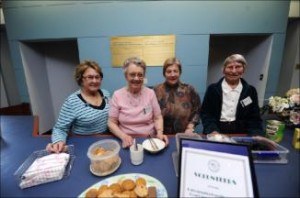
Parramatta Family Law Courts volunteers

Parramatta Family Law Courts

Margaret Russo, Dulcie Court, Margaret Wigmore, Judith Cook. PICTURE: PHIL ROGERS

FOR more than 25 years, volunteers at the Parramatta Family Law Courts have lent an ear to those in need. 

Now, as many of the mature-age helpers decide to retire, there is a genuine fear that the group’s dwindling numbers will leave visitors and their families without support.

For Paul Le Large, the contribution of the mature-age volunteers within the court complex is vital.

“On a busy day, there could be about 50 to 100 people who just want to have a chat or a cup of coffee and their demeanour toward the volunteers has always been of deep gratitude,’’ he said.

“They really respect them for the care they are showing.’‘

The Parramatta Family Law Courts comprise the Family Court of Australia and the Federal Magistrates Court of Australia and are a busy hub of activity with dozens of cases seen each day.

There are three volunteer groups at the court but the most short-staffed is the Interdenominational Parramatta Family and Local Court Support Group.

For its 70-plus members the task of assisting those in need is becoming harder each day.

“We need about 100 people to properly provide the care we want to, but we’re running short,’’ said volunteer Margaret Wigmore.

“Our core role is to provide tea and coffee facilities, a smiling face and an ear for those in distress.’‘

The volunteer services at the court began more than 25 years ago in reaction to a lack of support and positivity in a place that sought to resolve often stressful and upsetting family disputes.

Today, volunteers come to court for one day every month and donate about three hours of their time.

“Many of the volunteers started in their 50s when their children finished school and now they are in their 70s and 80s and can’t keep up with it all. But the demand for services is still there.’‘

Volunteer Justice of the Peace Rosslyn Fowler, 75, comes into the Parramatta Family Law Courts every Friday.

“Not only is it a good community service but once you retire you feel you aren’t part of the community any more. I value coming here and I would say to anyone who is retired that this is an important place for those with time on their hands to give back to the community,“ she said.

If you are interested in becoming a volunteer at the Family Law Courts, please contact Paul Le Large on 9893 5504.

Estranged wife seeks $35m in McCartney-Mills-style divorce battle

McCartney-Mills-style divorce

McCartney-Mills-style divorce

She was married to a man worth more than $260 million, lived a luxurious life and wanted for nothing – but it all came to an end when they split. 

Now she is seeking a $35 million settlement, arguing she is entitled to maintain and enjoy the lifestyle to which she became accustomed during the marriage.

When the case went to the Family Court, comparisons were drawn to Sir Paul McCartney and Heather Mills, whose bitter and very public divorce ended with a court ordering the former Beatle to pay his former wife £24.3 million ($43 million).

Like McCartney, the husband in the current case had already made his considerable fortune when he married the younger divorcee of modest means.

The pair, who cannot be identified for legal reasons, had signed a pre-nuptial financial agreement in case their marriage broke down, but it was set aside by a Family Court judge last year.

There is a significant dispute about how much the wife is entitled to; the husband argues it is nowhere near $35 million.

She wants a court order for comprehensive disclosure so his financial position can be determined. He says his assets took a hit during the global financial crisis, but she may ask for a larger settlement if he turns out to be even wealthier than she thought.

In an affidavit to the court, the wife said she had made significant contributions to the marriage and welfare of the family.

She was the primary carer of their own children and also raised her husband’s ”extremely disturbed and very needy” children from an earlier marriage, enduring attacks and vilification from his former wife.

Her own ambitions took a back seat as she assisted her husband’s business, social interests and career development, and she ”instructed, supervised and managed various paid staff” while handling their domestic affairs.

The woman described her lifestyle during the marriage as ”luxurious and wanting for nothing”, Justice Paul Cronin said. ”That lifestyle came to an end and she had to significantly curb her spending subsequent to the conclusion of the relationship. On the other hand, she said, the husband’s lifestyle had not changed.”

While the husband said he could meet whatever settlement was ordered, he objected to spending time, energy and money on the complex exercise of establishing his precise wealth.

Justice Cronin said the valuation exercise would be expensive but it was all relative. When it came from an asset pool conservatively valued at more than $260 million, ”$100,000 or thereabouts is not significant”, he said.

The wife and the court needed to know the husband’s financial position to determine a just and equitable outcome, Justice Cronin said.

”The husband therefore ought to provide sufficient detail to enable the wife to understand how he calculates his [position],” he said.

One in ten couples putting pre-nups before love

binding financial agreementCOUPLES are putting prudence before passion, with up to one in 10 now locking their wealth away from loved ones with a pre-nuptial agreement.

Ten years after pre-nups became legally enforceable, couples are moving in together or walking down the aisle older than ever and have more to lose in a bitter split, according to family law expert Michael Taussig QC.

“There used to be trickle of couples drawing up pre-nuptial agreements. That has become a steady stream,” Mr Taussig said yesterday.

He estimated that before they became law in December 2000, pre-nups might have been used by .05 per cent of couples. That figure could now be as high as 10 per cent.

Exact numbers are impossible to ascertain as the agreements, known legally as Binding Financial Arrangements, do not have to be registered with the Family Court.

But the court is increasingly being asked to act as referee by couples who wish they had never signed pre-nups and want to wriggle out of them.

At the same time, the cost of divorce is going through the roof, with millions of dollars at stake.

This week, the ex-wife embroiled in what has been labelled the country’s most expensive divorce sued her lawyers, claiming they had ripped her off.

Her legal costs so far are $10.5 million and her husband, who runs a gambling empire which he admits nets him $300,000 a week, has allegedly paid $26 million to his own legal team.

Multi-million dollar divorces were now becoming more common, Mr Taussig said.

“We are talking about huge numbers,” he said. “I remember in my younger days as a lawyer if you hit an asset pool of $1 million, you thought that you had a humungous case.

“The value of the dollar is getting less and with the price of real estate what it is, there is a significant accumulation of wealth in Australia.”

– Divorce costs have been going through the roof- 10th anniversary of legal pre-nups laws – One in ten couples now using them pre-nups

An everyday bride and groom, or de facto couple, can expect to pay about $1500 for a legally-binding pre-nup listing the assets they bring to the relationship – and intend to take out of it.

But the cost can rise up to $30,000 or more, as some couples have homes across the world, including in the UK which does not recognise pre-nuptial agreements.

Judge orders Spanish lessons for children

learning-a-languageA COURT has ordered that an Australian mother enrol her children in Spanish classes to learn the culture and customs of their father’s homeland.

Family law experts say the decision is highly unusual, but consistent with changes to laws emphasising cultural factors when considering what is in the best interest of a child when parents separate.

The woman, known in court documents as Ms Quang, met the man in Spain in August 2004 and they had plans to settle in Australia. But by October 2006, when their Spanish-born daughter was 16 months old and their son was about to be born, their relationship had broken down.

It was agreed that if the woman returned to live in Australia with their two children, she would allow them to spend two months each year with their father in Spain.

Advertisement

But she later refused to fly the children to Spain, claiming she had signed the agreement under duress and the children would experience separation anxiety away from her care.

During a Family Court hearing the mother was described by the judge as ”fearful and desperately sad at the prospect of having to return to Spain with the children”. The father was adamant that his children would not know him properly until they had stood on Spanish soil and ”benefit[ted] from his rich family life.”

The mother would consider taking them to Spain if the father first developed a relationship with them in Australia.

The father had never met his son and the only contact he had had with his children since the separation was by webcam and telephone, the court heard.

Justice Victoria Bennett accepted that if the children spent a long time without their mother ”the bottom would fall out of their worlds”.

Justice Bennett ordered they remain living with her in Victoria and that for the next three years, the father visit them there for three weeks, gradually increasing the time he spent with them on each occasion.

She also ordered they learn the language and customs of their father’s culture.

A senior lecturer in law at the University of Wollongong, John Littrich, said he had not heard of such an order in 13 years in practice. The court had found an effective way to maintain the cultural link between the children and their father so he did not become more of a stranger to them, he said.

A professor of law at Sydney University, Patrick Parkinson, said it was a smart and ”creative” decision.

Forget the romance, get it in writing

prenuptial-agreementPrenuptial agreements will protect your assets, writes Bina Brown.

Binding financial agreements are hardly the most romantic of topics for a couple to discuss before they get married or move in together but it is for good reason that they should be raised early in any new relationship.

If you find it hard to talk about your financial position and assets with a loved one over dinner, imagine how hard it will be in the Family Court.

An open airing of all matters financial is exactly what could eventuate if a relationship – whether it is de facto, same-sex or marriage – ends and there is no clear definition of who should get what.

The principal of financial advice company BFG Financial, Suzanne Hadden, says: “If you can’t be frank and upfront together about your assets and liabilities, then what are you doing getting married or moving in?”

One of the more formal ways to document exactly how you both expect assets and liabilities to be divvied up in the event of a break-up is through a binding financial agreement (BFA), which is recognised in the Family Court. Commonly referred to as a prenuptial agreement, a BFA is a legally binding agreement made between two people setting out the division of property in the event of relationship breakdown and other financial issues that might apply during the relationship or separation.

Those most likely to use a BFA are people who have been in an unsuccessful relationship before, have significant wealth prior to entering into a relationship, need to provide for children of a previous relationship, or who want to ensure they will not end up in court fighting over the division of assets if the relationship does not work out.

A partner at family law firm Watts McCray, Jeff Marhinin, says not everyone will make important financial decisions at the start of a new relationship but those conversations should take place early on.

He says discussions about finances and assets may be particularly relevant to people entering a second marriage following a long-term relationship, couples with children from previous relationships, young professionals who have built up substantial assets and the rich and famous who have large amounts of wealth behind them.

“It is not very romantic but planning what people would like to see happen in the event they do break up can be very important. It comes down to whether they want to work things out in the spotlight of the Family Court or cleanly and privately,” Marhinin says.

Couples should also discuss everyday financial matters, such as who will pay bills and other expenses. Marhinin says this should be as much of a priority as defining what would happen if the relationship ends.

Hadden says couples moving in together who want to keep their cash and other assets separate will still have financial issues to discuss, such as how the household budget will be managed.

One common approach is to open a joint account for bill-paying purposes and to meet household expenses. Other financial conversations might be around people’s attitudes to money.

“You might start off with everything separate but over the years things may start to merge. It will help to know what assets and liabilities someone has,” Hadden says.

She warns it’s easy for someone to get “sexually transmitted debt” if they don’t know what a partner is up to with their money.

“You could find your assets being used as security for a partner’s loan or you may authorise a second credit card, which means you are liable,” she says.

One of the most dangerous things to do without any form of protection is to act as guarantor for someone else’s loan. You will have to repay it if the other person fails to do so.

Hadden says couples should talk about insurance and what would happen if one person was to lose their income or to die and who would receive super fund benefits in the event of death.

They could also agree on what they identify as joint or shared property and what should be kept separate – and what would happen if one person received an inheritance.

The division of assets within the Family Court can become complicated once a couple has been living together for two years, or less if one person has made a substantial contribution or you have a child.

DRAWING UP A PRENUP

Imagine that, on the eve of your wedding, your fiance says: “Darling, I love you but I want you to sign this.” If that’s one of the worst ways to approach a financial agreement, then one of the best is to work it out together.

Binding financial agreements (BFA), also known as prenups, are a way of working out who should get what if a relationship ends. A family law specialist, Caroline Counsel, says it’s better for couples to work together on a BFA than to write separate agreements and present them to each other as a fait accompli.

“I have known relationships to end when one party’s lawyer drafts an agreement that solely represents one half of the equation,” Counsel says. “Nobody wants to think about what happens if a relationship ends early or what happens to property or who has to move out if it does end but they are all things that should be discussed and in a supportive environment.

“Trained collaborative financial advisers and lawyers can assist with the difficult conversations that none of us are taught, like what happens if one of us gets an inheritance: is it my money or shared money? How do you feel about money? Or how is someone who has a child in their care going to be protected if a relationship does end?”

It is a legal requirement that each person gets independent legal advice about a BFA. The lawyers representing each person sign an agreement that if the relationship ever goes sour and the BFA is challenged, the two lawyers who helped discuss the contents will not represent either person in court.

“In other words, we are guaranteeing a complete cone of silence around their discussions,” Counsel says.

A good agreement for a couple is one that is signed and put away, never to be thought of again.

“A bad agreement is one that hangs around like a third party and sits like a cold, hard rock in the bed between a couple,” she says. .

Parents to sterilise daughter, aged 11

mother-and-sonTHE Family Court has given a Queensland couple permission to have a hysterectomy performed on their profoundly disabled 11-year-old daughter. 

The decision prompted an immediate reaction from disability organisations, who describe forced sterilisation of any girl as an abuse of human rights.

“It is only ever the disabled girls,” said Carolyn Frohmader, chief executive of Women with a Disability Australia, which has agitated for years for a law that would ban the sterilisation of disabled children.

“When you go through the cases, there is never a boy, no matter how intellectually disabled, who has to be sterilised.”

The executive director of People with Disabilities Australia, Therese Sands, said she was “alarmed to hear that children are still being sterilised”.

“It is our view that nobody has the right to sterilise a child, not a judge, not a parent, not unless it’s a matter of life or death.”

But National Council on Intellectual Disability executive director Mark Patterson said the issue “is a very difficult one”.

“We take the pragmatic approach. It doesn’t help families in their day-to-day lives if we say we are not going to allow sterilisation,” he said.

The child in question, Angela, has Retts syndrome. She is profoundly disabled, and unable to communicate.

She began menstruating at age nine, and her parents believe that her periods trigger epileptic fits.

They wanted Angela to have a hysterectomy — the removal of her womb — to stop the periods and lessen her distress. Other treatments had failed.

Parents are ordinarily able to make decisions about medical treatment for their children, but in 1992 the High Court, in a case involving the sterilisation of a teenage girl known as Marion, found that serious, invasive, irreversible medical procedures require the permission not of parents but of the courts. In the matter of Angela, judge Paul Cronin said he made the order to improve Angela’s quality of life.

Retts syndrome is a progressive neurological disorder. Angela cannot talk and does not have the co-ordination to use sign language. She “acts as a three-month-old baby would”. She has a special walking frame into which she has to be strapped because she cannot stand supported alone.

Angela’s mother told the court that epileptic seizures appeared to be triggered by Angela’s menstrual periods, which also caused her pain and fatigue.

Three of Queensland’s leading gynaecologists agreed a hysterectomy was the best treatment.