Online Domestic Violence Order Applications could save lives

Online DVO applicationsVictims of domestic violence should be able to apply online for protection orders which can then be dealt with urgently by judges at any time, a family law expert says.

The system of applying online for a domestic violence order (DVO) which is sent to the Family Court and urgently dealt with by an “E-Judge”, or electronic judge, is currently operating in New Zealand.

Jennifer Hetherington, from family law firm Hetherington Legal, says this system would be perfect for Australia.

Domestic violence victims in Australia currently have to seek a DVO through a magistrates court, while other matters such as child custody are dealt with by the Family Court.

“Here we have different courts dealing with various aspects of family law issues,” Ms Hetherington said.

“New Zealand has a system of one court for all family law matters and it means there’s also less chance of child protection issues falling between the cracks of the laws.”

She said an online system would allow E-Judges to review all documentation relating to the case anywhere and anytime.

“They could do it at home in their PJs if they wanted to,” she said.

The judge would then fill in the required conditions, hit send, and any orders would instantly be available in the court registry for the victim to collect, she said.

Ms Hetherington said E-Judges in New Zealand were currently assessing and making decisions on up to 100 protection and parenting order applications each day.

“There’s no way we can do that here with our system where each parenting application has to go through the formal court process which in some cases can take weeks to organise,” she said.

“Domestic violence order applications in Queensland take less time but are in a different court and a person in need of protection still needs to go to court to obtain the order – sometimes when they are in really urgent need and time is critical.”

The Queensland government on Tuesday introduced new domestic violence laws to parliament that will give harsher penalties to domestic violence offenders.

NSW Lawyer Banned From Practising Law for Fraud

sydney-lawyer-on-right

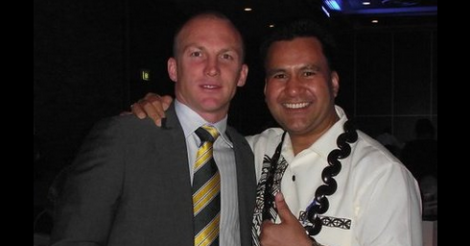
Sonny Wilson with rugby league great Darren Lockyer

A western Sydney lawyer has been banned from practising after he falsely invoiced Legal Aid NSW for more than $30,000.

Sonny Wilson, a Liverpool solicitor, charged Legal Aid for barristers’ and translators’ fees on behalf of his clients when no such work was provided.

Between 2012 and 2013, he misappropriated trust funds and made five false certifications to the service, which has struggled with federal funding cuts. Several times Mr Wilson told Legal Aid that barristers had appeared in court when Wilson himself represented his clients.

On Monday, the Civil and Administrative Tribunal found Wilson guilty of “egregious” dishonesty. The solicitor, pictured below with rugby league great Darren Lockyer, had his name struck off the roll of NSW lawyers.

Mr Wilson, representing himself, did not formally oppose the removal of his name but asked for a suspension instead.

“I am willing to learn from my past mistakes and errors,” he said in an affidavit. “Hopefully I can obtain another opportunity in the near future to practice as a solicitor and to be of some use and benefit to others.”

The tribunal found his dishonesty was so extensive they had no option but to remove his name from the roll.

“Despite his good intentions, we are far from satisfied he has achieved this redemption in the relatively short time that has elapsed since his practising certificate was suspended,” the tribunal panel wrote.

But the panel said Mr Wilson’s chance to return to law “may not be lost forever”. He is now studying full-time for a three-year degree in theology at Alphacrucis College in Parramatta.

The tribunal’s decision came one year after the Productivity Commission recommended the Abbott government add $120 million to legal aid services around Australia. The government is yet to respond to the recommendation.

What impact does the Ashley Madison hack have on Family Law matters?

ashley-madisonRecent articles confirm that data disclosing the identities of the “anonymous” users of the website Ashley Madison (a website that facilitates and encourages partners being unfaithful to each other), has been leaked online.

Many of these articles speculate that, as a consequence of that information, there will be a serious spike in the amount of family law matters as people learn that their spouse/partner has been unfaithful.

In circumstances where Ashley Madison advertises itself as having 37,565,000 anonymous members, there may well be some truth to the claims. What people may be surprised (and disappointed) to learn, however, even if there is an influx of family law matters, and the release of the Ashley Madison data is the reason for it, the fact that a person has been using the website bears little, if any, relevance to family law matters.

Since 1975, Australia has been a “no fault” jurisdiction. What this means is that, unlike the United States for example, it’s unnecessary to demonstrate to the Court that that one or both parties are at fault in order to dissolve a marriage.

The parties just need to have been separated for 12 months with no prospects of reconciliation. People often believe that unfaithfulness is in some way, disentitling behaviour when it comes to spending time with the children – that’s not the case. The Court’s paramount consideration is the best interests of the children (and unless they have been exposed to some form of unsavoury behaviour, it’s unlikely that a person being unfaithful affects the best interests of the children – at least as far as the Court is concerned).

In relation to property matters, there is no impact upon the way in which assets are divided by one person or another’s unfaithfulness to their spouse (unless there has been extravagant spending on the third party).

In my experience, unfaithfulness is not the main reason that parties separate. It’s certainly one of them, but stands alongside factors such as money difficulties, children, complacency in a marriage and the interference of an extended family.

I have no doubt however that there are over 37 million concerned people who are right now wondering how the Ashley Madison hack will affect their personal lives. Marriages may indeed end as a consequence. However, use of that information to determine what should happen with arrangements for children, or how property should be divided, is likely to have little impact on the way in which that family law matter is decided. 

Incompetent Family Law Lawyer Ordered to Repay Client

erasing-the-scales-of-justiceA lawyer has been ordered to repay more than $100,000 to a family law client after the WA Supreme Court found he charged too much because “he did not know what he was doing”.
The lawyer, identified only as Mr K, represented the client, Mr M, in family law proceedings between November 2008 and April 2010.

He charged the man more than $330,000, for what Supreme Court registrar Christopher Boyle found was excessive, technically deficient and inappropriate work.

Registrar Boyle expressed concern about the records produced by the lawyer to show the work he had done.

He found he seemed to have spent an excessive amount of time doing work of an administrative or clerical nature, while charging $270 an hour.

Registrar Boyle described one charge, for “research”, as disturbing and extraordinary and also noted that in some instances the lawyer charged for up to 20 hours of work in a day.

“The inevitable conclusion is that Mr K’s time records cannot be accepted as uncorroborated evidence even of time spent, let alone whether that time spent was properly chargeable to the client,” he said.

Registrar Boyle said Mr K was not an accredited family law specialist and he should not have accepted Mr M as a client.

“If he did, it should have been only on the basis that he would engage specialist counsel to provide him with the expertise he lacked,” he said.

He also noted criticisms of Mr K by the Family Court judge who heard Mr M’s case.

That judge expressed concern about the adequacy of the representation provided by Mr K and noted that Mr M and his former wife had accumulated legal fees of more than $1.1 million, which was “staggering” and “totally disproportionate to the pool of [their] assets.”

Registrar Boyle said the fact Mr K did not reflect on and consider his position as a result of those criticisms reflected poorly on him.

Registrar Boyle did accept the case was contentious and difficult and that the conduct of Mr M’s wife and her lawyers significantly increased Mr M’s legal costs because they did not attempt to resolve any disputes between the parties.

However he said it was clear Mr K was out of his depth and floundered in the task of identifying and presenting relevant evidence.

The registrar ruled the fees should be reduced to $220,000 because, in his view, a competent and properly resourced practitioner could have done what was needed for no more than that amount.

“That gives Mr K roughly two-thirds of what he claimed, and I think that properly reflects wasted or otherwise inappropriate work,” he said.

Millionaire’s wife jailed for Centrelink fraud

centrelink-fraudThe wife of a millionaire resources boss has been jailed for nine months after admitting claiming tens of thousands of dollars in Centrelink payments while he was earning up to $1.8 million a year during the mining boom.

Julie Bohannan married the former chief executive of Bathurst Resources Hamish Bohannan in 2006, the year after he had made just over $1.8 million in taxable income.

But the Perth District Court was told that for years afterwards she claimed benefit payments under another name, consistently lying to Centrelink about where she was living, to whom she was married and what they were worth.

More than $65,000 was fraudulently claimed over eight years, until a tip off led to Centrelink investigation.

Mrs Bohannan also avoided Centrelink appointments while she was pregnant, and deliberately lied about property ownership and her marriage.

Her lawyers had asked Perth District Court for a merciful sentence, pointing out the debt had been paid more than four years before she was charged with the offences – and outlining her eldest daughter’s severe intellectual disability.

But Judge Andrew Stavrianou said the frauds were planned and deliberate, and therefore an immediate prison term was required to punish and send a message to the community.

“You were not forthright, you were not truthful and you were deceitful,” Judge Stavrianou said.

The court was told Mrs Bohannan claimed more than $65,000 in fraudulent payments up until 2009, despite her husband earning nearly $3.8 million in the preceding five years — a fraud Commonwealth prosecutors said was motivated by “greed not need”.

Prosecutor Sarah Oliver said Mrs Bohannan had begun falsely claiming before she had met Mr Bohannan. In 2004, when they moved in together to his luxury 20ha home, she continued to tell Centrelink she was a single mother, living with her parents with no other source of income.

This included falsifying forms and avoiding Centrelink appointments after she became pregnant again. After some payments were stopped, Mrs Bohannan began claiming family tax benefit for her new daughter Ella, despite her husband’s six-figure salary.

“This was motivated by greed, not need — this is a sustained, deliberate fraud motivated by greed with a high level of deception,” Ms Oliver said.

Defence lawyer David Edwardson pleaded with Judge Andrew Stavrianou to impose a “merciful” sentence on the 42-year-old, describing how she had suffered a chronic depressive illness having cared for her severely disabled daughter for many years.

Mr Edwardson said Mrs Bohannan’s first daughter Georgia was born with severe epilepsy, which at first was thought to have been caused by tuberous sclerosis, a rare multi-system genetic disease that causes benign tumours to grow in the brain and on other vital organs.

Now aged 17, she still needs constant care.

Mrs Bohannan’s family was in court to hear the sentence.

Large Scale Welfare Fraud uncovered by Court

nhu-thuy-quynh-nguyen-social-security-fraudA WOMAN who claimed her partner was her brother has pleaded guilty to defrauding the Federal Government of more than $115,000 in single-parent welfare payments.

Nhu Nguyen, 40, was charged with three counts of fraud, committed between 1999 and 2011.

This included a charge of dishonestly obtaining financial advantage by falsely claiming’ the father of her three children was her brother, when in fact he was her husband, between May 2002 and February 2011.

Ms Nguyen’s lawyer said during sentencing submissions in the Adelaide District Court yesterday that the money was not spent on herself but her children and that she had mental health issues. Sentencing will continue later this month.

Latest figures show there were 86 welfare fraud cases involving SA residents finalised last financial year, a slight increase on the 79 resolved in 2013-14, according to Commonwealth Government records.

Among them was a 32-year-old Davoren Park man who had been on the dole on an “intermittent basis’’ since November, 2004.

An investigation revealed he had failed to declare income on 38 occasions and under-declared his earnings 14 times, meaning he was overpaid almost $27,000. In June he was convicted and sentenced to four months imprisonment.

In July, a 51-year-old Salisbury Downs man was sentenced to three months jail for fraud.

He was employed at a supermarket between August 2011 and 2012, despite receiving a Disability Support Pension, which is payable to people unable to work more than 15 hours per week.

During this time he was paid $8811 in welfare to which he was not entitled.

The Office of the Commonwealth Director of Public Prosecutions said the Department of Human Services has sophisticated capability to detect and investigate frauds and, increasingly fraudulent conduct is detected and referred for prosecution at an earlier stage.

The Department of Human Services records show it completed 185 welfare investigations in South Australia last financial year involving $2.9 million in overpayments.

Of these investigations, 136 were referred to the Commonwealth DPP.

Repayments were issued to 115 women and 70 males.

There were 95 investigations of dole recipients (47 males and 48 females), 44 relating to single Parenting Payment recipients (3 males and 41 females) and 24 into recipients of Disability Support Payment (11 males and 13 females).