
‘Pole dancer case’ could invalidate thousands of Pre-nups

pre-nup-uncertaintyTHOUSANDS of prenuptial agreements may be ruled invalid if one man’s mission to extricate himself from a multimillion-dollar payment to the pole dancer he married succeeds.

Divorce lawyers are closely watching what is known in family law circles as ”the pole dancer case” for its potential to disrupt every relationship contract signed since 2004, amid claims the legislation surrounding prenuptial agreements is in ”disaster territory”.

The man, who was given the court pseudonym of Mr Wallace, is challenging his prenuptial agreement with Ms Stelzer on grounds including that the law governing such contracts is faulty.

The case has so alarmed the federal Attorney-General’s office that it has appointed senior counsel to intervene, joining Ms Stelzer’s barrister in arguing that the agreement is sound.

Mr Wallace became besotted with Ms Stelzer after meeting her at a Sydney club around the time he separated from his first wife, and they married seven years later in 2005.

They drafted a prenuptial agreement that said Mr Wallace would pay Ms Stelzer $3.25 million if their relationship broke down in the first four years, and within two years, it did.

But Mr Wallace, who has a net worth of more than $16 million, is now claiming that the agreement is invalid.

He claims Ms Stelzer, who owns just over $10,000 in assets, behaved fraudulently when she professed before their marriage that she loved him, wanted to have children with him and spend the rest of her life with him.

He also says his original solicitor never gave him proper advice on the pros and cons of entering a prenuptial agreement, and took just minutes to sign off his version, commenting only that it was a lot of money.

Mr Wallace’s current solicitor, Trevor Hall, said the weakness of the legislation meant no financial agreement signed between couples was safe. ”Every binding financial agreement ever entered into is at some risk of being set aside if years later a spouse wants to suggest that the advice they received was not proper advice,” Mr Hall said.

In 2004, the federal government introduced changes to the Family Law Act that required solicitors to certify they had taken certain steps to ensure their clients understood their agreements. But it gave way to a rash of litigation, with people attempting to avoid their obligations on the basis their lawyers had not followed those steps meticulously.

In 2010, the government relaxed the wording, but Mr Wallace claims the law still doesn’t ensure proper advice has been given, and the changes should not apply to his action retrospectively, as that is unconstitutional.

Judge Robert Benjamin upheld the validity of Mr Wallace’s prenuptial agreement in 2011, saying his case was coloured by criticism of Ms Stelzer, whose evidence he preferred.

”At many levels this criticism seemed to endeavour to demean her and their relationship, bearing in mind the wife’s initial occupation and the circumstances of their meeting,” Judge Benjamin said.

Mr Wallace appealed to the full bench of the Family Court.

The appeal has alarmed the federal Attorney-General for its potential to affect thousands of other such agreements if it stands on constitutional grounds or on the basis that the legislation is weak.

In December, former Olympic swimmer Grant Hackett launched legal action against his former solicitors, claiming they had botched his prenuptial agreement with his wife and mother of his two children, Candice Alley.

Divorce lawyer Duncan Holmes said more people were challenging their agreements on the basis of inadequate legal advice, and lawyers were concerned about their liability.

Senior counsel were demanding $8000 to $10,000 just to look at them, he said.

”The legislation is in disaster territory,” Mr Holmes said. ”Well-intentioned legislation is getting corrupted and lawyers are running scared.”

A family lawyer, Susan Pearson, said the agreements no longer offered enough protection to justify drafting them.

Part of the reason they were overturned came down to differing interpretations by judges, but other times what was drafted many years ago was no longer considered to be fair, she said.

When do I need a New Will?

making-a-will-when-do-i-need-to-updateAs a general rule you should have your Will amended (or get a new Will drafted if amending isn’t possible) when you experience a major change in your life or a significant event, for example:

You plan to get married. Saying those magical words “I do” may revoke your existing Will. For peace of mind, and to ensure your spouse is cared for as you intend, you can either obtain a completely new Will once you are married, or obtain a Will in contemplation of marriage before you get married, the latter of which is usually a good idea if you plan to get married overseas.

You are separated or divorced. If you are separated but not divorced it is very important that your Will is updated to reflect your current circumstances. If you die and do not amend your Will your assets may end up in the hands of your ex partner.

Death of your executor named in your Will. It is a good idea to update your Will when the executor named in your Will dies, especially when an alternate executor is not appointed. If your executor dies before you and you have not appointed an alternate executor, the court will appoint an administrator to take the place of the executor. To stay in control of your affairs ensure you have a living executor and alternate executor appointed in your Will at all times.

Changes in the law. The law in the area of Wills and Estates is constantly changing. It is a good idea to have your Will reviewed by a solicitor specialising in the area of Wills and Estates from time to time to ensure your Will remains up to date and valid.

You change your mind about who you want to inherit a portion of your property. You should amend your Will so that your Will reflects your intentions at all times, however keep in mind Family Provision Chapters of the Succession Act that empower certain persons to make a claim against your estate where adequate provision is not made for them under your Will.

You have children. You can better provide for your children by having testamentary trusts in your Will. There are taxation, asset protection (against bankruptcy and in some cases divorce) and other benefits for having testamentary trusts in your Will. Testamentary trusts are also useful when a beneficiary is either incapable of managing their own affairs or is vulnerable to exploitation, for example, where a beneficiary is disabled or has spendthrift tendencies.

To change the guardian of your child (or children). A guardian is the person you nominate in your Will to raise your child in the unlikely event that both you and your spouse become permanently incapacitated or die. You should ensure you amend your Will if the guardian appointed under your Will dies. This is important to ensure your child is raised by the person of your choice and not by someone appointed by the Court!

You acquire or dispose of substantial or sentimental assets. If you’ve made a specific gift of property in your Will and you subsequently sell the gift, you should amend your will to remove reference to the gift. Likewise, if you obtain new property, for example a new ring with sentimental value, and you decide to leave it to someone specific, you’ll need to amend your will to make your wishes clear. If you fail to do this your ring will form part of the residual of your estate and will likely be sold!

Obviously this list is by no means exhaustive. It does, however, serve to highlight some of the more common situations that should prompt you to review your Will. Should you have any queries with relation to your estate planning requirements, or should you like us to review your existing Will to ensure it is up to date and valid.

Hikes in court fees endanger access to justice

Access to JusticeTHE federal government is about to face moves in the Senate for an inquiry into whether its fee increases for the federal courts will reduce access to justice.

The push for an inquiry will be made next week by Greens legal affairs spokeswoman Penny Wright, who hopes to win the backing of the Coalition.

“Half of all adult Australians will face a legal issue this year so it is crucial people can have access to our legal system based on the merit of their claim and not the size of their wallet,” Senator Wright said.

If the Coalition supports the move for an inquiry, Senator Wright hopes to focus it on whether the fee increases have created a barrier to justice for ordinary people.

She also wants to examine why “only one-third of the increased revenue will actually go to funding the courts, with the rest going into consolidated revenue — at a time of increasing pressure on the courts and legal assistance services”, she said.

The Coalition already has described the fee increases as a disguised tax that will hit court users hard.

Last week’s Senate estimates hearing was told the fee increases would bring in an additional $76.9 million across four years.

Those who use the Federal Magistrates Court will be hit hardest. That court’s fees will rise by $63.3m, while the Family Court’s fees will rise by $4.3m and those of the Federal Court will rise by $9.3m.

The move for an inquiry into court fees is the latest evidence of growing concern about access to justice.

The Coalition and the Greens used their numbers in the Senate last week to back a resolution calling on the government to acknowledge there was a crisis in access to legal services.

Cuts to legal aid in Victoria also have led to an extraordinary breach between the Supreme Court and Victorian Legal Aid.

Two criminal trials have been adjourned — one last week and one this week — because the Supreme Court believes the accused would not receive a fair trial following VLA’s decision to restrict funding for legal representation.

Law Council president Joe Catanzariti said the deepening legal aid funding crisis in Victoria was symptomatic of a national legal aid system in turmoil.

“We are now seeing the direct evidence of cuts to legal aid funding — delayed trials and a judicial process held to ransom by inadequate funding,” Mr Catanzariti wrote in the Law Council newsletter, Precis.

He warned that more cases nationwide were at risk of delay and complication if federal and state governments did not commit to increasing funding for legal aid immediately.

“In 1996 the commonwealth government’s share of legal aid commission funding was 55 per cent, today it sits at 35 per cent,” Mr Catanzariti said.

The issue at the heart of the adjourned criminal trials is VLA’s guidelines that restrict funding for instructing solicitors to two half days. Those guidelines came into force on January 7 and, according to VLA, they recognise that some trials need more funding than others, “with legal teams able to apply for funding for a second barrister if necessary”.

Last week, Supreme Court judge Lex Lasry adjourned an attempted murder trial and ordered that it should not begin “until counsel for the accused has the assistance of his instructing solicitor on a day-to-day basis for the duration of the trial”.

Justice Lasry noted that the prosecution had access to an instructing solicitor as well as the assistance of the police officer dealing with the matter.

He understood VLA’s guidelines had arisen “because of funding issues and the reduction of availability of solicitors is a money-saving measure”.

His judgment, in a case known as R v Chaouk, notes that before handing down his decision VLA had been contacted and invited to make submissions. However, counsel for VLA had told the judge’s associate that VLA would not seek to make submissions.

But on the day of the judgment, VLA issued a statement saying Justice Lasry had adjourned the trial “because he believes the Victorian taxpayer should have to pay for not only a solicitor to prepare the case for trial and a barrister to represent the accused during the trial but also for the instructing solicitor to sit through the trial”.

“In other Australian states, including South Australia, Western Australia, Tasmania and the Northern Territory, this trial would currently be going ahead.

“We are concerned that Justice Lasry’s decision will delay this matter, when it is ready to proceed because the accused has legal representation,” VLA’s statement said.

This week another Supreme Court judge, Terry Forrest, adjourned a complex murder trial in which the same guidelines meant VLA would pay for a barrister throughout the trial but would provide funding for a solicitor for only two half days.

Justice Forrest, in a judgment known as MK v Victorian Legal Aid, referred with approval to Justice Lasry’s ruling and said VLA’s decision restricting funding meant there would be “an inequality of arms” in the trial.

Like Justice Lasry, Justice Forrest noted the depth of resources available to the prosecution. The case against MK would be conducted by a barrister with an instructing solicitor, assisted by the resources of the Office of Public Prosecutions.

The trial would involve calling between 40 and 78 prosecution witnesses and would last an estimated eight to 10 weeks.

“I regard the proposal that the applicant be represented by a one-person legal team throughout this trial as constituting a significant disadvantage,” Justice Forrest said.

He said much of his ruling was confined to the precise circumstances of the case.

He accepted there would be some criminal trials that could be handled by a barrister alone after jury selection.

“There will be other criminal trials where no amount of case management strategies (from the bench) can ensure that the applicant will receive a fair trial in the absence of an instructing solicitor,” he said.

“These trials should not be commenced until the unfairness is cured.

“If I am correct, the unfortunate effect of the VLA’s cost constraints is that many criminal trials will be postponed for as long as the cost-cutting protocol survives. This is incompatible with the proper, timely and just administration of criminal trials.”

Soon after that ruling was delivered, VLA issued another statement, this time criticising MK’s legal team, naming Justice Forrest and asserting that it was not in the interests of those facing serious criminal charges for trials to be stayed indefinitely.

The statement said MK’s lawyers could have applied for a second barrister but instead insisted that an instructing solicitor be funded for the duration of the trial.

Nicole Rich, VLA’s director of research and communications, said Justice Forrest had stayed the trial “even though the accused has received legal aid funding for a solicitor to prepare the matter for trial and for a barrister to represent the accused during the trial, because he considered it was a complex trial which needed a two person legal team”.

VLA did not believe taxpayers should “automatically pay for not one but two lawyers for every day of every trial”.

“Legal aid should not be — and has never been — a blank cheque whereby every single case is funded in the same way.

“We need to make thoughtful decisions about how limited taxpayer-funded legal aid funds are spent and this means setting priorities not only for which cases to fund but also how much is appropriate to spend on each case,” Ms Rich said.

Gender identity ruling allows child, 12, to start puberty-blocking drug therapy

transgender hormone treatmentA 12-YEAR-old child who was born a boy but raised as a girl since “early in life” will be given puberty-blocking drugs.

The Family Court of Australia has granted approval for the mother of “Jodie” to start urgent but reversible “Stage 1” quarterly injections to suppress male puberty after doctors warned the child was at risk of “self harm”.

The ruling is likely to spark further debate over changing the gender of children in Australia as the legal system grapples over whether oestrogen treatment should be given to a child when they turn 16.

It is only the fourth case in Australia involving a child so young, with the other cases involving two pre-pubescent children changing their gender from female to male, most recently an 11-year-old child known as “Jamie”.

The decision over whether to start “Jodie” on the “Stage 2” drugs hinges on a Full Court appeal currently under way involving “Jamie” whose parents want her to undergo oestrogen treatment to become female at the age of 16.

In the current case, Justice Christine Dawe declared the “evidence is compelling and clearly indicates that the child is likely to suffer significant, detrimental, psychological and emotional effects” if stage 1 treatment is not commenced.

Her ruling means Jodie, who has been known as a girl since mid-2007, will receive injections every three months to prevent her voice deepening and facial hair growth.

According to the judgment, she has undergone psychiatric treatment for a decade and was diagnosed by an infant child psychiatrist in 2008 as having Gender Identity Disorder.

Three other doctors backed up the psychiatric disorder diagnosis, declaring treatment with puberty-blocking drugs was the only option because she had lived as a “girl for a significant period”.

Her mother, step-father, extended family, teachers and doctors had all acknowledged her as a girl.

A paediatric endocrinologist told the court the drugs can be stopped at any time and any long-term effects are completely reversible. The doctor also warned that without the treatment Jodie would suffer “significant depression”.

“It is also likely to undermine her personal dreams and ambitions,” he said.

Australian Transgender Support Association of Australia Queensland president Gina Mather said up to 6000 Queensland transgendering adults and children had sought help in the past 20 years.

Court-ordered Expert dumped from Custody Proceedings

no-sms-texts-allowedA COURT-ordered expert asked to report on the future of three children at the centre of a custody battle has been thrown off the case after his wife got involved in what was none of her business.

In a rare move, a Federal Court magistrate has reported the expert and his wife to Family Court bosses after she was found to have exchanged 81 text messages and numerous telephone calls with the oldest of the children, aged 14.

Expert’s reports are crucial in custody decisions but magistrate John O’Sullivan said that he could not be satisfied the two reports in this case by the expert, a psychologist, were independent. Mr O’Sullivan said they were probably affected by the unauthorised inteference by his wife, who is also a psychologist.

The magistrate has ordered that the transcripts of the evidence by both husband and wife be sent to the Family Court’s regional director of child dispute services who can refer the couple to the psychologists’ disciplinary board.

In a scathing judgment, Mr O’Sullivan said that the wife – who like her husband has not been named by the court – had become involved without the knowledge of the court or the permission of her husband.

“What may have been well-meaning involvement has had quite the opposite effect,” he said.

“It appears there have been 81 text messages and who knows how many number of phone calls between one of the children involved in this case and Mrs X who is not officially involved with this family.

“This went on without the knowledge of the parents and the court and is most unfortunate.”

The 14-year-old has been the worst-affected of the three children by their parents’ break-up, said the magistrate.

The other children are aged nine and six. Their parents split up in 2010 after 10 years of marriage.

The male psychologist may be banned from acting in any other court cases. It is not known whether any of the other cases he has been involved with have been affected.

The involvement of his wife was revealed to the court by the father of the three children, who will now have to be interviewed by a fresh expert and the case heard all over again.

Mr O’Sullivan said this would have serious consequences for both the family who will have to wait months for another hearing date, and for the court as it will hold up other cases.

A spokesperson for the Family Court and Federal Magistrates Court said the court was not able to comment on an individual judgment.

Community legal centre feeling Legal Aid cuts

scales-of-justiceA community legal centre says more people in central Victoria are preparing to represent themselves in criminal and family law matters because of funding cuts at Legal Aid.
In the past week, Supreme Court judges have delayed two serious criminal cases, amid concerns the accused would not get a fair trial because of a lack of Legal Aid-funded lawyers.

Victoria’s Premier, Ted Baillieu, has blamed the Federal Government for the funding shortfall.

The Loddon Campaspe Community Legal Centre’s Peter Noble says more people are coming to his service for advice because under the new rules, they are no longer eligible for Legal Aid.

“There’s no doubt we are seeing an increase in people, especially in the preliminary stages of their matter or perhaps after they’ve had a first appearance in court, are seeking further guidance about what they can do,” he said.

“That’s because of a contraction of the duty lawyer services at court and their ability to represent people in court.

“We are seeing and expect to see a rise in demand for services.”

The Bendigo Law Association says a smaller number of lawyers in regional areas means pro bono representation is harder to find for those no longer eligible for Legal Aid.

President Luke Docherty says the cuts are affecting the entire legal system in central Victoria.

“It’s affecting everyone,” he said.

“Family law and criminal law are two of the busiest areas of the law and these cuts have affected not just solicitors but also their clients and witnesses and anyone who comes into contact with the court system.”

Withdrawing treatment from premature babies — when doctors and parents disagree

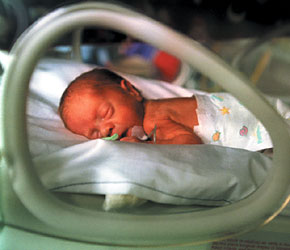
premature-infantParents of babies born severely premature or with serious abnormalities are turning to the courts in a bid to override medical opinion to commence or continue life-sustaining treatment for their infants.

It is difficult enough for parents to witness the birth of their child with such an acute handicap; it can be incredibly confronting when they are presented with the views of their treating doctors that it is not in the best interests of the child to keep him or her alive.

Doctors, on the other hand, are reluctant to commence or continue futile treatment for extremely premature infants when they consider that the burdens outweigh the benefits, in addition to the infant having a poor quality of life.

So how do parents and doctors make decisions about the lives of extremely premature babies? And what role should the legal system play when parents and doctors can’t agree?

The edge of viability

Infants being born too “early” is not a new phenomenon in the span of human history; the drive to save premature babies did not arise from any sense of duty or benevolence to protect or nurture the young. The development of neonatal care units began in 19th century Europe as a state-sponsored campaign to rebuild destroyed populations, variously affected by famine, poverty and war.

Today, the “edge of viability” — the earliest time at which a baby can be born alive — is approximately 23 weeks. A little over the half way stage of a full-term pregnancy, this is a crucial milestone. In Victoria, a woman can have a legal abortion or potentially give birth, both at 23 weeks.

Doctors talk about “premmies” or infants having severe malformation or abnormality. These infants generally begin their little lives suffering pain. Many cannot see or hear, lack neurological awareness and will never be able to walk or stand. The prognosis for such infants is acutely poor and unlikely to improve.

Doctors and parents have tended to make treatment decisions for these babies by looking at what is in the infant’s best interests, in agreement with one another. But parents are increasingly seeking the court’s input to override the medical team’s recommendation, often fuelled by widely publicised stories of “miracle babies” surviving against all odds. American paediatricians John Lantos and William Meadow have described parents’ perceptions of the neonatal intensive care unit (NICU) as “a place where miracles will happen and babies are snatched from the jaws of death”.

As medical science has progressed, and a hungry media has published stories of survival against all odds, doctors have become victims of their own success, giving more parents hope for their prematurely or extremely sick babies.

Legal challenges

Doctors in the United Kingdom are well practised at navigating these legal and ethical hurdles, because cases have been coming before the English courts for more than 30 years. In a majority of cases in the UK the courts have agreed with medical opinion that withdrawal or withholding life-sustaining treatment from critically ill infants is in their best interests.

In Australia, however, it was not until 2011 that the courts were asked to consider such a dilemma.

The first such Australian case is known as Baby D (No 2)(2011) FamCA 176. Baby D’s parents and doctors agreed that removal of the ventilation tube and palliative care was in her best interests, leading to her death. The judge concluded that any treatment decision was up to baby D’s parents in conjunction with the doctors, and that no criminal sanctions would apply if death came as a result.

Two months ago the second Australian case was heard. The parents of nine month old Mohammed sought an order from the court to ensure he was kept alive via mechanical ventilation to prevent oxygen deprivation. Born with various incurable medical conditions, Mohammed cannot see, hear, move, suffers seizures and cannot respond to touch without significant pain. The courts agreed that such treatment is not in his best interests as there is no cure for Mohammed’s conditions.

Time for debate

With only two cases to date, and, within a year of each other, it is too early to tell what decisions the courts will give in future life and death matters, and what reasoning judges will take into account. If the number of cases that have been and continue to go before the English courts is any indication, it should be a red flag to Australia to act now and set the bar for decision-making processes in such cases.

Time is now of the essence for the Australian government to recognise that similar cases are likely to be just over the horizon, as parents and doctors increasingly disagree on treatment options and seek outcomes from the courts. The Australian government has a real opportunity to prevent these cases making it before the courts at all, by creating a framework to decide future scenarios of this kind.

Related Family Law Judgments

Sickening insults via text are latest battleground for warring parents

SMS-text-message-abuseA WAR by text message is the latest battleground for separated families, with fighting couples resorting to foul language and sickening insults as they bicker over care arrangements for their children.

Spreadsheets exposing the unsavoury behaviour have reached biblical proportions, with “hundreds” of pages of the vitriolic SMS texts being tendered in custody battles in court.

While some parents used the technology to successfully juggle shared parenting arrangements, divorce lawyers are facing putting their own clients’ SMS texts under “forensic” analysis.

The Courier-Mail has uncovered one case of an angry wife trying to use a text message spreadsheet to prove her claims that her ex-husband is a drug dealer.

Australian Divorce Blog Founder Stephen Page said SMS was being hijacked by an outpouring of “emotional rubbish” as couples wage war over their children.

“It is a war by text message,” Mr Page told The Courier Mail.

In one text uncovered by The Courier-Mail, a mother sprays a round of insults at her ex-partner as she waits outside his house for their seven-year-old child.

Judges are desperate to rein in the behaviour and have ordered parents to post-separation courses and issued court orders banning denigrating comments.

They have also made orders limiting texts between parents to “emergency matters” and changes to phone numbers.

But Family Relationships Services Australia executive director Steve Hackett said “war on text” was common where couples could not afford to separate.

“They are also at war on the phone or at the school yard,” Mr Hackett said.

Where civility is at a premium, Mr Hackett said some parents are using mobile phone apps to communicate.

“The aim is to avoid an unnecessary heightening of the dispute and if you can communicate in a way to reduce conflict and it cannot be misconstrued there is less room for a heat of the moment argument,” he said.

In another disturbing trend, relatives of young children are also being exposed for sexually abusing, stalking and grooming them through texting and emailing under false names.

In one case, a scheming uncle was charged after being forced to confess he stalked his niece via email and tried to coerce her into taking explicit photographs of herself.

In a series of emails in 2005, he warned the Brisbane teenager he would expose her for sneaking out if she did not take the pictures.

Woman loses Family Court bid for baby to dead partner

sperm-storageA WOMAN cannot fulfil her late partner’s final wish and have their child by IVF because the Family Court lacks jurisdiction over his frozen sperm.

In a ruling published on the court’s website this week, Justice Garry Watts says he has no choice but to refuse the woman’s plea because her de facto partner died before giving her written consent to access his genetic material.

The judge says he cannot intervene – even with the blessing of the man’s sister and executor of his will – because it is not a matrimonial or property matter.

Reproductive specialists yesterday called on courts to honour a person’s verbal consent, saying not every couple gets the chance to put things in writing.

In his judgment, Justice Watts says the man, who cannot be identified, deposited sperm with an IVF clinic before he was diagnosed with non-Hodgkin lymphoma.

He and the woman fell in love during his successful chemotherapy.

They told friends and relatives they planned to marry in 2012 and “start a family immediately”.

The cancer treatment, however, took a toll on the man’s health and he committed suicide.

Subsequently the woman and her partner’s sister, who is executor of his estate, asked the clinic to release his sperm.

It refused because the man had not listed the woman as his partner on the sperm storage form.

However, the clinic agreed it would grant access if served with a court order.

In his judgment, Justice Watts says those factors are insufficient.

“I accept (the couple) formed a loving and committed relationship and discussed between themselves and family members the intention to marry and start a family,” he says.

“I further accept that (his) purpose in storing a frozen semen specimen was in the anticipation that it would be used to conceive a child – and that he subsequently formed the intention that the mother of that child would be (his partner).

“Unfortunately I conclude this court does not have any jurisdiction to make orders in accordance with the application that has been made.”

He says the court is limited to considering only matrimonial, defacto, property and child matters.

“I have no alternative but to dismiss the application,” he said.”

Reproductive specialist Dr Christine Kirby, deputy medical director of Repromed, said courts should broaden their scope.

“When it comes to dealing with reproductive rights after death, courts get bogged down,” she said.

“People die unexpectedly and consent does not always get to be written down.

“If there are multiple, credible witnesses to a deceased person’s intent, that should be honoured as would written consent.”

She urged donors to ensure their consent forms and information were updated regularly.

“Couples plan their house and their life insurance – they need to plan their fertility as well,” she said.

“They need to discuss what, in the event of death, they want to happen.

“Put it in your will, get it written down and then update it as often as needed.”

Dr Louise Hull, from Fertility SA, agreed.

“This is a tragic case, and not something you’d want to see happen to anyone else,” she said.

“The difficulty is that, when a person has died and their consent is not written down, you can’t ever be sure what their wishes were.

“Control over one’s stored material is a fundamental right… people must discuss their wishes with their partners and make sure forms are signed.”

For information about depression and suicide prevention, contact Lifeline on 13 11 14, SANE Helpline 1800 18 7263, Beyond Blue 1300 22 4636

Women’s Alliance Funding Renewed

federal-government-fundingThe Federal Government has extended funding for six National Women’s Alliances following an independent review.

The six National Women’s Alliances will receive $4.8 million in Federal Government funding to continue to enable them to bring forward issues onto the national policy agenda.

The Minister for the Status of Women, Julie Collins, said the three-year funding extension until 2016 will ensure the Alliances can continue to advise the Government on priority women’s issues.

“This new funding is $1 million more than the sum we provided to set up the Alliances in 2010 and recognises their excellent work in ensuring women’s perspectives are at the forefront when government and other groups consider policies and programs,” Collins said.

“In their short existence, the Alliances have scored significant achievements on issues of concern to women from all backgrounds and age groups.

“They have highlighted the adversity faced by immigrant and refugee women integrating into Australian society, examined the impact of new technology and media on young women and helped rural women to take the lead in their communities on reducing violence against women and their children.

“They have also influenced policy making to promote improved gender equality, women’s workforce participation, child care and retirement incomes,” Collins said.

The Alliances now represent more than 180 women’s organisations and each Alliance focuses on a distinct issue or stakeholder group.

“The establishment of the National Women’s Alliances in 2010 was a new way for the Government to engage with the women of Australia,” Collins said.

The renewed funding follows an independent review of the Alliances commissioned by the Government. The review report is available here.