The truth about adoption and why it’s so hard

empty cotIT HAD been three years since Beth and Tom Remboldt had adopted Galina, a little girl from Russia.

Abused as a child, the nine-year-old was nearly impossible to handle. She screamed, she hit, she would stand stone-still and refuse to move when things didn’t go her way. If we just loved her a little more, Beth thought, we’ll survive this.

Then one day, Beth was unpacking the dishwasher with Galina. She left the room for a moment and when she returned, there were feces on the clean dishes. Beth asked her daughter why she’d done that. “I want you to eat my poop and die,” she said.

Love, it seemed, was not enough.

“At this point I started fearing for my safety and for my family’s safety,” Beth said. “Did she really want us to die?”

The Remboldts considered the unthinkable, something that went against all they believed in as adoptive parents.

They would have to give Galina up.

‘EXACTLY WHAT WE WERE LOOKING FOR’

It is the dark side of international adopting – “re-homing,” when unprepared, sometimes naive parents realise that they are unable to handle the child they brought into their home for a better life.

A recent investigation by Reuters found Internet message boards dedicated to re-homing, with a new child advertised about once a week. While legal adoptions are handled through courts, a simple power-of-attorney document can shuffle kids to another guardian in the States. Reporters discovered that with such little oversight, children were sometimes abused in their second, or even third, re-homing.

Even when there isn’t abuse, the transfer seems cruel – to adopt a child, bring them into your home, only to give them up again?

The Remboldts understand the anger. But they also say that people don’t know the whole story. That parents involved in international adoptions are rarely warned about what they’re getting into – and provided no support afterward.

Beth and Tom Remboldt dreamed of building a big family. But after their daughter, Grace, was born in 1999, the couple struggled for years with secondary infertility.

Tom, then 40, a market-research analyst for a medical-malpractice insurance company, and Beth, 27, a homemaker at the time, dismissed domestic adoption because of its chancy reputation.

“We’d heard about too many horror stories of birth mothers changing their minds,” Tom said.

The couple looked abroad instead, turning to the now-defunct Faithful Adoption International, an Iowa-based nonprofit that specialised in adoptions from Russia, Ukraine, Kazakhstan and elsewhere.

The Remboldts began the arduous adoption process in 2005. Two years later, they heard a little boy less than 2 years old and his 5-year-old sister were up for adoption. It was exactly what they had asked for.

They traveled twice to Russia’s Tambov region, once in the winter of 2007, and again in June to finalize the adoptions. They vividly remember their first encounter with Teddy and Galina at the Little Stork orphanage.

“She was very proper, she shook our hands, she understood we would be her parents,” Beth said. “She was very charming and beautiful but it seemed rehearsed.”

TRYING TO ‘LOVE AWAY’ HURT

Still, Beth was excited. Galina took her hand and led her to look at her toys. She displayed poise. The couple noted Galina was not particularly warm to her baby brother, but care-takers explained the children didn’t live in the same part of the home.

The Remboldts read up on raising institutionalised children. They knew to be on the lookout for malnourishment, learning delays, language transitions. They didn’t know very much about Teddy and Galina’s background – only that the children’s mother had been an orphan, and had left the institution when she was 16 and had two children she was unable to raise.

At Russian orphanages, children are handed over to their adoptive parents without clothes. On the night the Remboldts came to take their children, they were shocked to learn that a third of Galina’s body was severely scared from burns. Chunks of her front legs had been grafted onto her back. A few months after they returned home and were struggling with Galina, they pressed the agency for answers. They would discover the children had been removed from a filthy, feces-infested house with no heat and no food.

Galina would eventually tell therapists her birth mother, in a fit of anger, poured a pot of boiling water on her.

When Tom and Beth saw the scarring, they weren’t deterred. “I thought when this child is older, she will never want to be seen in a bathing suit,” Beth said. “I didn’t immediately make the connection between early abuse and emotional damage.”

The Remboldts, like scores of adoptive parents, believed in their heart that they could “love away” their child’s hurt.

In many adoptions, children do attach and have normal, adjusted, successful lives. But the odds are stacked against children who were denied prenatal care, exposed to alcohol consumption or abused or neglected. Even those who were adequately fed and nappied may still suffer from attachment disorders because the mother-baby bond was broken and the child learned to turn inward and distrust love.

Galina celebrated her sixth birthday the day the Remboldts returned home to California. During the celebration, she suffered her first explosion after her parents set limits on chocolate cake. Day after day, the tantrums continued, for hours at a time.

Beth wasn’t surprised Galina was taking and hiding Grace’s jewellery, even though Galina had her own jewellery, or that the child seemed insatiable, or that she was defacing walls with crayons. But Beth and her husband could not understand Galina’s outright resistance to basic hygiene. She wouldn’t bathe or remove dirty clothing or brush her teeth.

GIVING UP GALINA

Then the wetting began. Galina would sit in the spot where she went, refusing to move or clean up. The Remboldts were mystified. They knew the 6-year-old was toilet-trained. They thought it might be a medical condition. It wasn’t, according to doctors.

The couple sought help from professionals who deal with emotionally impacted, internationally adopted children. “We were told to go back to basics,” Beth said. “That we were overstimulating Galina with stuff.”

Beth spent most of her time at home. She wasn’t able to send her daughter to school. She’d be afraid to go to the library or grocery store – holding her breath for Galina to eliminate. Not wanting to suffer embarrassment. She put Galina in pull-ups.

Oddly, Galina seemed quite bright. She picked up the language within a couple of months. She could read and do complex math. When her parents talked to her about eliminating and hygiene, Galina had the language and acumen to say she was sorry and she wouldn’t do it anymore.

By the end of year one, Beth was despondent. “I worked so hard to bring this child to my life. Every day I said, ‘OK, today’s the day I’m going to start over.’ But it was impossible. There was no connection.”

With her hands full with Galina, both Teddy and Grace took a back seat. Teddy, while not completely attached at first to his parents, and not at all with his biological sister, was at least a manageable toddler.

One day the couple brought the family to Tom’s mother’s house for dinner. He had warned his mother Galina was filthy. “She was horrified,” Tom said. “But I think for the first time she understood what was going on.”

Without consulting Tom or Beth, his mother called the Christian group Focus on the Family to seek help. Because she’d told the circumstances to a “mandated reporter,” two agents from Child Protective Services and a police officer showed up at their home. They spoke with Galina and with the other children. They told the Remboldts that a social worker from Family Preservation, a wing of CPS, would visit them weekly. “They came once and never showed up again,” Beth said.

By the spring of 2009, things were growing worse. The Remboldts had reached out to Nancy Thomas, an author who runs therapy camps for families who are struggling with adopted children at her ranch in Colorado.

Later that spring, the Remboldts visited Thomas’ ranch with the entire family for a week. “One night, there were a bunch of families streaming in and out of Nancy’s kitchen. Galina urinated on the kitchen floor. She stood in her pee for three hours, like a statue, with everyone just doing their thing around her,” Tom said.

The Remboldts were losing hope. They understood Galina was using elimination as a defense against intimacy – a classic technique for a child suffering with a severe attachment disorder.

“Subconsciously she believed if she was stinky enough, it would keep us away, that it would prevent us from loving her,” Beth said. “For nearly two years we kept trying to show her that even if she is stinky, we still love you. We are your parents.”

Nothing – not therapy, not love, nothing – was working.

Shortly after the dishwasher incident, three years after they adopted the girl, the Remboldts flew Galina to Thomas’ ranch for a one-month respite. One month turned to two, then three, and finally a year. As time wore on, the Remboldts had to make a hard decision. They knew Galina could not come back and live with them. It would have been too disruptive for the other children and unsuitable for Galina. Another family who worked with Thomas wanted to adopt Galina.

On Oct. 15, 2010, the Remboldts relinquished their parental rights to the 9-year-old girl.

Thomas says the new family went through all the proper channels – they had a home study done and they hired lawyers to handle the transaction.

“Unfortunately, the second adoption also ended in failure because Galina was abusing her brothers,” Thomas said. “She shouldn’t have been placed in a home with younger children.”

Now Galina is in a third home; the Remboldts don’t know where. Thomas, however, said she’s doing better.

“Galina was a very sick little girl, but she was adopted by a couple who had only grown children, which was better because she had a history of abusing younger children,” Thomas said. “She lives on a ranch where she rides horses. They have a big network of support. The Remboldts should have been given training. Their agency really dropped the ball” she said.

‘MYTH THAT LOVE CONQUERS ALL’

In the past two decades in America, about 250,000 children have been adopted from abroad. There are no statistics on how many have been given up or re-homed, and that’s part of the problem. For children like Galina, there’s little oversight in cases where a re-homing goes wrong.

And for parents like the Remboldts, there’s no one who can help them cope with a damaged child.

“Adoption is more than child placement,” said Adam Pertman, executive director of the Donaldson Adoption Institute, and author of Adoption Nation. “The training, education and support for adoptive families is just not there.”

At the Remboldts, Teddy, now 8, is attached but struggling. Grace, 14, has been in therapy. Beth has returned to work as a saleswoman for a small technology company. Tom is working on a master’s degree in counseling because “people out there are really hurting and I want to help them.”

“The myth that love will conquer all is just that, a myth,” Pertman said. “Adoptive parents are not miracle workers.”

Tina Traster is the author of the forthcoming memoir “Rescuing Julia Twice: A Mother’s Tale of Russian Adoption and Reactive Attachment Disorder”

Access to sperm donor data by children backed

History: Geraldine Hewitt has health fears. Photo: Dallas Kilponen

History: Geraldine Hewitt has health fears. Photo: Dallas Kilponen

Children of anonymous sperm donors should be allowed access to genetic information such as health history, height and eye colour, and an agency set up to quickly collect these records because they are at risk of being lost, an inquiry has found.

Alarmed by evidence clinics have deliberately destroyed the records of children conceived before 2010, before anonymous sperm donation was made illegal, the inquiry has called on the NSW Attorney-General to make it an offence to damage or falsify any donor conception records. But it has stopped short of recommending donor-conceived children be given access to old records that would identify the donor without their consent.

The chairman of the NSW Parliament’s law and safety committee, Nationals MP John Barilaro, said there was a sense of urgency in the recommendations. ”There are gaps that individuals have in their life story and life journey where donors play a role, and they feel they are entitled to that information,” he said.

“There are gaps that individuals have in their life story and life journey where donors play a role, and they feel they are entitled to that information”: Nationals MP John Barilaro. Photo: Supplied

Geraldine Hewitt, 30, who was donor-conceived and knows nothing about the donor, says she is worried about the likelihood of marrying a half brother, and inherited medical conditions.

Allowing medical information to be exchanged was ”an important step in the right direction”, she said.

But Ms Hewitt is disappointed the committee did not go further and recommend full retrospective access to donors’ identity. ”It is not in line with what adoptees have,” she said.

Fertility clinics argued against allowing full access to old records, claiming it would breach privacy.

But a strong argument was put by a range of groups about the psychological distress caused when a person did not know their genetic parentage. Gaps in medical histories would affect generations where a genetic disease was carried, doctors said.

The Law Society said there was a public interest in disclosing donor identities if it prevented siblings unknowingly marrying. The committee decided it could not allow access to identities without permission, because the voice of the anonymous donors themselves were missing in the inquiry. Only one donor submission was received.

Instead, the new agency would seek permission from donors to exchange identifying information, as well as offer counselling.

Mr Barilaro said the biggest emphasis should be on counselling for donor-conceived children before they access new information. ”Before they open Pandora’s box, you have to make sure they can take on that information, particularly when it hasn’t been a part of their story,” he said.

Setting up a new agency would be ”incredibly helpful”, Ms Hewitt said. ”It is crucial that it is independent of the clinics, hospitals and doctors.”


Father sought in travel ban dispute

Amaal Yasmit Finn with Zareen.An Egyptian national has evaded Australian authorities for weeks as his Australian wife and toddler remain stranded in Egypt amid a dramatic international custody dispute.

A warrant was issued for the arrest of Mazen Hassan Baioumy, 36, earlier this month after he failed to meet a court order that he support the lifting of a ban preventing his wife and four-year-old daughter from returning to Australia.

His wife, Amaal Yasmin Finn, and their child, Zareen Baioumy, have been stuck overseas since August when they discovered Mr Baioumy obtained the travel ban through Egyptian courts.

Speaking from Egypt on Friday Ms Finn said she was safe but concerned that her husband’s whereabouts remained unknown.

“Its tiring, it’s stressful and its pretty lonely,” she said.”If they could catch him it goes a lot further again to getting me back home,” she said.

Zareen travelled to Egypt in December 2012 when Ms Finn had agreed to let the child stay with her husband’s relatives for a short time to learn the language and culture.

But Ms Finn began to suspect Mr Baioumy had no intention of allowing the child to return to Australia, prompting a fraught rescue attempt, the Family Court of Australia in Melbourne has heard.

She travelled to Egypt with her father and tried to take the toddler back.

”We ended up being taken back to the police station, we spent two nights there, we attended the public prosecutors office where we were allowed to leave with Zareen,” Ms Finn’s father told Fairfax Media.

But then they discovered the travel ban.

Australian authorities began searching for Mr Baioumy two weeks ago after he missed a court appearance in Melbourne on October 4.

In September, Family Court Justice Paul Cronin ordered Mr Baioumy, who has remained in Australia, to do ”all acts and things necessary” to have the travel ban lifted.

The orders were extended to include a requirement that Mr Baioumy sign a power of attorney authorising a person of his choice to take all steps to withdraw the case that prevents his wife leaving Egypt.

But earlier this month the court heard he had yet to sign the documents.

On Friday Justice Kirsty Macmillan granted a publication order allowing the names and images of the couple and child to be published, something the law usually prevents in family law cases.

Anybody who believes they have information about Mr Baioumy’s whereabouts is urged to contact the Australian Federal Police or Crime Stoppers on 1800 333 000.

Euthanasia bill dies in Parliament

tasmanian-parliament-euthenasia-bill

Tasmanian Parliament Debating Euthanasia

In yet another example of how Parliament’s vote on contentious issues may not necessarily reflect its constituents’ views, the Tasmanian House of Assembly has voted against the Voluntary Assisted Dying Bill by 13 votes to 11.

This is despite a resounding four-fifths of Tasmanian constituents supporting voluntary euthanasia, the practice of terminating a life in a painless manner.

Globally, Belgium, Luxembourg, Netherlands, Switzerland, and four out of fifty US states (Montana, Oregon, Vermont and Washington) have legalised voluntary euthanasia.

The Northern Territory is to date the only Australian jurisdiction to have legalised euthanasia until the Federal Government reversed the decision.

Within the House, seven out of ten Labor MPs and all five Greens MPs supported the controversial Bill, co-sponsored by then-Labor Premier Lara Giddings and then-Greens leader Nick McKim, but were faced with stiff opposition with all 10 Liberal MPs rejecting it.

Following all parties’ grant of a conscience vote, heated and protracted debate over the Bill for 10 hours ensued.

This initially culminated in a 12-12 vote deadlock. However the Bill was eventually defeated after Speaker at the time Michael Polley, who was able to cast a vote, voted against it.

McKim co-incidentally introduced voluntary euthanasia legislation in 2009, which was rejected by a more convincing margin of 15 votes to 7.

This may suggest that Parliament’s and society’s constantly evolving perceptions and values towards euthanasia.

It is significant to note that the Bill was supplemented by stringent safeguards including the need for a patient to request for euthanasia a minimum of three times along with the need for consent from two general practitioners.

Proponents of assisted suicide such as the Greens MPs would reassert the right of a terminally ill individual suffering excruciating pain to experience a dignified painless death, thus preserving their ordered liberty interest, provided they possess the mental capacity to do so. No-one should be subject to such suffering; their inevitable death should rather be hastened.

Otherwise isn’t it ethically abominable to make someone live, who with vindication does not wish to do so? How is this any different to taking an individual’s life without their consent?

Doesn’t the Bill’s safeguards afford it enough protection and ensure that a patient must be completely certain before ending their life?

Should Governments be even able to intervene in such decisions?

Arguments against the Bill varied from religious perspectives, with former Liberal leader Rene Hidding asserting that the Bill was anti-Christian, to legal notions in relation to the Bill’s supposedly flawed drafting.

Its drafting was further criticised in the Tasmanian Law Society’s report, distorting the Bill’s credibility in protecting vulnerable patients.

Opponents further claim that euthanasia ethically debilitates societal respect for the sanctity of life and may instigate a slippery slope that may potentially lead to involuntary euthanasia.

Practically isn’t palliative care sufficient already? Legalisation of euthanasia may jeopardise the motivation to investigate for new treatments for the terminally ill and it may rather be masked as an economical practice.

As societal views towards euthanasia evolve over time, provided their present overwhelming support for such reform, Tasmanians ought to not be too surprised if a similar Bill is reintroduced sometime in the not-too-distant future.

Mother fled with son to stop abuse, court told

international-child-abductionA mother who secretly took her son to live overseas in the middle of a custody dispute says she did so to stop the boy’s father abusing him, asking a jury “what would you risk if you thought your little boy was in danger?”
But the jury was told that a few months before the woman fled with her son, a child abuse expert had been unable to conclude the boy had been abused in any way.

The woman, who cannot be identified, is on trial in the Downing Centre District Court for breaching the Family Law Act by taking the boy out of the country in 2008 and living with him overseas until September 2010, when the authorities eventually tracked her down.

At the start of the trial on Wednesday, the jury heard the relationship between the woman and her husband had become strained in 2006 because the woman wanted to have another child but he did not.

The husband referred to one heated conversation: “[She] said ‘I’ll resent this for the rest of my life’.”

The court heard that the next year the woman allegedly came to believe her husband was molesting their son.

Initially she took the boy and went to live at her brother’s house.

She then began proceedings in the Family Court, informing her husband that she was seeking permanent custody.

The court ordered that the boy be assessed by a psychiatrist, who was unable to find any abuse had taken place.

“He found it difficult to conclude from the material that the father molested [the boy],” Crown prosecutor Ian Bourke said in his opening address.

Mr Bourke said that months later, in April 2008, the mother bought tickets to an overseas destination, from which she did not return until police forced her to in 2011.

“This is not a sexual assault trial,” Mr Bourke said.

“You do not have to decide whether the allegations are proven or untrue. Your job is to decide whether or not the crown has proved the charge before you beyond reasonable doubt.”

But in an emotional opening address to the jury, the woman said she had left the country after deciding it was “too unsafe to stay”.

“It was a very difficult situation to try and weigh up what I should do,” the woman, who is representing herself in the trial, said.

“What would you risk if you thought your little boy was in danger?

“Try to put yourself in my place – it’s a very stressful situation. I know I went overseas but it was with good intentions and I think I did the right thing in the circumstances.”

The trial continues.

Narrow defeat for euthanasia bill in Tasmanian Parliament

euthanasia bill in TasmaniaTasmania’s lower house has rejected voluntary euthanasia by the narrowest of margins.
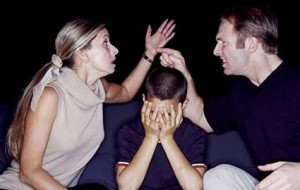
The private members bill, co-sponsored by Labor Premier Lara Giddings and Greens leader Nick McKim, was defeated 13-11 with Speaker Michael Polley effectively using his casting vote against it.

Debate in the 25-member House of Assembly had indicated a 12-12 result after all parties had granted a conscience vote on the contentious legislation.

With Greens deputy speaker Tim Morris – who supported it – in the chair and unable to cast a vote, it failed by two votes.

Tasmania would have become the first Australian state to allow assisted suicide had the bill passed its two houses, joining four European countries and four states in the United States.

Ms Giddings said it would be a “tragedy” if members who supported the bill in principle but had problems with its detail did not allow it to progress to the next stage of scrutiny.

“Vote for the principle … vote for what you believe in,” the premier said.

“There is, I think, an opportunity lost here if people don’t provide that opportunity.”

Seven of Labor’s 10 members joined the Greens’ five MPs to support the bill.

But all 10 Liberal MPs voted against it and they were joined by three ALP members, including Mr Polley.

The vote became closer than expected when long-serving ALP member Graeme Sturges changed his view after voting against similar legislation in 2009.

That bill, instigated by Mr McKim, went down 15-7.

In a marathon debate of more than 10 hours over two days, the house heard from the sons of two Tasmanian politicians who recently suffered high-profile deaths.

Former premier Jim Bacon’s son, Scott Bacon, a Labor MP, supported the bill.

Liberal opposition leader Will Hodgman spoke directly about his father, the popular Fraser government minister Michael Hodgman, who died after suffering emphysema earlier this year.

The Voluntary Assisted Dying Bill would have introduced highly regulated euthanasia to patients with incurable diseases and experiencing considerable suffering.

Ms Giddings and Mr McKim had said its safeguards, which included three requests from a patient and the consent of two GPs, were the strongest in the world.

Those opposed pointed to a Law Society report which found flaws in the Bill’s drafting, and questioned whether it could protect vulnerable patients.

One Liberal MP, former leader Rene Hidding, described it as elitist and anti-Christian.

Polls had shown 80 per cent of Tasmanians were in favour of the reform.

The Northern Territory became the first Australian jurisdiction to legalise euthanasia in 1995 before the federal government overturned it.

Euthanasia or assisted suicide is legal in the Netherlands, Belgium, Switzerland and Luxembourg as well as in the US states of Washington, Oregon, Vermont and Montana.

Inability to Control One’s Impulses a Ground for Loss of Visitation Rights

dysfunctional parentsIn the case of Neill & Redford ([2013] FamCA 588), the Family Court gave sole parental responsibility to the mother and prohibited the father from seeing or communicating with his two children except through the post on the ground that the father’s failure and consistent refusal to undergo psychiatric treatment to help him manage his anger issues, control his impulses and to reflect upon how his actions affect others around him puts his children at risk of significant harm.

The mother and the father had five children together during their cohabitation. The custody of the twins was given to the paternal grandmother while the three older children lived with the mother. The father is a truck driver and he is on the road on most days and nights such that it was impossible for the children to live with him. The consent orders granting them equal parental responsibility worked for two years until a series of complaints for domestic violence were made by the mother against the father. An Apprehended Violence Order (AVO) had been issued by the police against the father on the complaint of the mother. She claimed that he had sexual intercourse with her without her consent. The father then repeatedly breached the AVO which landed him in jail.

During his appearance in court, he asked that parental responsibility be given to him and not to the mother as the mother was using drugs and that the children were at risk of abuse and neglect with her. The mother refused to appear in court or even give evidence. The Court was in a quandary as to how to proceed seeing as neither of the parties was willing to give evidence that could form the basis of parenting orders.

The Court relied upon the testimonial evidence of a psychiatrist, refuge workers (who helped the mother recover from the domestic violence she had been living through), case workers from the Department of Family Services who had been helping her learn parenting techniques, and from the police who have already compiled a dossier on the father’s many criminal charges.

The father has had several criminal charges for drink driving, assault, offensive and disorderly conduct and for breaches of the APO. In court, he exhibited a propensity to use foul language, to bang his fists and engage in physically threatening behaviour that the court had to call in security personnel. He has hearing impairment and when he did not like the line of questioning of the Independent Children’s Lawyer he threw the hearing device that enabled him to hear the proceedings in the court, shattering it so that a new one had to be brought in for him.

The Court noted that the mother’s failure and refusal to attend the hearings or even give evidence must have been brought about by fear of the husband’s temper. The Court noted that there were two complaints filed by the mother against the father of engaging in sexual intercourse without the mother’s consent. The father was of heavy build and he had a loud voice. When he is angry, his behaviour could be regarded as threatening and menacing. On the other hand, the mother has a substance abuse problem: she takes amphetamines and this prevents her from being a sensitive and attentive parent to her children. However, as between the mother and the father, the mother has help from case workers and refuge workers who are all helping her overcome her substance abuse issues and helping her become an effective parent.

This is in clear distinction from the father who refuses to even acknowledge that he had a problem with impulse control and emotional regulation. The Court noted that he is of the belief that parental responsibility and face to face visitation are rights of which he is being systematically deprived by the police, by the social workers and by the court. He refuses to acknowledge that his difficulty may partly be due to his failure to control his emotions. This kind of failure to emotionally self-regulate does not speak highly of his ability to parent his children. Even if there is evidence that he has not ever hurt his own children and has not displayed any animosity against them, his continual display of ill temper, anger and irritation put the children in fear of their safety and in fear of the physical safety of their mother. This would place the children in significant harm and allowing him visitation would not be in the best interest of the children at this time.

While the children have not been the subject or object of his violent and aggressive outbursts, the children have witnessed his outbursts. The father took one of the children to a football match and by the time the match ended, the father was intoxicated. He showed enough good sense not to drive and instead, he and his son slept in the car. The mother, frantic that the child had not been returned after the game, requested police assistance. The police found the father and the child in the car. When the police awakened the father and told him of the complaint against him, the father displayed aggression toward the police which his son witnessed.

The Court was convinced that these outbursts of aggression and violence although not directed toward the children can still harm them as it sets for them a bad example of how to deal with frustration and adversities in life. Thus, as between the father who refuses to take responsibility for himself and the mother whose drug use may be attributable to the fear and anxiety she had been living under because of her relationship with her former husband, it is the mother who must be given sole parental responsibility over their children.

The father is entitled to know of any serious illness or injury of the children. He is also entitled to be consulted as to any major decisions affecting the health and schooling of his children. The mother is directed to write to her husband and give him sufficient time to respond before making any major decision about the children. The father is directed not to have any direct face-to-face contact with his children. He is free to send them letters and other things for their birthday and for Christmas through the post.

DNA orders in Family Provision Act Proceedings

family-dnaThere is no doubt that the rapid development of DNA technology in recent years has had a significant impact on criminal investigation – crimes can be solved with the use of a simple cheek swab on suspects and witnesses.

Similarly, in family law, DNA testing can resolve paternity issues quickly and effectively. Accordingly, Magistrates and Family Court judges routinely order such tests to be carried out.

However, courts have been slower to order the use of the science in other civil proceedings, for example claims against deceased estates, where testing can determine eligibility within Family Provision Act proceedings.

In Western Australia, four relevant provisions apply when seeking orders for DNA testing in Supreme Court Family Provision Act proceedings:

  • Where there is an intestacy, the Administration Act s12A provides that among those eligible to claim against the estate is any child of a deceased who:
    • can establish “to the reasonable satisfaction of the court” that they are a child of the deceased; or
    • whose parentage of the child was admitted by the deceased, or established (presumably “to the reasonable satisfaction of the court”) during the lifetime of the deceased.
  • Where a valid will exists, the Wills Act s30 mirrors the s12A wording above.
  • The Rules of the Supreme Court at Order 28 rule 1(1) provide that should it be necessary to consider the question of the physical and mental condition of any party, an opponent may serve a notice on them to submit to a medical examination.
  • There is the inherent jurisdiction of the Supreme Court to make orders under Order 1 rule 3A.

In McComish v Sharpe [2002] WASC 96, the Defendant executors applied under order 28 rule 1 for the claimant and her infant son – who claimed to be the child of the deceased – to submit to DNA testing. The deceased had admitted paternity of the infant on oath, but later expressed doubts to the executors that he was the father. The mother refused to submit to DNA testing for both herself and her child.

The court ordered the mother and child submit to testing, stating that it was entitled to determine the issue on the best scientific evidence available:”Why should the court decide a case on the less perfect evidence, when the better evidence can be obtained relatively cheaply and speedily (and) an order for DNA may very well achieve the settlement of this case?

The court was satisfied that it had inherent jurisdiction to make the orders, but could also have made the orders under order 28 rule 1.

Conversely, in 2003 in a suppressed judgment, the court refused to order the DNA testing of a woman who claimed to be a child of the deceased, apparently on the basis that she opposed the orders. The court subsequently found against the claimant in any event, there being no other evidence to support her claim.

More recently, in Hallett & Anor v Cottam [2007] WASC 147, the court was prepared to order DNA testing under its inherent jurisdiction of a claimant who, it was being argued, was not a child of the deceased. In that case, no order 28 rule 1 notice had been served by the defendants on the claimant but the court rejected the claimant’s contention that an assessment of “physical and mental condition” under order 28 rule 1 did not include the taking of a mouth swab for DNA analysis. The Judge said: “I am far from convinced that order 28 rule 1 is… incapable of application to examinations to determine genetic make-up“.

The court went on to exercise its inherent jurisdiction, and its discretion in the interests of justice, to require the DNA test, emphasising its contribution to the resolution of the issues as well as the lack of any prejudice to the claimant.

Wives’ first move in divorce is costliest

divorceWomen’s incomes suffer more than men’s after divorce, regardless of who decides to end the marriage, a study has found.
While it is well documented that women do worse than men financially after separation, family researcher Belinda Hewitt wanted to determine whether it made a difference who initiated the divorce.

Unexpectedly, the study found women’s household income was lower if they ended the marriage than for women who did not.

”We wanted to know whether anticipating the end of the relationship, and therefore putting in place strategies to avoid financial consequences, could make a difference,” said Dr Hewitt of the University of Queensland’s Institute for Social Research.

Using data from the Household, Income and Labour Dynamics in Australia survey, Dr Hewitt studied the income of 6424 men and women who were married in 2001 before and after they got divorced – including information about who made the final decision to separate.

The study found total household income – earnings, child support from their former partner and government payments – was almost level between the sexes after separation. But Dr Hewitt found men were better off once she examined other factors, such as the number of children in a person’s care.

Women’s incomes were lower in the first year after separation if they had ended the relationship than if their partner had.

Dr Hewitt said a possible reason was that, when women ended a relationship, men might be more resistant to being financially co-operative. ”Whereas, if the man has initiated a divorce, he might feel guilty and be far more co-operative,” she said.

The study, to be presented at a conference at the University of Melbourne next week, found no significant differences in household income for men after separation, regardless of who initiated it.

For mother of one Kerrie O’Sullivan, thinking about how she would manage financially did not play a part in her decision to separate.

”In my case it was definitely an emotional decision,” she said. ”The decision to separate was easy, the financial circumstances became evident after the separation.”

After separating, Ms O’Sullivan worked full-time. She got the family home as part of the settlement, but had to sell it to pay debts.

”I don’t think it makes any difference who ends the marriage, you still have the same financial commitments,” she said. ”Most times the mother ends up with the child or children so she already has the financial burden to care and look after them.

”With school fees, excursions and sporting activities, the money has to be found and, in some cases, women have to work two or three jobs to help cover these expenses.”