School tax breaks and refunds

school-tax-breaksSending a child to school is an expensive business, even if they go to a public school – there’s the uniform, the bags, the stationery, the shoes and so on.

State and Federal governments recognise that school and going back to school at the beginning of the year can be an expensive time for parents and have some refunds and payments in place. Here are a few.

Schoolkids Bonus (Commonwealth)

In the 2012 Budget the Australian Government announced that the Education Tax Refund (ETR) would be replaced by a new payment called the Schoolkids Bonus to help families with the costs of education. The simplified system means there’s no need to collect receipts or claim it through your tax.

Starting from 1 January 2013, the Schoolkids Bonus will help pay for expenses such as uniforms, books, school excursions, stationery and other costs including music lessons and sports registration fees.

Eligible families will be paid the bonus automatically in January and July.

Each year, eligible families and students will receive:

  • $410 a year for each primary student ($205 paid in January and $205 paid in July)
  • $820 a year for each secondary student in ($410 paid in January and $410 paid in July).

The first payment ($205 for a primary student and $410 for a secondary student) will be made by Centrelink or the Department of Veterans’ Affairs, directly into your bank account, in January 2013.

Your child must be undertaking primary or secondary studies and under 20 years of age to be eligible for the Schoolkids Bonus.

If you are a student, you must be undertaking primary or secondary studies and under 20 years of age to be eligible.

To receive the Schoolkids Bonus, you or your child must be receiving one of the following payments on the test date (either 1 January or 30 June):

Centrelink payments

Department of Veterans’ Affairs payments

To receive the correct Schoolkids Bonus payment in January 2013, Centrelink customers must check and update their details by 31 December 2012 if:

  • you are or your child is starting primary school or secondary school in 2013.
  • your child’s care arrangements or any other details have changed.
  • you are or your child is finishing secondary study in 2012.

You can update your details through Centrelink Online Services.

If none of the above applies to you, but you or your children are in primary or secondary school and you are eligible for Schoolkids Bonus, it will be paid to you automatically without the need to contact Centrelink.

Find out more about the Schoolkids Bonus and your eligibility here.

Assistance for isolated children (Commonwealth)

The Assistance for Isolated Children (AIC) Scheme assists families with the extra costs associated with educating their children.

If you have a primary or secondary student who cannot go to an appropriate state school because of geographical isolation, disability or a special health need, the Assistance for Isolated Children may help you.

The scheme also helps families that are isolated from an appropriate state school where the school-aged student is undertaking a tertiary course instead.

For more information on what isolated families can receive, head to the Assistance For Isolated Children page at the Australian Government’s Department of Human Services website.

Textbook and resource allowance (Queensland only)

The Queensland Government provides financial assistance to parents of secondary school students attending state and approved non-state schools to contribute towards the cost of textbooks and learning resources.

All payments for the allowance are made to schools through a bulk payment from the government. In consultation with school communities, schools may choose to distribute the funds through operating textbook hiring schemes, individual payments to parents, or a combination of both schemes.

The allowance is paid annually with the rates per student in 2013 are $112 for Years 8 to 10 and $245 for Years 11 and 12.

For more information visit the Queensland Government’s Department of Education and Training website.

Education Maintenance Allowance (Victoria only)

This an allowance for low-income families with school-age children.

In 2013 Education Maintenance Allowance (EMA) payments to eligible families are:

  • $200 for parents of eligible Prep students.
  • $150 for parents of all other eligible primary school students.
  • $300 for parents of eligible Year 7 students.
  • $250 for parents of all other eligible secondary school students up to the age of 16.

For more information on the Education Maintenance Allowance and to find out more about your eligibility, head to the Victorian Government website.

The School Card Scheme (SA only)

SA’s government-run School Card Scheme provides financial assistance towards the educational expenses incurred by lower-income families at government and non-government schools and who meet the eligibility criteria. Families are eligible of they have:

•    a child or children from four years of age attending school full time.
•    independent full-time students undertaking six subjects in years 10 or 11 or five subjects in year 12.
•    a gross income being within the School Card income limits for the number of dependent children.

To learn more and to check your family’s eligibility, head to the South Australian Government website’sinformation page.

Secondary Assistance Scheme (WA only)

The Secondary Assistance Scheme is available to secondary students whose parents hold Centrelink Family Health Care or Pensioner Concession Cards or Veterans’ Affairs Pensioner Concession Cards.

There are two parts of the scheme – a uniform allowance of up to $115 and an Educational Program Allowance of up to $235 for public school students which is sent to the school to go towards their voluntary contribution.

For more information, head to the WA Department of Education website.

Student Assistance Scheme (Tasmania only)

The scheme provides assistance for low-income families towards the cost of levies for students enrolled from kindergarten through to senior secondary level attending Government or registered Non-Government schools or colleges.

This scheme, which is means-tested, was recently expanded to include grandparents raising their grandchildren.

For more information go to the Tasmanian Government’s Department of Education website.

Public transport concessions state-by state

Each state has its own way of subsidising student travel on public transport. Some are completely free while others have a small fee involved. Here’s a brief rundown on what each state provides, although these can change from year to year so it’s worth checking at the websites provided here.

NSW
Its School Student Transport Scheme provides free transport Monday to Friday for all primary students who are NSW residents and aged over four years and six months of age or older. It has some restrictions on distance travelled according to age and is eligible by a special pass which must be applied for through the school.

There’s more information at the Transport for NSW website.

Victoria
All students 16 years and under are entitled to a “child myki” card and concessionary rates of travel.

Head over to the myki website to find all the details you need.

Queensland
A 50 percent concession is offered here for children aged 5-14 years (inclusive) who are full-time Queensland primary school students.

Go to Queensland’s Transport and Main Roads website for more information.

SA
Visit Adelaide Metro to find out the latest on fare discounts and conditions for SA primary students.

Tasmania
Students are required to carry a Student Buss Pass which allows free travel for two one-way trips per day on government-funded, fare-charging bus services between home (or boarding residence) and school.

Visit the Tasmanian Transport website for more details.

WA
Offers Student SmartRider cards which enable students to purchase 50c tickets on public transport.

NT
All students attending primary school (including transition) through to university (studying part-time or full-time) can travel for free seven days a week on all scheduled services on the NT’s existing school and public bus network.

Find out all the details at the Northern Territory Government’s Public Transport page.

Tasmania
Children under 16 years of age are eligible to travel at student/child fares as long as a Metro-approved student ID card is presented when purchasing the ticket.

Find out all the details at the MetroTas website.

Read more about education tax breaks and saving money on back to school:

More education must knows:

More back to school tips and ideas:

Catholic hospitals fear abortion claims under anti-discrimination laws

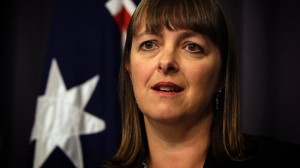
Attorney-General Nicola Roxon admitting the bill is badly worded.

Attorney-General admitting bill is badly worded.

CATHOLIC hospitals fear patients will use new anti-discrimination laws to demand abortions, vasectomies and IVF treatments now banned for religious reasons.

A public backlash against the Federal Government’s draft Human Rights and Anti-Discrimination bill forced Attorney-General Nicola Roxon into a u-turn yesterday.

Ms Roxon admitted her department was rewording a contentious clause that redefines discrimination as conduct that “insults or offends”.

But state governments and religious groups remain concerned that other drafting flaws in the 198-page legislation will trigger vexatious discrimination claims.

Catholic Health, representing 75 hospitals, says the bill is “confusing” for patients.

“It does give rise to the potential for vexatious claims to be made,” Catholic Health chief executive Martin Laverty told News Ltd. “But they’d have no legal standing.

“We don’t provide the full range of reproductive health services and we’re transparent about that. To not provide the service is not to discriminate.”

The Catholic Health code of ethics bans its hospitals from providing abortions, sterilisation or contraceptive procedures, or treatment for IVF or surrogate pregnancies.

Catholic Health has flagged its concerns in a submission to the Senate committee assessing the draft bill.

“To not provide a service on grounds of Catholic teaching is not to discriminate, rather it is a simple limiting of services that Catholic organisations choose to offer as fulfillment of their religious belief,” it states.

“The current drafting of the bill does not allow for this distinction.”

Mr Laverty said yesterday the legislation would require hospitals to prove they had not discriminated against a patient who lodged a complaint.

“Any action would be futile but the reverse onus of proof gives rise to the potential for us to have to defend it,” he said.

“We (now) face the scenario where there needs to be new documentation for every hospital admission, and that there will be a likelihood of increased litigation.”

A spokeswoman for Ms Roxon yesterday said Catholic Health had “misunderstood the legislation”.

Complainants would first need to prove a prima facie case, before defendants were required to prove their innocence.

“Our draft law will not change their ability to decline to perform procedures that conflict with the Catholic faith,” the spokeswoman said.

Reproductive Choice Australia yesterday demanded that Catholic hospitals be forced to offer all health services,  or relinquish taxpayer funding.

RCA president Leslie Cannold said many pregnant women using Catholic maternity services did not realise they would be denied a “life-saving abortion”.

“And if a patient decides she wants to have her tubes tied, she won’t be able to,” Dr Cannold, a Monash University academic, told News Ltd.

“If the Catholic health system feels it is entitled to decide what services to provide, it shouldn’t be running public hospitals.”

Ms Roxon yesterday said she had instructed her department at the start of January to develop “alternative drafting” for sections of the bill “that have raised freedom of speech concerns”.

One option was to remove the reference to “insult and offend”, she said.

However, when News Ltd asked Ms Roxon’s office on January 20 whether the words would be removed from the legislation, a spokeswoman for the then-acting Attorney-General, Jason Clare, replied that the government was waiting for the Senate inquiry to report its findings.

Custody fight girls speak in magazine

4-italian-sistersTHE man who lists Nelson Mandela and Bill Clinton as former clients is orchestrating publicity for the Sunshine Coast mother of the four Italian girls who have been caught in a bitter custody dispute.
Max Markson was behind the four girls’ “first major interview” about their life in Italy with national magazine Woman’s Day.

The interview, printed this week, revealed how the girls “begged a judge to put them in foster care” instead of having to live with their dad.

Woman’s Day news editor James Graham said there has been an “overwhelming response to the story online”.

“We just thought it was a good story to tell from their perspective,” he said.

“They’ve been the ones in the shadows for so long, but they are the ones obviously directly affected.”

Photographs showing the girls’ faces are splashed on the front cover and their names and the names of their family are provided in detail, despite pending court action against the Courier Mail.

The Courier Mail is facing prosecution for allegedly breaching the Family Law Act by printing photographs of the girls in its coverage of the custody dispute last May.

Mr Graham said as the matter was no longer in the Family Court in Australia it “wasn’t an issue”. Also, he said, the magazine had the “full co-operation” of the mother.

Mr Markson, however, declined the Daily’s request to discuss the interest in the girls because it was “before the courts”.

Woman’s Day would not reveal the cost of the interview.

The former administrator of the Kids without Voices website, Melissa Thompson, has also spoken out about breaking away because of her frustrations with the family.

“The mother is trying to make money to get funds for her Italian lawyer, but in the process of doing this she is trying to hype the kids up and incite fear in them and keep them kicking and screaming,” she said.

Ms Thompson has begun posting on an opposing site.

The girls’ mother said she was “too busy” to respond to the Daily’s request for an interview yesterday.

However, her aunt said the mother was a “natural introvert” and merely trying to raise funds to bring the girls back because “that’s what they want”.

“That’s also why they’re selling the t-shirts online,” she said.

Child Care Rebate Paid Quarterly

Child Care RebateAbout 340,000 eligible parents can expect to receive their quarterly Child Care Rebate payment from this week.

Acting Minister for Human Services Anthony Albanese said the Child Care Rebate supported working parents by providing them with financial assistance to meet the costs of child care.

“Of the 700,000  Australian families who receive the Child Care Rebate, about 340,000 choose to receive it quarterly,” Mr Albanese said.

Minister for Early Childhood and Child Care Kate Ellis said the Australian Government had  made a record investment to help families out with the cost of child care.

“We’ve increased the Child Care Rebate from 30 per cent to 50 per cent of  all approved out-of-pocket child care expenses up to a maximum of $7500 per child per year to help families out with the cost of child care,” Ms  Ellis said.

“We also gave parents the option of having their Child Care Rebate paid fortnightly or weekly, so parents don’t have to wait to  receive this crucial assistance.”

Mr Albanese said that even  if parents are not entitled to Child Care Benefit, they may still be  eligible for the Child Care Rebate.

“Families who receive their Child Care  Rebate payments quarterly will begin receiving their second payment and statement for the October to December quarter this week,” he said.

“If  families have not received the payment in their bank account by Friday February 1, they can check online at humanservices.gov.au to see whether their quarterly Child Care Rebate payment has been issued.

“To find out more about Child Care Benefit  and Child Care Rebate visit humanservices.gov.au.

Old laws mean doctors manipulate stories to provide abortions

abortion - Doctors feel obliged to help, even if it means tall liesOUTDATED laws are forcing doctors to twist the truth to get abortions for their patients, a study has found.

The convoluted legal demands of abortion can make the process traumatic for pregnant women and confusing for medical practitioners.

An article in the latest Australian and New Zealand Journal of Obstetrics and Gynaecology explains that in New South Wales and Queensland, abortion is still a crime for both women and their doctors even if there are severe fetal abnormalities, unless there is also a serious threat to a woman’s mental or physical health.

“Abortion has remained in the criminal legislation with little change from the wording of the 19th Century,” the article states.

The news that abortion can still be a crime would come as a surprise to many, as for more privileged women they are relatively easy to access. Children by Choice spokeswoman Cait Calcutt said for poor women and those living in regional and rural areas, it was another story because it is far harder to get an abortion in the public system than in a private clinic.

“Your rights depend on the size of your wallet,” she said.

“There are many women who can’t access abortion easily. In the private system the doctor just has to form an opinion in good faith that the abortion is necessary (and meets legal criteria of being a danger to the woman).”

Ms Calcutt said it was quite different in the public system, where there are more stringent checks to ensure the abortion is technically legal and a woman is more likely to have to see a psychiatrist.

The laws are exactly the same for public and private patients, but the way they are followed varies.

Doctors told researchers that they were aware that abortion remained a crime so they had to manipulate the process and felt they had to “manufacture” mental illness to obtain an abortion.

“(Women) who have abortions done for abnormalities incompatible with life have to see psychiatrists and jump through all those hoops which is absolutely absurd, ridiculous and insulting,” one doctor said.

Lead author Caroline de Costa, Professor of Obstetrics and Gynaecology at James Cook University, told news.com.au that the laws forced doctors to shoehorn patient information into bureaucratic holes so they could access safe abortions. She said when women were diagnosed with severe fetal abnormality and then made the decision to have an abortion, they were traumatised by the process they had to go through to get one.

“I’d like abortions to be decriminalised in NSW and Queensland as well,” she said.

“Ultimately I think the majority of people would want to have a much more updated abortion law… or at least move it out of criminal law and into health legislation.

“There’s always anxiety about this… there is always this elephant in the room (for a doctor) – what would happen if I had to explain this in a court of law?'”

The researchers interviewed 22 medical practitioners in NSW and Queensland who provide pregnancy terminations. Laws vary from state to state, with those two states at the strictest end.

Doctors told researchers this meant they had to exaggerate the effects on women’s health in order to get a legal abortion. One said this process “manufactured” mental illness for the woman:

“She needs to see one and sometimes two psychiatrists. They would ask her if she’s ever been depressed or upset or thought suicidal thoughts and many psychiatrists are fed up with doing this because it manufactures mental illness.

“If my mother dies tonight, I’m going to be upset tomorrow. Now is that mental illness?

“So it’s almost got to the stage: ‘Are you upset that this baby’s got Down syndrome?’ Of course you’re upset…”

Another said they’d have “no qualms” writing that a woman’s mental health would be jeopardised.

Prof de Costa said while she wanted law reform she was not optimistic politicians would do it because it’s a “sensitive issue… and one they don’t want to take on”.

Queensland Attorney-General Jarrod Bleijie said there “are no plans to change the current laws”. A spokesman for the NSW Department of Attorney General and Justice also said they had no plans to change the current laws and that the laws had developed over time to prohibit women having abortions unless there is a serious danger.

New Schoolkids bonus “big improvement” say parents

new-schoolkids-bonusGETTING the kids ready to go back to school is a pretty stressful time for parents already before you start thinking about the costs involved. Add in the expense of buying new uniforms, books, stationary and sports equipment and it can be a big financial burden.


The new back to school bonus government scheme has just been rolled out with 1.2 million families who are eligible for Family Tax Benefit Part A receiving up to $820 a year per child for education-related expenses.

Payments of $410 a year for primary school kids and up to $820 a year for each high school student from eligible families are paid automatically into accounts through Centrelink. One installment has just hit accounts and the next one will come in June.

Most parents are happy with the new scheme which replaces the previous Education Tax Refund.

Meredith Marshall has eight boys and says the new automatic system is much improved. She will buy books, stationary, school and sports shoes with the cash.

“Before it was too hard to collect all the receipts and claim later. I think I lost most of mine as they end up in the wrong file. The only thing is I would have liked the money a little earlier – not a week before they go back to school.

“The payment is too late as we have to pay for 2013’s books in the first week of December. The school sends the list out before the end of the 2012 term and the book ordering company packs it at the end of December, so I have 2013 text books sitting in my cupboard for nearly eight weeks, and had nearly $1000 of funds tied up over the holiday period.  I also only had a week to buy school shoes.”

Mum of two Belinda Parkes says the timing is good because it reminds her to spend the money on school-related expenses rather than it “disappearing” when it used to come as part of a tax refund.

“It is a big help. I’m going to buy my daughter a computer and pay rent with the rest.”

New government Schoolkids Bonus “much improved” – 1.2 million families received first payment automatically -But disadvantaged families say support not enough

Mum of three Monique Nickalls says it is perfect receiving the payment in January when you need it most for upcoming school expenses.

But some people believe the new direct payments still do not go far enough.

Charity The Smith Family works with many disadvantaged kids to help with their education costs. Their Back to School Appeal sees sponsors help them with necessary items.

Single mum Dianne Nyoni has had four children on the charity’s sponsorship programme over seven years.

“The costs of having multiple children can be astronomical. Even paying for the internet can be hard and you have to weigh up what extra activities you can afford to let them do.

“No parent likes saying no to their child, but you have to be extremely frugal. The Smith Family sponsors have been fantastic and we have had refurbished computers, support for books, uniforms and other equipment.

“Having a new, fresh uniform means they can be included at school and now, my eldest child has gone onto university though their encouragement and support which is a major achievement.”

Rosie Simpson, head of strategic development at The Smith Family, says: “Government support only goes some of the way and doesn’t cover all the costs. If students show aptitude to music or a sport then it is impossible for some families to keep up with these costs.

“The Smith Family support allows these children to participate in these activities that they otherwise would have missed out on and are given the opportunity to participate fully in their education and in any extra-curricular activities,” she adds.

But not everyone agrees with the increase in money for cash-strapped families. “It’s just more money to families like always,” says young professional Fiona, 28. “Once again huge portions of our society get over-looked when it comes to handing out support.”

For more information on the new bonus and how to receive it, see www.fahcsia.gov.au.

The financial fallout of a de facto relationship breakdown

Nabil-Wahhab_York-Family-Law

Nabil Wahhab -York Family Law

Financial planners and accountants need to know how their clients’ relationship status is seen in the eyes of the law, according to lawyer Nabil Wahhab, or things like super splitting after a break-up can get very complicated.

There is a saying amongst family lawyers: every applicant for financial settlement in the family law courts “walks away with a prize”.

Has this been true of de facto cases that have been decided in the Family Court since the States referred their de facto powers to the Commonwealth from 1 March 2009 (except South Australia which commenced on 1 July 2010)?

Has the court made orders for property or spouse maintenance in every de facto case?

Since the new law commenced, the Family Court (and the Federal Magistrates Court) has heard and determined a number of cases about jurisdiction namely whether the parties were in a de facto relationship or not.

The stakes are very high for both applicants and respondents – because if jurisdiction is established the gates open for the applicant for property settlement and spouse maintenance.

No wonder the fights over jurisdiction are hard fought and can take a number of days of hearing.

To invoke the family law de facto jurisdiction, an applicant must show that they were in a de facto relationship for a period of at least two years.

If the applicant cannot do this, their application for property settlement (including super splitting) or spouse maintenance is doomed as the court does not have jurisdiction.

There are exceptions to the two years rule which are outside the scope of this article: birth of a child to the relationship or significant contributions made by the applicant for which they have not been compensated (eg, if the applicant puts their savings towards the purchase of a home with the respondent), but it appears that there must still be a period of time where the applicant and the respondent must have lived together as a prerequisite.

The relationship status

What is a de facto relationship and how does a couple know if they were in a de facto relationship or whether their relationship was friendship or courtship?

This is a new concept in the Family Court because unlike marriage where there is a certificate of marriage, in de facto relationships there is certificate of de facto (one can be signed and registered at the Registry of Births, Deaths and Marriages; however most couples have not taken up the registration or signing of certificates of de facto).

Even if a certificate is signed, that is not determinative of whether or not there is or was a de facto relationship as that term is defined in the Act. This is definitely getting harder!

Relationships are complex. They take many forms. Parties who are in a relationship could live together for a period of time; they may have a sexual relationship; one of the parties may regard themselves as having an affair with the other; the other person may consider themselves as a “kept woman”.

Are any of these forms of relationships capable of a finding that a de facto relationship existed between the parties?

To answer the above question we have to go back to basics. Section 4(1) of the Family Law Act defines a de facto relationship as a relationship between two adult persons (a) who live together as a couple; and (b) who are not married to one another or related by family.

The essence of the definition involves two concepts: living together and acting as a couple.

Whilst it is true that in s.4(2) there are a number of circumstances that would be taken into account in determining whether two persons are in a de facto relationship, those factors or circumstances are “reminders of matters that possibly might be relevant in deciding whether two people are in a de facto relationship, but do not state its essence.

The essence is to be found in s.4(1).” This is important, as there may be cases where one can show that a sexual relationship existed between the parties, or that the duration of the relationship was significantly longer than two years – but a judge may come to the view that these pointers do not elevate the relationship to a de facto relationship.

Case study

The case of Jonah & White is illuminating to understand the concepts referred to above. In Jonah, the parties were in a relationship for 17 years.

They travelled together overseas on at least one occasion.

The respondent gave the applicant $24,000 early in the relationship which enabled the applicant to buy a home to live in.

They maintained a sexual relationship.

The applicant stayed at the respondent’s farm for a few days once every two to three weeks.

For 10 years, the respondent maintained the applicant financially by giving her between $2,000 to $3,000 per month, and the applicant did not work so as to be available for the respondent.

They each accorded to the relationship love and affection.

They gave each other “pet names”, did a joint portrait and sent each other affectionate emails and had very regular phone contact. Overall the parties had significant degree of mutual commitment to the other.

Ultimately, however, the judge found that all of these matters did not amount to a de facto relationship, for the applicant could not establish that the parties had a relationship as a couple living together on a genuine domestic basis.

Wow – all of the above circumstances and the judge still was not convinced?

The judge found that absent from the relationship was “the merger of two lives” – or the “coupledom”: the applicant must establish that the parties had so merged their lives that they were for all practical purposes living together as a couple, which he thought was the “manifestation of coupledom”.

The nature of the union lies at the heart of the statutory consideration.

In Jonah, the judge found that the parties’ relationship was clandestine; the parties maintained separate households; the respondent was married and had children yet he never introduced the children to the applicant; the respondent emphasised the limits of the relationship to the applicant – namely, if he had to choose between the applicant or his wife, he would choose his wife; virtually no involvement by the respondent in the applicant’s life in the locations where she lived; the parties were having an affair; the parties did not have a reputation as a couple and indeed the evidence showed very few public aspects to the relationship.

In the case of Taisha, Taisha was 22 when she moved in with Peng and her husband Pan and their children. Taisha asserted that she and Peng were in a de facto relationship for 17 years.

She asserted that they shared a bed; had sexual relationship over 17 years; went on holidays together (but not with Pan) and that she made financial contributions to the household.

The trouble for Taisha is that Peng and her children and Pan asserted something different. Peng said that she treated Taisha as her daughter and their relationship was a mother/daughter like relationship.

She agreed that they shared a bed together for many years but there was nothing sexual about the sharing of the bed.

Peng and Pan’s children’s evidence was along the same lines as their mother.

Ultimately, the judge did not find a de facto relationship, because even if they were a couple, Taisha could not prove that they were living in a domestic relationship.

How does one establish or rebut the ‘coupledom’ principle?

The following evidence could assist in establishing or rebutting the coupledom principle:

  1. Evidence from friends and neighbours that the applicant did not move-in;
  2. Toll records: In a recent case the writer had, the applicant alleged she lived with the respondent for two years and five days and she was at his home at all times except when she worked. The toll records established that she did not cross the Harbour Bridge to go to her work except on limited occasions;
  3. Facebook: In particular the “status” that people ascribe to themselves can be of assistance. Do they describe themselves in a relationship with the respondent; do they have photos of the respondent on Facebook;
  4. Bank statements/credit card statements: To establish locations where transactions were conducted and thus whether there was any moving in or merger of two lives. In a recent case the writer had, during cross-examination the applicant revealed that the way she was able to work out whether she was in the relationship with the writer’s client at various times (they had a number of separations during their alleged relationship) was by viewing her credit card statements. Having mapped out her expenditure on her credit cards over the period of the alleged relationship of 4.5 years proved very useful, as the writer was able to put to her periods that she omitted to include in her affidavit as being periods when she and the respondent were not together.
  5. Did one spouse move their belongings to the home of the other spouse? Or did they come with an overnight bag? The merger of two lives is powerfully illustrated where spouses move their belongings and items of furniture to the home of the other spouse. Situations where one spouse turns up, even as regularly as a couple of times a week, with an overnight bag and where they may leave some of their accessories behind, do not amount to coupledom. Their relationship appears not have matured to a merger of their lives together.

What should financial planners do?

If you are a financial planner or an accountant, what should you look for and what advice should you give your client over and above some of the matters raised above?

Consider the following:

  1. How do you refer to the client’s ‘partner’ in your records: is she/he referred to as girlfriend/boyfriend or spouse or partner? Clarify the issue with the client and advise the client to seek specialist family law advice;
  2. If the client is wanting to income split with their ‘partner’, consider the consequences as that may suggest some merger of lives and relationship;
  3. When setting up a Family Trust Deed, should the name of the client’s ‘partner’ appear as a beneficiary, or whether the class of beneficiary used should be the term ‘spouse’;
  4. Does the client’s ‘partner’ attend meetings with you, and if so what input does he/she make? How do you record their input into your notes or financial plan? Clarify the position with your client when you are told or find out that certain regular payments are being made from the client’s accounts to the ‘partner’ and advise the client to get family law advice on such a course;
  5. In a recent case a client signed a statutory declaration that he was in a de facto relationship for a number of years just to get stamp duty exemption on a car transfer. This evidence can be used effectively against that client if the client then asserts in court that they were not in a de facto relationship.

The financial consequences that will flow once de facto jurisdiction is established are significant, as the rivers of financial rights to the applicant will flow in the form of financial settlement and/or spouse maintenance.

If the judge in Jonah found jurisdiction, and even absent the court making an order for property settlement, the applicant would have been successful in obtaining periodic or lump sum spouse maintenance.

As at 2010 the respondent was giving the applicant $3,000 per month in support.

In an application for property settlement, even if an applicant cannot establish that they have made contributions to the property of the respondent, a court may still award a property settlement to that applicant as, in determining the property rights of parties, the court takes into account not only contributions made but also the future needs of parties.

If the respondent has, for example, $5 million in assets and the applicant none, then because of that disparity alone a court would award some property to the applicant.

That could be as little as 5 per cent and higher. In a $5 million property pool, 5 per cent is equal to $250,000! That is a lot of money in anyone’s language.

New family abuse database mooted for NSW

pru-goward-domestic-violence-database

NSW Minister for Women Pru Goward

NSW Minister for Women Pru Goward wants all bodies dealing with family abuse to share their information in a bid to stop women dying as a result of violent relationships.

Ms Goward said she was shocked to learn that only one in 10 domestic violence homicide victims were previously known to police.

“What we need to do is develop protocols for sharing information, particularly between hospitals and police, who are bound by confidentiality,” Ms Goward said.

“Both are employees of the state and it can’t be beyond parliament to make sure proper rules are in place.

Ms Goward’s plan would include a database for relevant agencies so they can be better informed about the risk to the victim and the frequency of abuse.

The first step passed through cabinet on Monday night. It consisted of a ministerial working group that will advise the state government on the safest way to implement the changes.

It will be headed by Ms Goward, Police Minister Michael Gallacher, Attorney-General Greg Smith, Health Minister Jillian Skinner and Aboriginal Affairs Minister Victor Dominello. The changes are expected to be up for public consultation in March.

Tracy Howe, CEO of the Women’s Refuge Movement, supported the proposed changes, as long as the victim’s safety was central: “It will mean less women fall through the gaps. There is a benefit in information sharing as long as women’s safety in sharing this information is at the fore.”

Stephanie, who for legal reasons cannot use her real name, got an AVO against her partner a year ago.

The 32-year-old said many women did not report abuse because it was “insidious” and sometimes doesn’t present itself as violence at the outset.

“Over time it went from being manipulative, and then was intimidation,” she said.

“I feel safer with the AVO but I’m always thinking about it if I hear a noise outside.”

According to Auditor-General Peter Achterstraat, domestic violence is the greatest single factor contributing to death, ill health and disability among women under the age of 45, and costs the state’s economy more than $4.5 billion per year.

There is typically a spike in domestic violence in January, which Ms Howe said had a lot to do with families spending more time together.

In 2011, there were 2,616 reports of domestic violence in January, compared to 2,368 a month earlier.

Court Refuses Ventilator for Terminally ill Baby

westmead-childrens-hospitalA NSW Supreme Court judge has refused a parental request for a terminally ill baby to be placed on a mechanical ventilator, in a case he described as “one of the saddest” imaginable.

The nine-month-old baby, known only as Mohammed, is severely brain-damaged, deaf and blind.

Doctors at The Children’s Hospital at Westmead, where he has been treated since the age of two months, believe he has only weeks or months to live.

Mohammed’s parents filed an emergency application with the Supreme Court just before Christmas seeking an order compelling medical staff to treat their son by means of mechanical ventilation.

The procedure sends oxygen to a patient’s lungs through a tube to alleviate breathing difficulties.

At the time, the baby was being given oxygen via a non-invasive machine.

During an emergency hearing held at the hospital on December 21, Mohammed’s mother and father, described by Justice Peter Garling as “model parents”, said their son should be given any treatment that could help him breathe.

They said he would then have a chance to resist, or better cope with, his other illnesses.

They said Mohammed had survived the nine months of his life because he was a “fighter” and, if given the chance, he would continue to fight for his health and life for as long as possible.

Mohammed’s doctors submitted it was not in the baby’s best interests to be placed on a ventilator, which they described as an invasive procedure.

They argued that since Mohammed’s condition was terminal, the risks associated with ventilation and the pain and distress it would cause significantly outweighed any benefit Mohammed would receive.

Instead, they said he should be given pain relief and palliative care.

In a judgment handed down on Christmas Eve, Justice Garling found placing Mohammed on a mechanical ventilator would not cure his condition, nor play any role in a better outcome.

“Mohammed’s life is to be measured in the short term,” Justice Garling said, in refusing to grant the parents’ application.

“He should not be subjected to pain and discomfort for the remainder of his life by being placed on mechanical ventilation from which he will not be weaned.”

“The present case is one of the saddest which can be imagined,” he said.

Call to discount IVF for embryo donors

IVF-TreatmentPROSPECTIVE parents could receive discounted fertility treatment if they promise to donate some of their embryos to other people, under a proposal to deal with the problem of thousands of unwanted embryos sitting in clinic freezers.

A reproductive law expert at University of Technology Sydney, Jenni Millbank, estimates that of the 120,000 frozen embryos in storage in Australia, up to 30 per cent will never be used. But many people embarking on IVF do not consider what they will do with any embryos left over once they have completed their family.

Less than 10 per cent of unwanted embryos are donated to other families or to science, with the majority disposed of by clinics after storage periods expire, usually after five or 10 years.

A UTS report on the quandary facing IVF parents who have unwanted embryos in the freezer recommends authorities investigate whether reciprocal donation could work in Australia, potentially reducing the number of unwanted embryos and helping with the shortage of donor supplies.

Such a scheme already exists in Britain, where IVF patients who agree to donate some embryos to other people can store their embryos free, receive cheap fertility treatment or be bumped up the waiting list for donor sperm and eggs.

”It’s a question that deserves to be asked and explored, whether reciprocal donation is right or wrong for Australia,” Professor Millbank said. ”Some people are really for it [but] when does an incentive tip over into improper influence?”

Half of the 114 IVF patients UTS surveyed who had received donor sperm, eggs or embryos said they would consider reciprocal donation if it was offered in Australia.

”I have a strong sense of the value of the altruism of donations of eggs and sperm and embryos,” survey respondent Kate said. ”I would feel quite positively about participating in that kind of arrangement where I would know that someone else was getting a benefit from donations and there being a bit of mutuality there.”

But others feared any inducements to donate embryos would improperly influence people’s decisions.

The Fertility Society of Australia vice-president, Michael Chapman, said there was little need for reciprocal donation in Australia, because 95 per cent of embryos created were used.

He said there was more demand in Britain for a financial incentive to donate because IVF cost twice as much there.

”[In the parents’ mind] it’s a potential child that they’re adopting out, that’s what stops most of them,” Professor Chapman said.

”It’s a moral dilemma for most of them. The alternative is to have the embryo thawed and the cells break down.”

Read more