Queensland MPs blame men for surge in fake Domestic Violence Orders

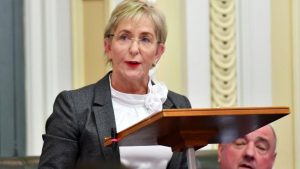
LNP politician Ros Bates believes those complaining about fake domestic violence orders are just angry, jilted men.

Sexist LNP politician Ros Bates blames the victims of fake domestic violence orders. Picture: (AAP Image/Darren England)

Recent outbursts by female Queensland MPs about domestic ­violence orders highlights a disturbing idea that men should just shut up.

The statements by the LNP’s Ros Bates and the ALP’s Shannon Fentiman were disturbing because of their gross generalisations and also because of their factual inaccuracy, which showed shameful ignorance and a disconnect from the real world.

They also highlighted a severe ­social imbalance that’s becoming more prevalent, because if a man said the same things about women, it would feature on every talk show and social media feed in the world.

Ms Bates unleashed a bile-laced ­tirade in response to a One Nation policy that would grant provisions for parents under domestic violence orders (DVO) to still see their children while the courts processed the matter.

This policy is designed to counter cases of untrue claims of domestic violence that are used to gain an unfair advantage in child custody hearings.

Bates said One Nation had been “brainwashed by a few jilted men caught up in custody battles”.

She was focusing on the relatively extreme rhetoric and actions of the Brotherhood of Fathers, but if she had bothered to take even the most cursory glance at ­online men’s help forums, Facebook pages and hard statistics, she’d realise that frivolous DVOs are far more than just “jilted men” whingeing.

According to the Australian ­Bureau of Statistics, about 26 per cent of DVOs issued in NSW were either withdrawn or successfully defended in 2015-16.

There is also this statement by ­retired Family Court judge Justice David Collier: “I’m satisfied that a number of people who have appeared before me have known that it (filing a frivolous DVO) is one of the ways of completely shutting husbands out of the child’s life. It’s a horrible weapon.’’

Then we have a survey of Queensland magistrates in 2015 that showed 74 per cent believed restraining ­orders were “often” used for tactical purposes. In NSW, this number soared to 90 per cent of magistrates.

A submission to the Australian Government in December 2016 by the Parents Beyond Breakup support group stated: “It is not uncommon that mothers who come to us for ­support will inform us that they were advised to make such claims in order to gain strategic advantage …”

Director of Australian advocacy group Dads In Distress, Peter ­Nicholls, said frivolous intervention orders were “extremely common”.

“Once an order is issued, it can take six months to two or three years for a court to throw it out and in that time, fathers are prevented from seeing their kids,” he said.

The other major issue is fathers being pressured to make “consent without admissions” to false claims, something One Nation wants scrapped when children are involved.

“We speak to many men who say they have been advised by police and legal sources to sign these ‘consent without admissions’ forms because they won’t affect any court proceedings and will expedite the process. But it is detrimental,” said Mr Nicholls.

“The solution can be seen in some states in America and in the UK where police have to make an assessment of both parties before issuing ­orders, rather than applying a blanket approach.”

Queensland Family Violence ­Prevention Minister Shannon ­Fentiman also piled into One Nation.

But rather than saying the law should assume all estranged fathers and husbands are violent, perhaps she would be better off dealing with the record 25,678 people who breached protection orders under her watch in the past year.

Domestic violence groups say proof is required for intervention ­orders to be issued but Augusto Zimmermann, a commissioner with the Law Reform Commission of Western Australia, wrote last year: “… data from the Western Australia Police ­indicates that domestic violence incidents … classified as ‘crime’ accounted for only 40 per cent of all domestic ­violence restraining orders in 2012.

“For instance, official illustrations on domestic violence now include such abstract considerations as ‘extreme jealousy’, ‘constant criticising’ and ‘ignoring the victim’s rights’.”

The biggest problem with the ­attack on One Nation is that Bates and Fentiman have basically shut down the debate.

According to them, we can’t even discuss the issue of fake intervention orders and anyone who does is just a jilted, angry loser.

The examples described above prove we do need to have the conversation and not be lectured to by nasty, ­virtue-signalling politicians.

NSW assisted dying bill ‘unsafe’, warn Palliative care experts

NSW Voluntary Assisted Dying Bill 2017Palliative care professionals have presented a united front against proposed voluntary assisted dying legislation on the eve of debate in the NSW Parliament, declaring the bill “cannot be made safe”.

The NSW upper house is set to debate laws that would make it legal for terminally ill NSW residents aged 25 or over and expected to die within 12 months to end their own life with medical assistance.

It includes safeguards such the decision must be signed off by two medical practitioners, including a specialist, and the patient assessed by an independent psychiatrist or psychologist.

On Wednesday a group of doctors and nurses involved in palliative care outlined their strong opposition to the proposed law during a media conference at Parliament House.

The objections ranged from the risk that should the bill pass there was no guarantee eligibility would not be later expanded to the safeguards being “a bandaid on the danger of the situation”.

Palliative care specialist Dr Frank Brennan said “too often the debate is characterised as a simple choice between suffering and choosing physician assisted suicide or euthanasia”.

He said the choice was “a false one” that ignores “the enormous advances” had been made in the area of treating human suffering.

Dr Frank Brennan says his experience is that patients experience “the ebb and flow of feelings” and that “people change their mind”.

“A day of anguish may be followed by a day of calm,” he said.

“To proceed with physician assisted suicide or euthanasia in a period of despair ignores this ebb and flow”.

A common theme was the need to improve palliative care services and access to them.

Dr Alan Oloffs from Nepean-Blue Mountains local area health district, highlighted a recent auditor-general’s report that identified “significant gaps in provision” especially in rural and remote areas.

The clinical director of palliative medicine at Royal Prince Alfred Hospital, Dr Maria Cigolini, said the group believed the proposed legislation is “not safe and we believe it cannot be made safe”.

Asked why a terminally ill person should not be given the choice of how they die, Dr Maria Cigolini argued the “majority of people who have the desire to die” are depressed, feel they are a burden to others or are unsupported.

“When those people are managed appropriately and are … sent to the right services … particularly palliative care and mental health services, that desire to die changes dramatically,” he said.

However, advocates argue the bill – devised by a cross-party working group of MPs – contains the tightest eligibility criteria in the world.

Related Family Law Judgments

Surrogate Birth Mother banned from child’s life for Blackmailing Biological Parents

A couple desperate for a baby turned to a surrogate for help. What happened next ended with a mother erased from her son’s life forever.

court-gavel

A surrogate mother has been stripped of her parental rights after the baby boy’s biological parents won a court battle to erase her from the child’s life.

The Queensland woman, 32, wanted to spend increasing amounts of time with the boy, amid a bitter and messy feud with the biological parents, one of whom is a relative.

The relationship between the two parties broke down during the pregnancy to such an extent the biological parents believed their unborn baby was being “held hostage” by the surrogate who was “using the baby to extort money”.

It even escalated to the woman threatening to have the child aborted.

Court documents revealed the birth mother instructed a lawyer to write to the couple that “implicitly threatened on behalf of the birth mother that she would neither hand over the child to the genetic parents after it was born, nor consent to a parenting order being made in their favour” and “sooner the better” start speaking to her “kindly”. The legal threat was made just two weeks before the baby was born in April last year.

The matter went to trial in the Family Court in February. In a recent judgment, Justice Peter Tree ruled in favour of the biological parents as having “equal shared parental responsibility” for making decisions about major long-term issues regarding the child” and be “solely responsible for [his] daily care, welfare and development”.

The birth mother was also forced to change the child’s name on the birth certificate.

Under the Family Law Act, the birth mother had shared parental responsibility with the biological father — but Justice Tree said that was not in the child’s interest.

“However I am satisfied that it would not be in the best interests of the child for the birth mother to have any parental responsibility for him, because no parties’ proposal would see the child ever live with her, and to allow her input into decision making would be unworkable, because of the intractable hostility between the genetic parents and the birth mother, which seems insoluble and likely permanent,” he said in the judgment.

He slapped down the birth mother’s attempt at some involvement in the child’s life, saying it was a matter entirely for the parents.

“The child shall spend no time with the [birth mother] save and except as may be determined by the Applicants at their sole discretion.”

Exposing the child to the hostility between the adults was a “recipe for disaster”.

THE AGREEMENT

The biological mother and father, who are aged 44 and 40 respectively, invited the birth mother to their home for dinner in early 2015. It was at this dinner that they told her about their struggle to have a child and asked her to consider becoming a surrogate.

They had been unable to conceive and the mother had then battled breast cancer, which left her unable to carry a child.

When the relative agreed, they drew up a surrogacy agreement that included a paragraph that said: “The birth mother intends to carry the embryo to term and following the birth of the child to hand the child to the intended parents so that they may bring up the child as their own child.”

It went on: “The intended parents intend, following the birth of the child, to make an application for a Parentage Order as provided by the Surrogacy Act 2010.”

Also part of the agreement was that the biological parents would pay the birth mother’s costs. It noted, however, that she had the right to manage her pregnancy and the birth.

Much of the dispute between them that followed was about money — the birth mother claimed the couple were late with payments and some didn’t arrive at all.

Another source of conflict was a perception by the birth mother of disinterest from the couple, who she accused of disengaging with her. But Justice Tree said that illustrated a “lack of insight into the sensitivities of the genetic parents based upon their past experiences, and the genetic mother’s personality”.

‘THE BIRTH MOTHER’S THREATS WERE FAR FROM IDLE’

In his judgment, Justice Tree said that in hindsight the personalities and expectations of the biological mother — who admitted she was “a control freak” — and the birth mother were not compatible.

But also an issue was the “divergent expectations” as to the level of payment the birth mother would receive during the pregnancy.

“Indeed this seems to have been manifest from a very early stage. For instance, although she had only been successfully implanted with the embryo on 3 August 2015, as early as 12 August, the birth mother was complaining to her psychologist that the genetic parents were “not treating her like other intended parents. Other surrogates are showered with gifts.”

It emerged during the Family Court trial the birth mother told her counsellor she was regretting the pregnancy and was thinking “of using a coat hanger to induce abortion”.

She told the counsellor if the genetic parents didn’t start treating her well “then they are in for a shock”, the trial heard.

The psychologist’s notes tendered at the trial revealed the biological father felt [the birth mother] was “holding their baby hostage”.

Then in February 2016, weeks before the birth, the birth mother decided to break of all contact with the couple. Within two months her solicitor wrote a detailed legal letter in which they:

  • emphasised the need to make timely payments to the birth mother;
  • suggested that “it will also be helpful if [the genetic mother] could, with full humility, speak kindly to our client, the sooner the better; and
  • implicitly threatened on behalf of the birth mother that she would neither hand over the child to the genetic parents after it was born, nor consent to a parenting order being made in their favour.

The letter noted costs incurred to that point by the genetic parents were about $20,000 — but he normally advised his clients to budget for a sum of $60,000.

Justice Tree said: “The birth mother’s threats were far from idle. Towards the end of the pregnancy she was in advanced negotiations with an adoption agency, whose representative travelled to be at the hospital around the time of the birth, to take delivery of the child if he was relinquished [by her].”

The birth mother gave an extraordinary interview to the ABC’s 7.30 program in the days before the birth in which she claimed the couple hadn’t paid her properly.

“They asked me to give them a baby. I’ve got the baby. They were supposed to pay my expenses and they’re refusing. They’re holding me to ransom. They’re blackmailing me.

She went on to say: “I’m gonna let her have him for a little bit, see what it’s like … I’m gonna take him from her arms. And I’m gonna say: ‘You pay my money or you don’t see your son ever again.’”

Asked if she was holding them to ransom, she said: “I have every right. It’s a business deal, isn’t it? It’s not a friendship.”

‘DISGUSTING BEHAVIOUR’: AFTER THE BIRTH

After the baby was born in April 2016, he was taken to the biological parents and stayed with them in a room at the hospital with them. But early the next day the birth mother met with the adoption agency, and by late that afternoon she requested the boy be returned to her and “negotiations” began as to whether the birth mother intended to pass the child back to the genetic parents.

On April 15, after spending a few minutes with the child, the child was discharged into the care of the genetic parents where he has remained since. But the legal battle was only just beginning.

The judgment said the birth mother’s solicitors sought payment of a further $21,351.59 “to move the matter to a parentage order” in August 2016.

Part of the payments she was demanding were to meet the costs of ongoing counselling. The payments she said she was owed were paid into her lawyer’s trust account after the birth.

“It appears as though at about that time the birth mother was reminding the genetic parents that she was still legally the baby’s mother, and was wanting to know details of his progress.”

A surrogacy guidance report compiled that month recorded how bad the relations between the parties had gotten and their poor views of each other.

The birth mother told the report writer “even now I want to have [the child] back and put him up for adoption. [The genetic parents’] behaviour has been really disgusting.”

She later texted the writer and said she was “seeking shared custody of my legal son” with the intent to put him up for adoption, and gave evidence at trial her fears the genetic mother was “suicidal and homicidal”.

In arriving at his decision, Justice Tree said he was concerned about the erratic changes in what the birth mother wanted to do with the child.

“However, the fundamental difficulty which this case presents is that, so long as there is a substantial prospect that the child will be exposed to adult conflict and hostility by virtue of having a relationship with the birth mother, any benefits that might ensue from that relationship would be vastly outweighed. Sadly, I am well satisfied that the birth mother remains angry, hostile, offended and desirous of punishing the genetic parents.

“I share [psychologists] concerns that the birth mother may be using the child to punish his biological parents, in that she is using her legal rights in a way which she knows is deeply upsetting and potentially harmful to them. I accept the submissions of the genetic parents that the birth mother ‘is locked on a revenge path’.”

Voluntary euthanasia in Victoria a step closer

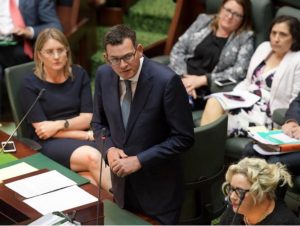
Victorian Premier Daniel Andrews addresses parliament. Picture: AAP/Tracey Nearmy

Victorian Premier Daniel Andrews addresses parliament. Picture: AAP/Tracey Nearmy

Voluntary euthanasia is a step closer to reality in Victoria after Deputy Premier James Merlino’s bid to derail proposed state laws last night in the Victorian Parliament failed.

The Bill, which would allow terminally ill Victorians to apply for lethal medication in the last year of their lives, now appears set to pass the Legislative Assembly late today or on Friday.

There is likely to be a debate on amendments to the substance of the bill today, including whether to reduce the time frame in which patients could access deadly drugs from a year to six months.

The bill would then need to pass the Legislative Council next month to become law.

Late last night, Mr Merlino — a vocal euthanasia opponent — moved to put the bill on hold indefinitely because of concerns about patient safeguards and other issues.

But his reasoned amendment was defeated 47 votes to 39.

Several Labor MPs voted in favour of the amendment with most coalition MPs, while 5 Liberal MPs, two Greens and two independents voted with most of Labor’s MPs against it.

Advocates and opponents of the scheme filled the public gallery at 11:30pm last night as the results of the crucial vote were declared.

Late yesterday Premier Daniel Andrews caved in to Mr Merlino’s push for an ALP conscience vote on his amendment, despite previously arguing it should be a procedural matter.

Health Minister Jill Hennessy said last night there had been sincerity in the comprehensive debate so far, and that politicians have expressed “vulnerability” in making their choice.

“These debates can bring out the best in politicians,” she said.

Earlier in the day Police Minister Lisa Neville opened up about her ­terminally ill mother’s last days being unable to eat or hold her head up, as emotional MPs continued to debate ­euthanasia laws.

Several have revealed painful experiences, including Nationals MP Danny O’Brien who spoke on the death of his twin baby boys in 2008.

But the personal outpourings were punctured by Australian Medical Association president Michael Gannon taking aim at creating a voluntary assisted-death scheme because a “few powerful people see (a) parent die”.

Ms Neville said it was ­“almost impossible” to ignore personal experiences, as she described her mother’s breast cancer ordeal that had left her unable to “speak, eat, drink, swallow, hold her head up” ­before she died.

On Tuesday, Premier Daniel Andrews had choked back tears as he spoke about his ­father’s last days in palliative care before dying of cancer.

Mr Gannon stood by his tweet yesterday, but the AMA’s Victorian branch said it “apologises to the Premier of Victoria, Victoria’s Minister for Health, AMA members and others who have lost a parent”.

Health Minister Jill Hennessy recently lost her mother, Joan, after a long battle with multiple sclerosis.

Related Family Law Judgments

Fred Nile gives renewed push to Zoe’s law to criminalise harm to a fetus

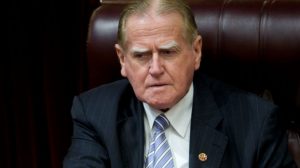
Christian Democratic Party leader Fred Nile. Photo: Jon Reid

Christian Democratic Party leader Fred Nile. Photo: Jon Reid

Cabinet is set to consider upper house MP Fred Nile’s renewed push to criminalise harming or killing a  fetus.

Reverend Nile reintroduced his controversial bill, known as “Zoe’s law”, to Parliament on Thursday.

The bill would amend the Crimes Act to make it a crime to harm or destroy a child in utero.

Its opponents have said the bill is a stalking horse to restrict women’s abortion rights.

Mr Nile has rejected this, and said the wording of his bill explicitly exempts medical procedures, including terminations or abortions.

Abortion remains a crime in NSW.

Mr Nile told Fairfax Media his opponents were misleading in suggesting it was an “anti-abortion bill”, saying it was intended to help mothers who lost their unborn babies in car accidents or domestic violence incidents.

Mr Nile, who leads the Christian Democratic Party, has introduced separate bills seeking restrictions and other new rules around abortions.

A spokeswoman from the Premier’s office said the bill would be considered by Cabinet and the party room in line with usual procedure. The government may then elect to bring the matter to a vote.

Mr Nile was hopeful the new membership of the upper house since the 2015 election would give him the support to get the bill through in a vote.

Zoe’s law passed the lower house in a conscience vote in 2014, but Mr Nile withdrew it ahead of a vote in the upper house, where it faced defeat.

It is known as “Zoe’s law” after NSW woman Brodie Donegan lost her unborn daughter Zoe after she was hit by a drugged driver on Christmas Day 2009, when she was 32 weeks pregnant.

At the time, the law was criticised by the NSW Bar Association and the Australian Medical Association for potentially conflicting with abortion laws by giving legal personhood to a fetus.

The resurrection of the bill provoked an angry response from Labor and the Greens, who have introduced their own bill to decriminalise abortion in NSW.

“Defining a fetus as a ‘child in utero’ would be a fundamental change to the law, establishing the fetus as a separate legal identity to that of the mother,” said Greens MLC Mehreen Fahruqi.

“This has wide-reaching implications, including serious ramifications for a woman’s right to choose.

“Fred Nile says there is an exemption for medical procedures, but this does not provide any legally meaningful safeguard against the overarching conceptual change represented by the bill. Since the legal status of abortion as a medical procedure is ambiguous while it remains in the Crimes Act, this bill will further endanger access to abortions.

“Premier Gladys Berejiklian and the Women’s Minister Tanya Davies should outright oppose this bill.”

On her first day in the job in January, Ms Davies confirmed that she personally opposed abortion but Ms Berejiklian, who has supported abortion rights, said that there was no pending change to Liberal Policy.

Labor’s Penny Sharpe said: “This is an unwelcome move from Fred Nile, the previous LC [legislative council] saw fit to reject this bill and I hope that they will do so again if he brings it forward.”

Backyard Euthanasia: the shocking cases that could change the law

euthenasia-right-to-dieBarbara Collins was waiting in the kitchen when her husband of 50 years walked out into the backyard and shot himself.

He had woken her that morning, a mild summer day at their home in Raymond Island in the Gippsland Lakes. They had sat together in the living room and said their final goodbyes.

When it was time, he hobbled outside on his crutches and collected his gun, locked away in the safe stored in the garden shed.

Robin Collins’ body would lie on a patch of grass, near the Hills Hoist, for about 30 minutes before the police arrived.

Later, forensic cleaners would do their best to wash away all evidence of the shooting. But there was a piece of grass where his blood and other body matter remained, so they cut it away. For months, Barbara had to water the newly sown piece of lawn.

That final morning, Barbara had stayed inside the house, as Robin had requested. However, when she called triple zero, they asked her if she could look into the backyard to see if her husband was moving.

The sight of him lying in the grass continues to play over her mind, but as she said last week: “When the police arrived, sirens blazing, all I could think was: ‘He’s not suffering anymore’.”

There’s a palpable anguish that comes with knowing someone you love has lost their will to live; that the fear of dying a painful death riddled with disease has overtaken their desire to keep going.

As a father, husband, and engineer, Robin had always been stoic and determined. Other men might be handy with their tools, he forged his own out of iron. He built boats, and was a champion sailor. He built a plane, and he and Barbara flew around Australia.

He was also not one to talk about pain. So when he got sick with myelofibrosis, a form of blood cancer, his family could only helplessly observe his decline. His daughter Amanda Collins knew that her father was likely to shoot himself. She just didn’t know when.

“My dad was always a law abiding man. He owned guns and taught us to use and to store them responsibly,” Amanda said.

“He refused to implicate any of us in his death, especially my mum. But he knew that he couldn’t tolerate any more days of utter misery.

“So my darling dad was alone at the most terrifying moment of his life. To this day I don’t know how he had the courage to do it.”

Robin Collins’ story is emblematic of an unavoidable reality: that many terminally ill Victorians are choosing to end their lives, rather than endure the intolerable suffering they expect to face in its final stages.

Sometimes that death is aided and assisted: the growing number of people who have sought advice on how to illegally obtain barbiturates over the internet; the doctors who covertly adhere to their patients’ request for terminal sedation or a lethal dose of drugs to hasten their death.

And in recent years, there’s been an emerging trend of people inhaling a certain chemical that has traditionally been used for home brewing, but is now marketed as a deadly gas by a company affiliated with pro-euthanasia group Exit International.

But far too often, that death is solitary and violent. Figures from the Victorian Coroners Court suggest that 240 people who experienced “irreversible decline” in their physical health took their own life between 2009 and 2013.

There was the 90-year-old man who had lived his life as though it was a gift, but killed himself with a household tool after the melanoma spread to his brain.

There was the 59-year-old cancer patient who underwent 22 cycles of treatment, but was later found by a motorist under a bridge on a major Victorian freeway.

And there was the 82-year-old woman with a long medical history of hypertension, insomnia, arthritis, and gastro-oesophageal reflux disease, who bled to death. She had lost her eyesight – and with it, her ability to read books, which had always been her joy.

Fairfax Media has chosen not to include some of the raw details of the Coroner’s evidence, much of which was so shocking it profoundly shaped the parliamentary inquiry that would ultimately form the basis of Victoria’s euthanasia reforms.

Coroner Caitlin English told the inquiry at the time: “These are people who are suffering from irreversible physical terminal decline or disease, and they are taking their lives in desperate, determined and violent ways.”

With Parliament on the cusp of debating the country’s first state government-sponsored assisted dying bill, advocates for reform hope the laws will result in fewer people choosing to die in such harrowing circumstances.

Instead of turning to “backyard euthanasia”, terminally ill Victorians will have access to physician-assisted death in strictly defined circumstances, giving them the chance to die in peace, at a time of their choosing, in the company of their loved ones.

Some might not go through with it in the end: since the Dying With Dignity Act was passed in Oregon 20 years ago, 1749 people have had prescriptions written under the law, but only 1127 patients had died from taking the medication. Proponents believe that simply having the choice will make all the difference.

“The evidence overseas is that many people that apply may not end up using the assisted dying to end their life, but it is the assurance that it brings them – with how to get through today, and how to get through tomorrow and how on earth to get through the day thereafter,” said Health Minister Jill Hennessy.

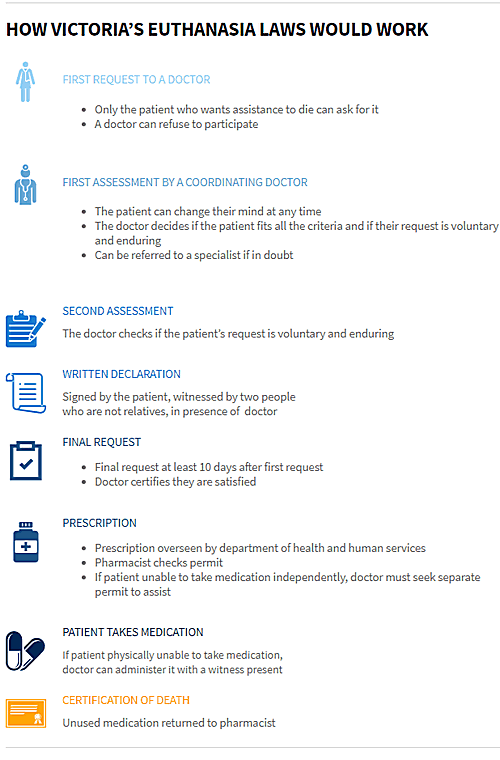
Under legislation to be debated this month, adults who are terminally ill, have no more than 12 months to live, and still have decision-making capacity will be eligible for a lethal pill – most likely to be a newly created concoction of drugs already approved by the Therapeutic Goods Administration.

In order to qualify, a patient must be a permanent resident of Victoria, must make three requests (two verbal, one written) and must obtain approval by two doctors, including one who specialises in their illness.

With 68 safeguards enshrined in the bill, Premier Daniel Andrews insists the reforms would be the “most conservative” in the world. But not everyone is convinced.

Some do not wish to see assisted dying legalised at all. Others who support it warn against creating a new pill through a “cocktail” of TGA-approved drugs, and have instead urged the government to use Nembutal, a fast-acting barbiturate that has been used in other countries for years. And some say the legislation is so heavily safeguarded that few people will qualify, forcing them to find other options.

Take the Coroner’s findings as a case in point. Of the recorded suicides involving people in “irreversible decline” due to disease, about half were diagnosed with cancer. Depending on how long they had to live, many of those people could have been eligible for an assisted death under the proposed Victorian regime.

But the other half ranged from patients with multiple sclerosis, prostate issues, lumbar spinal osteoarthritis and so on – conditions that can diminish one’s quality of life, but would not necessarily meet the criteria for assisted dying under the government’s model.

Controversial euthanasia advocate Dr Philip Nitschke argues the reforms are so onerous that he expects there will still be a “strong and growing demand” to illegally access euthanasia drugs over the internet, where 25 grams of Nembutal can be sourced for about $700 from places such as China or South America.

In a sign of that demand, Australian Federal Police data reveals approximately 10.4 kilograms of Nembutal has been seized by authorities since 2013. But as Nitschke knows only too well, plenty more slips through the cracks.

For years, Nitschke’s group Exit International has been holding workshops advising mostly elderly people about end-of-life matters: from how to buy the drugs online using bitcoins and encrypted emails, to the prevalence of certain deadly gases. The last 10 workshops held across Australia between August and September attracted about 1500 people, he says, “and many of them already had their drugs”.

“The average age [of participants] was about 75 years old – they’re basically people who want to know what their choices are, and more particularly how they can hold of all the best drugs,” Nitschke told Fairfax Media from Amsterdam this week. “That’s a common question: how do I obtain these drugs and keep them just in case? They want to know they’ve got the safety net in place.”

Melbourne urologist Rodney Syme, who has been advocating for assisted dying for decades, takes a somewhat different approach. Syme estimates he’s counselled about 1800 people about end-of-life matters, and now receives “about three to four approaches a week” for advice.

Like Nitschke, he is concerned that many people won’t qualify for an assisted death under the Victorian model, but adds: “You have to start somewhere.”

What’s more, he argues, passing the bill will lead to much broader discussions between doctors and patients about the end of life – the kind of conversations that are currently limited because of uncertainty in the law.

While the Crimes Act stipulates that suicide is not a crime, doctors or family members involved in killing or helping to kill someone with a terminal illness are at risk of being charged with murder (maximum penalty life imprisonment) or aiding and abetting someone to suicide (maximum penalty five years’ imprisonment).

However, prosecutions are rare: between 1992 and 2013, 10 people were charged with offences related to assisted dying, including five cases of attempted murder, but none received jail terms.
how-victorias-euthanasia-would-work-min
Victorian cases relating to assisted dying

For example, in 2013, Heinz Karl Klinkermann was convicted of the attempted murder of his then 84-year-old wife, Beryl, who was suffering advanced Parkinson’s disease and dementia, and could no longer communicate.

After researching suicide on the internet, he gave her a sleeping pill and took several himself before he laid down holding her hand and they were poisoned with carbon monoxide. They were later discovered by a district nurse.

An intervention order was later taken out preventing Klinkermann seeing his wife in palliative care. In sentencing him, Supreme Court Justice Betty King said it was clear he adored his wife, and this restriction was “in some ways the worst punishment that could be made”.

The legal uncertainty is also problematic for the medical profession, where voluntary euthanasia sometimes takes place, albeit covertly.

Long-term palliative care nurse Lynette Dickens – who is opposed to assisted dying – said she often hastened people’s deaths, in the process of giving them drugs to relieve their pain.

“I can honestly say I have never intentionally murdered anybody, but I have certainly made a lot of people comfortable so they die peacefully,” she said. “It’s a bit of a joke really. We all know that it goes on, but no one admits to it.”

But while doctors can invoke the “doctrine of double effect” as a defence – which generally accepts that whatever treatment is needed to alleviate suffering is permissible, even if the outcome happens to be death – concerns remain.

Syme says the government’s bill will lead to much greater clarity in the law – and much-needed choice for patients.

“Most doctors run a mile before they engage in an honest, open discussion with all the cards on the table – because if you don’t have the opportunity to provide assisted dying, all the cards aren’t on the table,” he said.

“The great thing this legislation will do is open the gates to broad discussion between doctors and patients about the end of life, and as a result, many of those people who might otherwise end their lives as the Coroner has described will not do so.”

Rob also wonders what might have been had assisted dying been legal on February 27, 2014, when her father Robin, 73, took his life.

On the death certificate issued after her father’s death, it says Robin died of a gunshot wound. In reality, he was also “several excruciating weeks” away from dying, Amanda said.

His spleen had gotten so big he couldn’t breathe, sit or lie comfortably and his stomach was also compressed, which meant he could not take in much food.

“So he was basically going to just starve,” Amanda said. “The only thing he would say was ‘If I was a dog, you wouldn’t let me suffer like this’.”

Amanda believes her father would have sought and been granted access to euthanasia drugs if they were legal at the time of his death.

Significantly, she also feels that had her father had access to lethal medication, he might have never killed himself, but died in a hospice surrounded by his loved ones, knowing he could say goodbye at a time of his choosing.

“He would have been grateful for the gift of a dignified end, rather for the nightmare he left for my family.”

Victorian cases relating to assisted dying

R v Hollinrake, 1992
Charge Attempted murder
Maximum penalty 25 years’ jail
Actual penalty 3-year good behaviour bond. Jean Hollinrake had long expressed horror at the thought of becoming impaired and losing control of her senses. When she suffered a debilitating stroke, her husband of 51 years, who had suffered health issues himself in the preceding decade, set about honouring a pledge to her and unsuccessfully tried to end both their lives. Justice Coldrey said that, in such “truly tragic” circumstances, justice may be “tempered with mercy”. “I cannot accept that the community would want a sentence involving retribution in the circumstances of this case.””DPP v Riordan, 1998
Charge Attempted murder
Maximum penalty 25 years’ jail
Actual penalty 3-year good behaviour bond. Riordan tried to kill himself and his wife, who was suffering from advanced Alzheimer’s. Justice Cummins stated: “Mr Riordan is a decent, compassionate and selfless man who was totally devoted to his wife. He spent his life working hard and caring for his family … Ultimately … he sought to take his wife’s life to relieve her of the terrible suffering and indignity she had been undergoing for years and which he daily saw.”

R v Marden, 2000
Charge Manslaughter by suicide pact
Maximum penalty 10 years’ jail
Actual penalty 2-year suspended sentence. Robert Marden tried to kill himself and his wife of 48 years, Joan, who was suffering from rheumatoid arthritis, was unable to dress herself and was in constant pain despite medication. Several times she had expressed a wish to die. Mr Marden had undergone surgery to have a pacemaker implanted but was later diagnosed with lung cancer and depression. The couple decided to die together. Joan died but Robert’s pacemaker kept him alive. The judge accepted a statement from their son that “he did what he did to my mother out of the uncompromising love and devotion he had for her”.

R v Hood, 2002 
Charge Aiding and abetting suicide
Maximum penalty 5 years’ jail
Actual penalty 18-month suspended sentence. Daryl Colley believed that he had a terminal illness and wanted to take his own life. A friend who had tried to talk him out of it eventually agreed to be present as he consumed drugs and alcohol. Justice Coldrey said, “The degree of moral blame attributable to a person who assists or encourages an act of suicide may vary greatly from case to case. At one end of the spectrum may be placed a person who assists or encourages a person to commit suicide in order to inherit property or for some other ulterior motive; at the other end there is the individual who supplies potentially lethal medication to a terminally ill person, perhaps a loved one who is in extreme pain and who wishes to end that suffering at the earliest possible opportunity. I regard your case as being some way towards the latter end of this spectrum.”

R v Maxwell, 2003
Charge Aiding and abetting suicide
Maximum penalty 5 years’ jail
Actual penalty 18-month suspended sentence. Mrs Maxwell had terminal cancer. Her husband had tried to dissuade her from taking her own life several times and had looked for herbal remedies for her without success. She decided that she wanted to die using a method she read about but she needed her husband’s help to carry out the method. In sentencing Maxwell, Justice Coldrey said: “I do not believe that thoughtful members of the community, knowing all the facts relating to you personally and the unique circumstances of this tragic case, would regard your immediate imprisonment as necessary. In my view, this is a case where justice may be tempered with mercy.””

DPP v Karaca, 2007
Charge Attempted murder
Maximum penalty 25 years’ jail
Actual penalty 3-year suspended sentence. A man suffering repeated bouts of depression convinced his two housemates to accompany him when he set about ending his life. He had requested that, if he was unsuccessful, his friends should hit him to kill him. One of the men struck him twice. The judge took into account multiple mitigating factors and said the housemates had been manipulated to assist the man in his plans for suicide.

DPP v Rolfe, 2008
Charge Manslaughter by suicide pact
Maximum penalty 10 years’ jail
Actual penalty 2-year suspended sentence. Janetta Rolfe had vascular dementia, needed help to walk and could no longer communicate. Her husband of 55 years, Bernard, worried that she would go into respite care and that they would be separated. He suffered extreme anxiety and depression. He promised her that she would not end up in a home. When police found the couple at home, Janetta had died but paramedics resuscitated Bernard. In sentencing him, the judge said, “Your actions do not warrant denunciation; you should not be punished; there is no need to deter you from future offences; and you do not require reformation.”

DPP v Nestorowycz, 2008
Charge Attempted murder
Maximum penalty 25 years’ jail
Actual penalty 2 years and 9 months suspended sentence. Mrs Nestorowycz tried to kill herself and her husband who was suffering from dementia and diabetes and living in a nursing home. She was found to have been suffering from a major depressive disorder at the time and said to have had reduced capacity to make appropriate decisions.

Victor Rijn, 2011
Charge Inciting suicide
Maximum penalty 5 years’ jail
Actual penalty 3-year good behaviour bond. Inger Rijn developed chronic pain from a tendon tear in her hip that resisted medication and other alternative therapies. She died alone at home using aids that her husband, Victor, had bought online from a voluntary euthanasia group. He had told his defence barrister, “You come to a point where you don’t want to lose your wife who you love but you also don’t want to see her suffer as much as she was.” A magistrate said there was little doubt Inger Rijn’s decision to end her life was her own, made with a sound mind. He said Victor Rijn was a decent man whose moral culpability was at the lower end.

R v Klinkerman, 2013
Charge Attempted murder
Maximum penalty 25 years’ jail
Actual penalty 18-month community corrections order (was also prevented from seeing his wife). After researching suicide on the internet, Heinz Karl Klinkermann attempted to kill himself and his wife, Beryl, who had advanced Parkinson’s disease and dementia. Klinkermann gave his wife a sleeping pill and took several himself before they laid down together holding hands and were poisoned with carbon monoxide. They were later discovered by a visiting nurse.
Major Family Law Review Announced

Family court buildingA wide-ranging inquiry into the strained family law system will be launched — the first since the Federal Government passed legislation establishing a national Family Court in 1976.
The review has already been greeted with cautious optimism from those on the front line of helping Australia’s victims of family violence, but Federal Labor is warning there is a need for urgent action.

The family law system has been criticised for being painstakingly slow and prohibitively expensive, putting undue pressure on those hoping the Family Court and its other services can resolve some of the most emotional legal disputes.

There has also been concern the rights of victims and children are being overlooked by a system strained by demand.

Federal Attorney-General George Brandis described the review, to be run by the Australian Law Reform Commission (ALRC), as “necessary and long overdue”.

“These include ensuring the family law system prioritises the best interests of children, best addresses family violence and child abuse, and supports families, including those with complex needs, to resolve their family law disputes quickly and safely while minimising the financial burden.”

Advocates ‘hope cost-cutting won’t dominate review’

Some of the changes being demanded by victims’ rights advocates include stopping alleged perpetrators of family violence being able to question their victims in court proceedings, and more funding for support services.

“We are heartened to see the terms of reference reflect serious issues we see in our work at the family courts — including safety concerns, family violence and protection of vulnerable witnesses,” Women’s Legal Services Victoria acting chief executive Helen Matthews told ABC News.

“We hope that cost-cuttings do not dominate the review, but rather that access to justice and the safety of women and children in the family law system are prioritised.”

The Law Council of Australia welcomed the review, but warned inadequate funding was always a major problem.

“Those on the front line of our family law system have been sounding the alarms for years,” president Fiona McLeod said.

“The current lack of resources has meant that families facing the most serious family law issues are waiting for up to three years or more before a final trial.”

The review will be run by Melbourne Law School Professor Helen Rhoades, and is due to report back by the end of March 2019.

System should be immediately improved, Opposition says

Shadow attorney-general Mark Dreyfus argued there were many things that could be done to immediately improve the system — including filling vacancies on the Family Court bench — that should not wait until that deadline.

“He needs to, just for starters, to appoint a replacement for the retiring Chief Justice of the Family Court of Australia.”

But Mr Dreyfus was hopeful the ALRC would make some wide-ranging recommendations.

“There are some longstanding issues about how the court goes about dealing with, for example, custody matters, and I’m looking forward to this systemic inquiry,” he said.

In the 2017 Budget, the Government earmarked around $80 million for the family law system.

Key crossbench senator Pauline Hanson has spent her time back in the political spotlight calling for changes to the family system, including abolishing the Family Court altogether.

Senator Hanson first raised her concerns during her original foray in federal politics back in 1996.

Chronology of same-sex marriage bills introduced into the federal parliament

bills-in-parliamentThe introduction of legislation on same-sex marriage has continued in the current (45th) Parliament. Since September 2016 four same-sex marriage bills have been introduced into the federal parliament, while six bills were introduced into the previous (44th) Parliament.

Since the 2004 amendment to the Marriage Act 1961 (Cth) which inserted the current definition of marriage, 22 bills dealing with same-sex marriage or the recognition of overseas same-sex marriages have been introduced into the federal Parliament. Four bills have come to a vote: three in the Senate (in 2010, 2012 and 2013), and one in the House of Representatives (in 2012). These bills were all defeated at the second reading stage; consequently no bill has been debated by the second chamber. To date, the bills have been introduced by members of parliament representing the Australian Democrats, Australian Greens, Australian Labor Party, Liberal Democratic Party, Liberal Party of Australia and by Independents.

A bill introduced into the House of Representatives in August 2015 was the first cross-party same-sex marriage bill introduced into the Parliament.

This Quick Guide provides a chronological list of bills relating to marriage equality introduced into the federal parliament, including bills restored to the Notice Paper or reintroduced in a later parliament. The information on each bill includes:

  • whether or not a conscience vote was granted by the major parties (Note: Australian Greens policy is to support marriage equality, and the Australian Democrats had previously adopted a similar policy)
  • links to each bill homepage and, where available, the bills digest and committee reports
  • links to parliamentary speeches and answers to parliamentary questions
  • type of bill: government or private
  • changes in party policy
  • comments by party leaders and other members of parliament where relevant
  • status of the bill: current, defeated or lapsed and
  • results of divisions in the Senate and House of Representatives.

The list also includes one government bill: the Marriage Amendment Bill 2004 which inserted the definition of marriage as the ‘union between a man and a woman’.

The list does not include the following plebiscite bills (in which no party was granted a conscience vote):

  • the Marriage Equality Plebiscite Bill 2015 was introduced in the Senate on 19 August 2015. The previous week, the leader of the Australian Greens, Senator Richard Di Natale, had announced that the Greens and other members of the Senate crossbench would ‘put forward a bill to ensure a fair question on marriage equality is put to the people no later than the next election’. The Bill lapsed at the prorogation of the 44th Parliament.
  • the Plebiscite (Same-Sex) Marriage) Bill 2016 was introduced by the Prime Minister, Malcolm Turnbull, in the House of Representatives on 14 September 2016. The Bill fulfilled a Liberal Party election promise and sought to establish the legislative framework for a compulsory, in-person vote in a national plebiscite that would ask Australians ‘Should the law be changed to allow same-sex couples to marry?’. The Bill passed the lower House on 20 October 2016 but was defeated at the second reading stage in the Senate on 7 November 2016.

Additional information on conscience votes and same-sex marriage is available in the Parliamentary Library publications:Conscience votes on same-sex marriage legislation (D McKeown and R Lundie, 2011), Same-sex marriage (M Neilsen, 2012), Same-sex marriage brief (M Neilsen, 2013), Same-sex marriage: issues for the 44th Parliament (M Neilsen, 2015), Same-sex marriage: key issues for the 45th Parliament (M Neilsen, 2016) and various bills digests (links included in the following table).

Please note the following abbreviations: 2R (second reading), 3R (third reading), HoR (House of Representatives), Australian Democrats (AD), Australian Greens (AG), Australian Labor Party (ALP), Liberal Democratic Party (LDP), Liberal Party of Australia (LIB) and Independent (IND).

Background

Marriage Bill 1961

The Marriage Bill 1961 was first introduced into the House of Representatives on 19 May 1960 by Attorney-General Sir Garfield Barwick (LIB, NSW) as the Marriage Bill 1960. The Bill sought to introduce uniform marriage laws across Australia. In his second reading speech on 19 May 1960 Barwick noted that:

 … it will be observed that there is no attempt to define marriage in this bill. None of the marriage laws to which I have referred contains any such definition.

The second reading debate was postponed to allow for consultations with the States and other interested organisations over the proposed administrative arrangements. On 18 August 1960 the Bill passed the second reading stage in the House of Representatives without a division. On 8 September 1960 Barwick announced that various adjustments to the Bill were required. He proposed circulating amendments, withdrawing the Bill at the committee stage and replacing it with a new Bill incorporating the amendments. The Bill lapsed before the committee stage because the second session of the Parliament was closed on 9 December 1960.

On 21 March 1961 Barwick reintroduced the Bill (Marriage Bill 1961) stating that it incorporated:

… the amendments which would have been dealt with in committee, together with the original bill, had it been found possible to proceed with the committee stage. As I have said, that was not found possible and the 1960 bill has now lapsed.

In the same speech he also said:

Because of the similarity between the Marriage Bill 1960 and the present bill, and because of the very full second-reading debate in this House last year, the present bill will go to the committee stage without a second-reading debate.

Both major parties (ALP and LIB) were granted a conscience vote on the Bill. On 22 March 1961 the Bill passed the second and third reading stages in the House of Representatives without divisions.

The Bill was introduced into the Senate on 23 March 1961 and passed the second reading stage on 18 April 1961 without division. On the same day, during the committee stage, Senator George Hannan (LIB, Vic.) sought to insert a definition of marriage as ‘the voluntary union of one man with one woman for life to the exclusion of all others’ but this was defeated 40–8. The Bill passed the third reading stage without division.

Complete list of 22 same-sex marriage bills introduced to Parliament

Court rules on parents’ dispute about sending their children to private schools

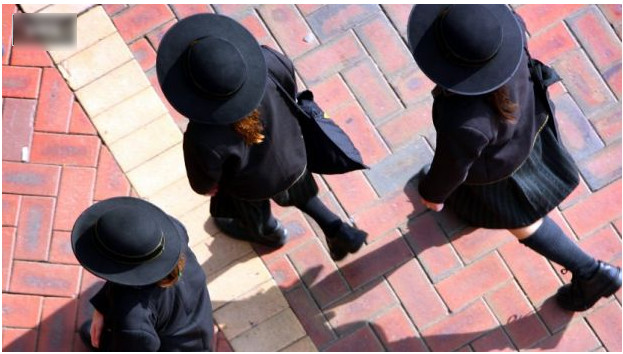
She was set on sending her children to expensive private schools. There was just one problem – she and her former husband could not afford the $50,000 in annual fees.

The parents, given the court-ordered pseudonyms Mr and Ms Stewart, could not agree on where their primary school-aged son and daughter should go to high school.

Ms Stewart sought a court order that the children be enrolled in specific single-sex private schools, with the son attending the father and grandfather’s alma mater.

As the Court heard last year, if both children attended private schools the tuition fees alone would be $50,000 a year. Even without taking account of the extra costs of a private education and probable fee increases, it would cost up to $300,000 to put the children through school.

private-school

The court found the parents could not afford $50,000 in annual fees to send their children to private schools. Photo: Louie Douvis

Ms Stewart sought a court order that the children be enrolled in specific single-sex private schools, with the son attending the father and grandfather’s alma mater.

As the Federal Circuit Court heard last year, if both children attended private schools the tuition fees alone would be $50,000 a year. Even without taking account of the extra costs of a private education and probable fee increases, it would cost up to $300,000 to put the children through school.

Mr Stewart opposed his former wife’s application, saying they simply could not afford it.

She, however, contended that he “should be able to pay 60 per cent of those fees if he reduces the amount of money that he spends on his wife’s three children on things such as overseas holidays, the latest electronics and clothing etc”.
In an affidavit, Ms Stewart said her weekly income was $370 from social security and $491 in child support.
She said while she agreed “that I do not earn a large sum”, she was prepared to sell assets – including a $1.35 million property – to fund the children’s schooling.
However, she also had a $64,523 HECS debt and owed $130,000 to a family member.

Judge Stephen Coates found Ms Stewart had not established that the likely cost of private schooling would be affordable.

“The mother said she could afford 40 per cent of the fees, yet on her income, I do not see she has proven her case,” he said.

He ruled that the children should attend a government high school, saying they would not be disadvantaged as the state provides “a capable education system”.

The judge said the Stewarts’ son would cope with not going to the private school “if the mother responsibly handles the situation for the child, even though such an order would be a great disappointment to her”. Indeed, he said, it “may be more of a disappointment to her than to the child”.

Ms Stewart appealed against the court’s decision, claiming Judge Coates failed to give adequate reasons and had misapprehended her case – and that she was willing to pay all the school fees herself, despite being unemployed and spending $290 each week more than she received.

The Family Court, sitting in Brisbane, this month dismissed Ms Stewart’s appeal, saying there was “no merit in any of the grounds”.

Chief Justice Diana Bryant, and Justices Murray Aldridge and Michael Kent, found there was no substance to arguments “that the trial judge was in error in his findings as to financial capacity or, perhaps more accurately, financial incapacity, for the probable future and ongoing costs of the mother’s proposed schools”.

They ordered Ms Stewart to pay the costs of the failed appeal.

Related Family Law Judgments

You’d be wise to make a Will – and it’s cheap and relatively easy to draw one up yourself

must-make-a-willHalf of all Australians die without a will, according to the Australian Securities and Investments Commission, meaning the law decides where your assets go, potentially favouring relatives you resent.

Making a will is vital, but can cost from $150 to thousands of dollars, if you use professional channels. Here are some tips on how to do it yourself, with intense attention to detail.

  1. Harness online resources

Study Will sample wills on the internet to strengthen your grasp of how to structure yours. One example is Slater & Gordon’s amusing Fred Flintstone model. Then there’s Peter Evans and Associates’ straight take.

The template provided by a do-it-yourself downloadable will kit costing between $20 and $300 can help, if you read the disclaimers and remember that one size does not fit all, experts say.

  1. Be picky about the key players

Find the most objective witnesses possible: those with the least to inherit, experts say. The executor – the person who carries out the terms of your will – should be someone set to outlive you: a much younger person.

  1. Sound out relatives

Discuss plans with your family – even seek their input, says estate planner Bruce Cameron. “It doesn’t hurt to know ahead of time which of your family members wants your collection of garden gnomes, grandma’s china, or the silver tea service,” Cameron says. Lack of discussion may spark entitlement feuding, he adds.

  1. Keep it explicit

Be exact, says Cameron. Instead of identifying heirs by name alone, include details such as their birth date, address and relationship to you.

Likewise, do not just denote your home by its street address – include its legal description on the deed. And, instead of just listing a charity by name, give detailed contact information.

  1. Insert stopgaps

State where your assets will go if heirs and beneficiaries prove unavailable, unable or unwilling to claim their inheritance, says Cameron. For instance, the beneficiary might “predecease” you. Or, if a beneficiary is a charity, it might have stopped operating.

  1. Don’t preach

Resist the urge to hit back from the grave. A clause saying that someone will only inherit if they quit gambling and drinking and wed someone at least 180cm tall and five years their senior may spark court battles rather than reform behaviour, says Cameron.

  1. Keep tweaking

Don’t think you can just write your will and relax, says Cameron. Regularly update and rewrite your will, reviewing it upon changes such as the birth or adoption of a child, divorce or retirement.

Revision may also be necessary when you open a new bank account, buy a car or move house, he says.

  1. Know the neighbourhood

Mug up on your state’s inheritance rules, because they vary depending on your location, warns lawyer Shane Fischer.

The Government’s Wills and power of attorney” page offers state-specific information.

Remember that in Queensland, New South Wales and Tasmania, on the day someone divorces, any previous will is revoked, according to RP Emery and Associates.

  1. Exclude the estranged

Don’t bequeath peanuts to disenfranchised friends and family. For instance, forget leaving a dollar to the daughter you have not talked to in 10 years, because she could cause havoc with your estate by challenging your will, Fischer warns.

If you want to disinherit the person, write: “I do not leave anything for ‘X’, my daughter. This is intentional,” Fischer says.

  1. Pinpoint the paperwork

Tell a close contact the location of your will and final wishes statement, Fischer says. Otherwise, your heirs may pick your home apart in search of the information. If they fail, you may get cremated when you should be buried.