
The boy was in Lady Cilento Children’s Hospital in Brisbane.
Photo: Christopher Frederick JoneH
A baby suffering from a severe form of epilepsy will undergo brain surgery in a bid to stop his seizures, after the Supreme Court ruled it was in the child’s best interests.
The boy, known as “baby K”, was born with a brain abnormality that causes him to have frequent and serious convulsions.
He has had alternative treatments including cannabis oil and a ketogenic diet, as well as conventional medical treatments such as anticonvulsive drugs, some of which have had serious side-effects and effectively sedated him.
The child’s social worker told the court he had also received traditional remedies from his parents’ home country, including treatment with holy water, prayers by a monk and traditional ceremonies in which smoke has been administered to him at the parents’ request.
But the court found all the treatments had been “ineffective”, resulting in numerous admissions into the paediatric intensive care unit.
Baby K’s seizures are felt only on the left side of his brain, but as time has gone on, the seizures have begun to affect the other “good” side of his brain, the court heard.
His doctors told the court they were of the “firm opinion” that the only way to preserve his brain and give him the best chance of a future life was to perform a functional hemispherectomy.
They described it as a “serious operation” that would involve disconnecting the two sides of his brain to preserve the intact “good” side, with the aim of preventing or reducing the child’s constant seizures.
K’s parents refused to consent to the operation so the matter ended up in court.
“That is not because they do not love their baby – they clearly do – but because they retain hope that traditional remedies might provide what might be described as a miracle cure. This is in accordance with their sincerely held religious and cultural beliefs,” the judgement stated.
In her ruling, Justice Roslyn Atkinson said she had “thought long and hard about it” because it was not the parents’ preference.
“He is their child, and it is they who will be bringing him up,” she said.
“It is they who will be with him before the operation and be with him while he recuperates and once he is discharged from hospital.
“But I am satisfied that the operation is in his best interests, and … that their love for their child and involvement in his physical, emotional and spiritual development will stay with him through the days and weeks, months and years to come.”

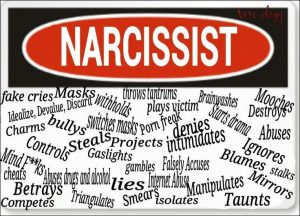 Those words are like nails on a chalkboard to anyone who has been through a divorce with someone who suffers from Narcissistic Personality Disorder (NPD). While divorce can bring out the worst in a healthy person, a divorce involving someone with NPD is like inviting the devil himself onto the battlefield. The narcissist appears to be charming, charismatic and endearing to those whom he encounters yet outside of the courtroom, he is calculated, manipulative and many times, downright dangerous. The untrained observer may perceive the situation to be about two immature parents who are not capable of putting their children first.
 A court has given the green light for a family lawyer to be sued for misleading and deceptive conduct over claims he failed to properly advise a woman about the consequences of signing a prenuptial agreement.
 Can SMS Text Messages be used as Evidence in the Family Court? The short answer to this is YES, YES and YES again.
 However, apart from the obvious, electronic messages can play a vital role in your family law circumstances, even if you are not planning on going to Court. Many disputes hinge on whether one parent or the other has received (or read) a particular email, which can be very hard to prove sometimes.
 Had proper measures been taken by the father, for instance, he could have, assuming he was telling the truth, proven that not only did he send the email, but that his ex-wife actually read the email. He could also have also shown what time she read the email, for how long she read it, from what location and internet account, and even from which computer.
 For a free
  “I wanted to end my life the day that our community allowed this man to cross-examine me in court.”
 The prospect of a divorce is not something that most people getting married would be contemplating and when it comes to your client’s SMSF things can become more complicated.

 More than 50 per cent of wills are being contested in courts, typically by family members fighting over how parents’ estates should be divided between siblings.