
Wife gets payout order years after separation

superannuationA WIFE should pay her estranged husband about $25,000 more than seven years after the couple separated and reached an informal property settlement, a court has ruled.

Their situation had changed since the agreement, and it would be unjust to hold them to it, even though the husband had been violent and had spent considerable amounts of money on alcohol, drugs and gambling, the Federal Court magistrate Philip Burchardt said.

The Melbourne couple, who cannot be named, had been married for more than 20 years and had four children under 20 when they separated in 2004. They have not been divorced.

The wife, known as Mrs Dixon, told the court they had agreed she would remain in the mortgaged matrimonial home with the children, while he kept an investment property, a car, and his larger superannuation.

Even though her husband denied such a deal had existed, the magistrate – who described the wife as an ”excellent witness … and transparently honest” – said he had no doubt they had come to the agreement Mrs Dixon had described.

Both sides had considered it a fair agreement at the time and ”as a matter of very superficial impression” it would have been appropriate, he said.

But, Mr Dixon’s life ”went into something of a tailspin” after the separation, the court heard. He had drunk six to 12 stubbies a night and smoked cannabis almost daily during the couple’s marriage, but this increased after their separation, when he also started to gamble.

Mr Dixon, now 53, also lost his job and ”conducted his affairs so inefficiently and negligently that he was made bankrupt”.

His health worsened, he is an invalid pensioner and rents accommodation cheaply.

Lawyers for Mrs Dixon, 52, strongly argued the 2004 agreement should stand, even though it had not been formalised.

But Magistrate Burchardt said: ”Their positions have changed radically since then. The parties simply did not foresee the very unfortunate march of events that has transpired and to hold them to their bargain as a matter of justice and equity at this stage would plainly be unconscionable.”

A family law barrister Grahame Richardson, SC, said a 12-month time limit applied to property claims only after divorce. In cases where parties had separated, ”the court’s hands aren’t tied by anything the parties [agreed] informally”, he said.

Geesche Jacobsen
Reference

Father banned from asking daughter about school

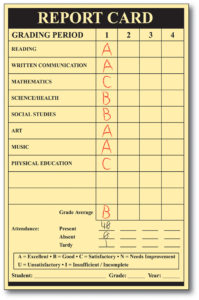
school report cardA NSW father has been ordered by the Family Court not to ask his daughter about her school reports or force her to eat meals.

The order was made following a dispute between the divorced parents of a 13-year-old intellectually disabled girl and an 11-year-old boy, the Daily Telegraph reports.

The mother alleged the father was in denial about their daughter’s disability and he was damaging her self-esteem by interrogating her about her school results in front of her brother.

She also told the court the father forced the children to eat and would yell at them if they did not want to.

The court heard the father, who has spent time in jail for kidnapping a child from another relationship and suffers from bipolar disorder, already had to be supervised by his mother or ex-wife’s mother while spending time with the children.

In the judgement published last week, Family Court Justice Stuart Fowler ordered that the father be allowed access to the girl’s school reports but not discuss them with his daughter.

He also ordered the father not to force the children to eat, abuse them, physically discipline them, insist they do tasks beyond their abilities or smoke or drink in front of them.

The father is appealing the judgement.

Wife’s AIDS lie ‘doesn’t violate marriage consent’

deceitA MAN whose bride did not tell him she had AIDS has lost a battle to have his marriage declared void.

The court case is believed to be the first of its kind in Australia.

A court heard that the wife, in her 30s, was diagnosed with AIDS in 2006.

The husband, in his 50s, said that if he had known she had AIDS he never would have married her the following year.

The wife filed for divorce last year but the husband asked the court to dismiss the application and grant a decree of nullity “on the ground of fraud”.

It was revealed he wanted a decree of nullity rather than having the marriage dissolved because he believed it would mean the wife would not be able to pursue him for a property settlement.

The Full Court of the Family Court of Australia last week rejected the man’s bid.

It also said the husband was mistaken in his view there could be no property settlement if the marriage was found to be void.

The husband claimed the case was the first where a court had been asked to consider an application for nullity on the basis that one of the parties had failed to disclose they suffered from a communicable disease that could lead to the death of the other party.

It is not known if the husband contracted the AIDS virus.

Slater & Gordon family law expert Ian Shann said the moral of the case was simple: “Check out people’s stories before you marry them.”

Had the man been successful it would have opened Pandora’s Box, Mr Shann said.

“I don’t think there’s much difference between lying about your health or lying about your financial circumstances or lying about your financial intentions,” he said.

A lower court dismissed the husband’s application for a decree of nullity last year and he lodged his appeal in the Full Court of the Family Court.

The Marriage Act says a marriage is void in the event that “the consent of either of the parties is not a real consent because … it was obtained by … fraud”.

The Full Court said the wife’s failure to inform the husband of her condition “did not vitiate the husband’s consent to marriage”.

In the earlier judgment, a judge said there was no question the husband married the woman he thought he was marrying and the parties went through what they knew to be a valid marriage ceremony.

Mr Shann said grounds for getting a decree of nullity included bigamy, being too young to be married, being in a phony marriage, being pressured into a marriage and a case of fraud, such as mistaken identity.

“This particular case did not fall within any of those circumstances, although the wife clearly lied and although the husband was clearly placed in a precarious position because of the lie,” Mr Shann said.

The wife did not participate in the hearing.