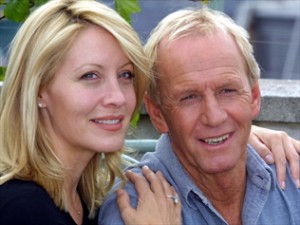
Big Sydney Divorce with Bizarre Home Sale ends in Property Transfer

lisa-poulos

Lisa Poulos involved in big money Sydney divorce

Another example of divorcing men trying to out-smart the system, but in most cases simply ending up with egg on their face.

In this case a successful businessman did everything in his power to prevent his estranged wife from residing in the former matrimonial home, even concocting a late night fire sale of the house to a mystery buyer.

The NSW Supreme Court saw right through the intent of this transaction, and ordered a property transfer back to the wife, with Hans Eberstaller left to carry the quite significant legal costs and penalties involved in such a charade.

Despite appeals to the NSW Court of Appeal and the Judicial Commission, this is a case where it was patently obvious what the man was trying to secure, and the Court typically has very low threshold of tolerance for such  tactics.

It’s being dubbed Sydney’s War of the Roses: a bitter marriage breakdown, a bizarre property deal and claims the city’s men are being turned from daytime lions to “pussycats at home”.

Business executive Hans Eberstaller’s late-night decision to sell his family home to a man who had never seen the property and paid no deposit has produced a stinging legal rebuke and he and the mystery purchaser have been hit with a $150,000 legal bill and the sale cancelled.

Mr Eberstaller’s actions would have put his estranged wife, public relations agent and former publisher of Elle magazine Lisa Poulos, and the couple’s children, out on the street.

“His intention towards his wife was not merely unreasonable, it was dishonest by the standards of ordinary, decent people,” said Justice Michael Pembroke of the NSW Supreme Court.

Mr Eberstaller, the managing director of Strategic Investments for Amalgamated Holdings, which owns Greater Union cinemas and the Rydges hotel chain, did everything in his power “to frustrate and intimidate” his wife and to prevent her from having the home, said the judge.

“You’ve seen War of the Roses,” said Mr Eberstaller said of his bitter marriage breakdown. He also suggested that when “eastern suburbs wives” were “no longer happy with their man” they go to court to get the matrimonial home.

Fear of this happening was turning men who were ‘‘lions in their business” into “pussycats at home”, he claimed.

On August 12, 2013, within weeks of Ms Poulos’ confronting tale of her double mastectomy airing on the ABC’s Australian Story, Mr Eberstaller exchanged contracts at 10 o’clock at night for the sale of the couple’s Bellevue Hill mansion to a man who had never seen the property and who paid no deposit.

“There is nothing mysterious about it,” Mr Eberstaller said. “I’ve been in banking and finance for 30 years and most deals are done at four in the morning so ten o’clock in the evening is pretty early actually.’’

The agreed purchase price was $2,350,000, which was $1 million less than a valuation Mr Eberstaller had obtained in 2009.

“For all I know, he could be an illusion,” said Justice Pembroke of the mystery purchaser, Premjit Singh.

Mr Eberstaller said he had never met Mr Singh despite Mr Singh being listed as a co-director with Mr Eberstaller in two companies, one of which owns a tavern in Innisfail and the other is developing a former drive-in site south of Cairns.

Mr Eberstaller said Mr Singh’s son Ranjit, a Cairns property lawyer, was his business associate and that Ranjit organised for his father to buy the property because the bank was about to foreclose on Mr Eberstaller and he did not wish to have a bad credit rating.

“An urgent fire sale is how you strike a good bargain,” Ranjit Singh said. “The key in business is if you know someone has a potential weakness, you exploit it.”

But Justice Pembroke dismissed Mr Eberstaller’s claim about the bank foreclosing.

Describing his behaviour as “obdurate and obstinate,” the judge said he put “one obstacle after another in the way of his wife’s entitlement to have the property transferred to her name.”

The court heard that for months Ms Poulos had been trying to give her husband a bank cheque to pay out the $640,000 mortgage upon which Mr Eberstaller had to transfer the house to her.

The judge said his “wholly unreasonable lack of co-operation” was because of his “desire to hinder, delay or prevent his wife” from having the house.

“He thwarted her and engineered a sale to the second defendant … rather than to allow his wife to have the former matrimonial home.”

After a two-day hearing in December, Justice Pembroke set aside the contract to sell the house to Mr Singh and ordered Mr Eberstaller to transfer the property to his wife, which he did.

In May Justice Pembroke ordered Mr Eberstaller and Premjit Singh to pay Ms Poulos’ court costs of $148,278, which they are yet to do.

The NSW Court of Appeal recently rejected Mr Eberstaller’s appeal on jurisdictional grounds.

The businessman has lodged a complaint about Justice Pembroke to the Judicial Commission, claiming apprehended bias.

“He made a character assassination in order to scare me off. I am a managing director and I have 3500 employees and I have never had someone say that to me ever,” Mr Eberstaller said.

Ms Poulos declined to comment.

Four Women Fight Over estate of Notorious Solicitor

michael-ryan-and-prostitute-marie-christos

Solicitor Michael Ryan and Marie Christos

This is another sordid case becoming more and more frequent with the changing nature of relationships in Australia, which highlights the difficulty in determining whether a relationship was simply casual or de facto.

This is the case of notorious solicitor Michael Ryan, who had numerous lovers, many of them prostitutes, who have all made claims on his $8m estate as his de facto lovers, with varying degrees of success.

As a solicitor, multi-millionaire Michael Ryan shot to ­notoriety when he appeared for former judge Marcus ­Einfeld as he tried to get off a $77 speeding fine by blaming it on a dead woman.

As a lover, Mr Ryan’s ­private life was just as ­complicated — as the Supreme Court was told during a fight between four women, three of them prostitutes, over his $8 million estate.

Marie Christos withdrew her claim because of legal costs; Denise de Bono settled out of court for $115,000; and Gillian Crighton — the only one who was not a prostitute — received $20,000 in another out-of-court payment.

Janet Amprimo, who sued for $2.8 million, walked away with nothing but a potentially large legal bill after Justice Nigel Rein on Thursday found that, although she was one of Mr Ryan’s mistresses, there was no evidence they lived in a de facto relationship.

The judge found their relationship was “well and truly over” when Mr Ryan died alone in his Fairlight mansion in 2012 after selling his legal practise and becoming a recluse amid the controversy surrounding the Einfeld case.

Justice Rein said Mr Ryan met Ms Amprimo at Melbourne brothel, the Daily Planet, where she had worked for some years. Between 1996 and 2006, she stayed in Sydney hotels and a Kirribilli apartment at Mr Ryan’s expense but also worked at Sydney brothel, the Penthouse.

Ms Amprimo said she knew Ms Christos from the Penthouse and Ms de Bono from the Daily Planet. During those years, Mr Ryan was also seeing Ms Crighton while taking Ms Christos on luxury cruises and visiting Ms de Bono in Melbourne.

The six-year relationship between Ms Christos and Mr Ryan broke up two months before she found documents relating to the Einfeld case — which she took to police and the media — while searching Mr Ryan’s bin in August 2006 for evidence of another woman. Marcus Einfeld later served two years after pleading guilty to perjury for blaming driving offences on other people.

The judge said he accepted evidence from Philippa Duncan, a friend of Mr Ryan, that on August 22, 2006, he gave her Ms Amprimo’s mobile number and asked her: “Would you just call and say that I am unable to see her any more and that she should just go away.”

Justice Rein said Ms Amprimo had never mentioned the word “love” in any of her ­affidavits. He said he accepted a man could have a de facto ­relationship with a prostitute and such a relationship could exist while two people lived in separate homes but there had to be some romance and that had ended for Ms Amprimo and Mr Ryan in 2006.

He adjourned the case for a decision on costs.

Paul Hogan and Linda Kozlowski Divorce After 23 Years

paul-hogan-and-linda-kozlowski-divorce

Hogan and Kozlowski

AFTER 23 years together, Paul Hogan and Linda Kozlowski have finalised their divorce, which will allegedly see Linda Kozlowski receive US $5.775 million (AU $6.25 million) of Hogan’s US $20 million (AU $21 million) fortune.

Hogan is keeping the rights to his iconic Crocodile Dundee character and the film company that produced the films, as well as ownership of their home in Venice Beach, California.

Linda Kozlowski will reportedly be able to remain living in the house for another four years, or until she remarries, whichever happens first. She also has the option to buy the house outright at the original purchase price of $US1.59 million.

The couple will reportedly have joint custody of their 15-year-old son Chance, and neither will pay child or spousal support. 

It is unknown if Paul Hogan and Linda Kozlowski had entered into a pre-nuptial agreement prior to getting married,

Hogan cast Kozlowski as his love interest in 1986’s Crocodile Dundee, where a romance blossomed and Hogan subsequently split with his first wife Noelene Edwards soon after. 

Hogan, 74, and Kozlowski, 56, married in 1990 after the release of the film which made Hogan a global star.

Previously, Hogan had five children with ex-wife, Noelene, whom he divorced (for the second time) in 1986.

Paul married his first wife Noelene Edwards in 1958, the year that Linda was born, and divorced her for the first time in 1981. The couple had five children together.

They remarried just a year later but divorced for a second time in 1986, when it is alleged that the comedian started his relationship with Linda.

Hogan, it seems, hasn’t given up on love, even at his advanced age, recently stating that:

“The secret to love and women is — if you’re lucky, you get a good one, and they stick around.

“If you’re real lucky, they’ll stick around for a long time. If not, you move on. But,” Hogan smiled cheekily, “I haven’t given up.”

Prior to splitting with Kozlowski, Hogan was at the centre of a long running Australian Tax Office (ATO) investigation for tax evasion. After returning home to attend his mother’s funeral in 2010, he was prohibited from leaving the country, which resulted in a public stand-off with the taxation department. No charges were ever laid and he settled for an undisclosed sum in 2012.

Another Big Money Australian Divorce for the Lews

solomon-lew-recently-separated-from-wifeAnother big money divorce in Melbourne, Australia between billionaire Solomon Lew and wife Rosie Lew.
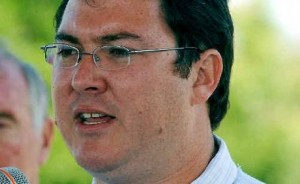

Solomon Lew has been seen with a pretty blonde of Greek heritage many decades his junior who has been by his side since he ended his 45-year-marriage to Rosie. The 40-something, Melbourne single mother of two is Rosa Prappas.

Solomon Lew, 69, separated from his wife last February. Friends of the couple say Rosie Lew is keeping a “dignified” silence on the matter, although privately she is said to be “extremely bitter” about the end of the marriage.

Rumours have been rife that Rosie Lew will walk away from the marriage with a settlement worth about $300 million.

Rosa Prappas is the woman who has been living in Lew’s multi-million dollar penthouse apartment in downtown Melbourne. She will be joining the retailing mogul in the first week of August as they join 80 other guests heading off to Mykonos for the combined birthday celebrations of Lew’s right hand man Mark McInnes and his partner Lisa Kelly.

Although Lew is enjoying the good life for now, his imminent divorce is part of a broader family collapse over recent years that could at one point unravel the secrecy and control Lew has held over his massive fortune for decades.

Solomon Lew’s daughter Jacqueline had been embroiled in a bitter matrimonial dispute with her former husband Adam Priester, while his son Steven Lew was involved in divorce proceedings with his estranged wife Sarah Nowoweiski.

Both cases were before the Family Court, which bans any media coverage. But the private feuds had spilled into the public domain in dramatic style.

Lew’s 2012 writ in the Supreme Court of Victoria was a pre-emptive strike to protect part of his family’s $621 million Lew Custodian Trust from Priester and Nowoweiski, who are parents to six of his grandchildren.

The case could have serious implications for Lew. Aside from the vast fortune at stake, Priester and Nowoweiski have been the custodians of business and family secrets that could be exposed in court.

The dispute centred on a longstanding agreement between Lew and his three children, Peter, Jacqueline and Stephen, who each received $170 million but agreed to cede control to their parents.

While the deal is believed to have never been documented, each child would receive $25 million in loan accounts in their own names, with the remaining $145 million to be gifted back to Lew and his wife Rose.

According to Lew’s senior counsel, Leslie Glick, the arrangement was designed to minimise tax, at a time when the former Howard government was contemplating a tax on the undistributed reserves from family trusts in 1999.

The tax never happened, but the deal remained in place, and only became an issue when the marriages of Jacqueline and Stephen unravelled.

Abbott Government Considers Paying Child Support to Single Parents

george-christensen-on-child-support-inquiry

The Nationals George Christensen

The government could pay child support to single parents regardless of whether the other parent pays, under a proposal being considered by a parliamentary inquiry – potentially adding more than $1bn to the budget if the debts are not recovered.

Senior lecturer at the University of Tasmania’s school of social sciences, Dr Kristin Natalier has recommended taxpayers foot the bill of the amount owed so single parents and their children are not financially disadvantaged.

In her submission to the inquiry into the child support program, Dr Natalier said there were high rates of non- payment, partial payment or late payment of child support.

National party MP George Christensen, chair of the committee inquiring into child support which has a public hearing in Brisbane on Tuesday, said the system was raised by a number of single mother advocacy groups and he was not opposed to the idea.

Submissions to the Inquiry into Child Support

“The idea was raised with us and I am not opposed to it, it has its merits but one of the problems we will look into is potentially how much it will cost – but we are not ruling it out,” Christensen said.

At the moment, “payers” – who are usually non-custodial parents – pay child support to the department of human services (DHS) and then the DHS pays the “payee” – usually the custodial parent.

George Christensen said there were a number of jurisdictions around the world where the government guarantees the child support payment regardless of whether it is received from the payer. It is then up to the government agency to chase down the child support debt from the parent.

A submission by the Council of Single Mothers and Their Children (CSMC) estimated Australia’s unpaid child support bill was over $1bn, “yet even this figure does not capture child support that goes unpaid in private collection arrangements and debts waived by child support”.

“Calculating unpaid child support from private collect (sic) and waived debts would more than likely triple this figure,” the CSMC submission said.

“Less than 50% of child support payments are made in full or on time, yet there are few real consequences for paying parents defaulting on their child support obligations.”

Labor deputy chair Sharon Claydon said while she had concerns that a government guarantee might allow some parents to shirk their payment responsibilities, the advantage of a guarantee would be to “take the emotion” out of the system.

“From a taxpayer and public policy maker’s view we really have to ensure the capacity of the commonwealth to be a debt collector,” Claydon said.

“Some payers are delaying payment as a means of exercising financial control over the situation, that is why it has been an attractive proposal for some single mothers groups and the lone fathers have found it interesting as well.”

Alleged Unfairness in the System

George Christensen said the other main issue facing the inquiry was “alleged unfairness” in the system, particularly in regard to “payer” parents.

George Christensen said a common problem reported in submissions occurs where a child support “payer” had court ordered custody arrangements which are breached by the “payee” moving away, leaving the payer parent unable to see their children.

In such cases, when the payer parent can no longer maintain their custody arrangements due to distance, the payee applies for a reassessment of the child support amount and the payer is left with a larger child support payment.

George Christensen said parents reported that the department was often aware of a breach of court orders but enforced the reassessment regardless. One of the terms of reference requires the committee to consider how to improve the link between the the Department of Human Services and the Family Court.

“We are looking for linkages at the family court end to ensure those problems don’t arise,” George Christensen said. “(Payer parents) see (reassessment) as salt being rubbed into a wound. Anecdotally, that is where a lot of suicides occur.”

The inquiry will hold ongoing public inquiries and is not expected to report until the end of the year when Christensen expects it will make recommendations that the government can “pick up and run with”.

Sharon Claydon said in her experience, the child support system was “generally working ok” though for families with “entrenched conflict”, there were still significant issues, including around domestic violence and cultural issues for Indigenous families.

“Sometimes conflict has been there for a long period of time so we will be working through those issues and I don’t think we have landed on the magic solution yet.”

Calls For New Tribunal to deal with Family Violence

judge-john-pascoe-family-violence-tribunalONE of the nation’s top judges has called for a separate, less ­formal tribunal to deal with family law cases involving extreme domestic violence, arguing that the current adversarial system is not the right place for women who have been badly abused. Federal Circuit Court chief judge John Pascoe told The Australian he ­believed a new approach was also needed for cases involving serious mental illness.

“I wonder whether some sort of tribunal where there can be a ­different sort of approach that reduc­es the trauma of having to perhaps be cross-examined on really, ­really often horrific events would work better,’’ he said.

The Federal Circuit Court ­handles most family law cases and deals with domestic violence and mental illness every day, including in the context of parenting ­disputes. Chief Judge Pascoe said he worried that a formal, adversarial court environment did not encourage maximum disclosure by women who had suffered domestic violence.

“Part of the tragedy for battered women in particular is often they are very reluctant to disclose (what has happened to them),” he said. “We have an adversarial system, where each person is entitled to hear the evidence of the other, and some women feel very, very threatened by that.” Chief Judge Pascoe said he had a “similar concern” that the advers­arial system was not necessarily the best way to determine disputes involving people with a serious mental illness.

He said those cases often took up a lot more court time. “How do we make sure that they are properly heard?” he said. “Sometimes they present very strangely but there’s a real issue that they’re entitled to have heard and determined by the court. It’s being able to build a structure that enables them to get those issues on the table … “Those people often need huge compassion.”

Chief Judge Pascoe’s call for a separate tribunal for cases involving domestic violence comes after the NSW Director of Public ­Prosecutions, Lloyd Babb SC, told the royal commission into child sexual abuse that a separate court for sexual assault should be established. Mr Babb said that some judicial offic­ers and prosecutors were better at handling those cases than others.

Chief Judge Pascoe said proper Legal Aid resourcing was also crucial to assist women who had experienced family violence. “Things like Legal Aid resourcing become very, very important so those women feel protected,” he said. Those calls were echoed yesterday by former Family Court chief justice Alastair Nicholson, who said judges did their best to be sensitive in cases involving serious violence or sexual abuse but sometimes the set-up of the court was “too formidable”. “I think there’s room for a lot less formality and a better structure in those sorts of cases,” he said.

Mr Nicholson believed cuts to Legal Aid funding had exacerbated the problem. “You’ve got the unfortunate situation for someone who’s the victim of domestic violence being cross-examined by the perpetrator and it’s quite terrifying,” he said. “We ­really should address those issues. Domestic violence advocates have backed calls for changes to the way courts approach serious family violence, with some calling for a separate tribunal to handle such cases and others calling for more help for women to navigate the system.

Rape and Domestic Violence Services Australia executive officer Karen Willis said she strongly supported the call for a separate tribunal to handle such cases, and believed criminal cases involving domestic vio­lence and sexual assault should also be moved to a less formal ­environment. Ms Willis said the court system was intimidating for many who had experienced violence and they had “absolute fear” of facing their abuser. “At that point women are scared out of their brains and often rightly so.”

North Queensland Domestic Violence Resource Service director Shirley Slann believed judges and magistrates in the criminal and family law systems, as well as police prosecutors, needed to be better trained so they understood family violence. Women’s Legal Services NSW executive officer Helen Campbell said resources should be directed to provide extra support for women to navigate the current system, rather than on creating a separate tribunal.

Self-employed dads avoid paying higher child support

victoria-legal-aidFathers who run their own businesses are declaring lower incomes to the Australian Tax Office to avoid paying higher rates of child support, Victoria Legal Aid says.

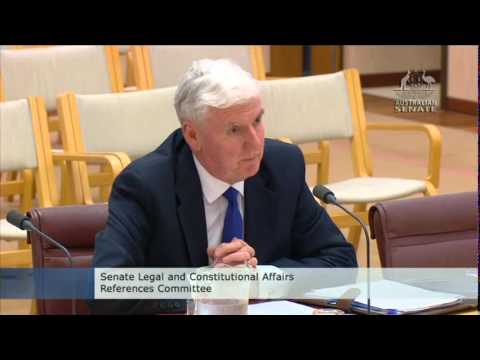

The organisation will discuss its clients’ difficulties in both receiving and paying child support at a federal inquiry into the child support program in Melbourne on Friday.

Its Child Support Program manager Jayne Ford said that most of the parents applying to change the amount they received were women who argued their self-employed ex-partners could afford to pay more. The payers – who were mostly men – could have legitimately declared lower taxable incomes by making deductions for their home office and telephone expenses.

“But their business might be rolling over quite a lot of money and they might have other resources,” she said. “They’re certainly able to pay more child support and the bottom line is that the children are missing out and not being adequately supported.”

While some were not declaring lower incomes to pay less child support, others were “well aware” this would lessen their obligation to pay.

In a submission to the inquiry, Legal Aid says the Department of Human Services should make note of self-employed parents, so that it could review the amount they were required to pay “at appropriate intervals”.

Meanwhile, many parents paying child support found it hard pay or reduce child support payments they could not afford to pay, when their financial circumstances had been incorrectly assessed.

Ms Ford said prisoners were often unaware they had to inform the department they were in jail and were unable to continue paying the same level of child support: “They may be in prison being assessed on the income they earned before they were imprisoned … accumulating a large debt without knowing it.”

This could include thousands of dollars in penalty payments, which made it harder for them to move on with their lives when they were released.

Legal Aid recommends that only those prisoners who were paid wages for work done in prison should have to pay a minimum amount of child support.

A report on the inquiry, which is looking at the way child support is collected and managed, is expected to be published in 2015.

No-Fault Divorce Creating Uncertainty and Marriage-Aversion

no-fault-divorceMARRIAGE should never be a prison, but should it be a subsidised holiday house?

The government is rightly bemoaning the immense cost for taxpayers of the 50,000-odd divorces in Australia each year in extra single parent and child support payments, not to mention consequent social delinquency and emotional heartache. But its plans for “free” counselling vouchers and so-called expert panels will only add to the waste.

A better idea — one that economists and feminists can rally around, which costs taxpayers nothing — is the introduction of optional “fault divorce”.

The shift to no-fault divorce — celebrated, paradoxically, by so-called progressives then and still — drastically shifted bargaining power away from reluctant divorcees in a way that harmed women and benefited men. Academics at New York University and the IMF have shown how the introduction of “no fault” divorce has not only pushed up divorce rates — Australia’s is around two to three times that before 1975 — but had a permanent, costly and potentially damaging impact.

In the 1970s Australia and the US rightly banished fault divorce, which had prevented formal break-ups without “grounds”. This forced couples to fake the reasons — including adultery, desertion and cruelty (and 11 others in Australia) — even when both were simply content to move on.

This led to ridiculous and sometimes costly charades, but, crucially, gave any spouse who didn’t want to divorce the right to extract compensation before he or she would participate.

“Divorce is less costly for men since they earn substantially more than women on average and also bear a smaller share of the cost of raising children upon divorce,” write Raquel Fernandez and Joyce Wong in their June paper, noting that some degree of specialisation by women in child-rearing is, for now, biologically inevitable regardless of female career pursuits.

“Poorer individuals are hit hardest by the loss of insurance and economies of scale from marriage, leading poorer women in particular to become more averse to marriage,” they add, arguing that the fall in marriage rates since the 1970s — 40 per cent down in Australia since then — shows that women’s aversion to marrying has overpowered men’s increased desire to.

It is much easier for the spouse with higher actual and potential income, usually the male, to walk away from marriage. It is especially difficult for women with younger children who have elected to stay at home to do so. The ‘‘disutility of working’’ is, for these women, much higher than it is for men.

The relentless focus on the cost of weddings obscures the strong economic rationale for marriage — the ability to specialise and economies of scale in domestic duties and accommodation, and the ability to draw on each other’s earning power in tough times.

Modern marriages have become expensive public statements without contractual teeth. Women (and men whose wives have much greater earning potential) have lost the ability to constrain their own or their spouses’ future behaviour.

The dramatic changes in family structures since the 1950s have complex cultural, political and even technological explanations. But it should be no surprise that the sudden, wholesale shift in the standard terms of society’s most famous contract — in favour of the spouse with a better outside option — would have dramatic ramifications.

Women have responded rationally. They have invested far more in their own education and worked longer to ensure self-­reliance. They have married far later and had fewer children. Husbands and wives are less willing to make sacrifices to support their partner’s careers because they know they have no certainty that those benefits would be shared if the relationship soured. If women do have children they want taxpayer-funded childcare and paid parental leave, costs foist on to other taxpayers, subconsciously fearful of the long-run consequences of losing their skills.

All these trends might not be optimal. For instance, surveys show most younger women typically want more than two or even three children, but end up having one and in many cases much later in life. Were other marriage contracts available, some women (and men) might prefer to marry younger with the knowledge the economic benefits of marriage can’t be arbitrarily withdrawn by their spouse without compensation.

Australian and US evidence shows women who wanted a marriage to continue did much better financially under the old fault regimes than they do now, where courts expressly ignore the differing desires of the spouses.

Pre-nuptial agreements are expensive, unreliable and awkward. The idea they are an effective ­substitute for a cheap, standard, government-sanctioned “fault” divorce contact is a typically elitist and naive view.

Permitting couples the option of a modernised form of fault ­divorce would cost nothing but could potentially lead to a virtuous circle that saved taxpayers substantial sums. More choice typically enhances welfare.

Of course, any new option should avoid the anachronism of requiring specific grounds for ­divorce. Both parties’ wanting to split (for whatever reason) should be quite enough. But such agreement would imply the unwanted party has been adequately ­compensated. Over time, the “fault” marriages might become more popular as the existing, more whimsical variety came to be seen as a half-hearted alternative.

Govt Inquiry Told of Failings in Australia’s Child Support System

Commonwealth-Ombudsman-Colin-Neave-Child-Support-InquirySeparated parents are avoiding lodging tax returns — for up to a decade — a bid to shield themselves from paying thousands of dollars in child-support payments.

In his submission to the government’s current Child Support Inquiry, the Commonwealth Ombudsmen has catalogued a series of “systemic problems” in Australia’s child support system, some of which are leaving parents caring for children significantly out of pocket.

Worrying examples of clerical errors, computer system problems, failures by staff to act on information and botched administration are laid bare in a submission to the Abbott government’s parliamentary inquiry into the child support regime.

Commonwealth Ombudsman Colin Neave, who received 1700 complaints about the system last year alone, has told the government he is raising these examples to “highlight areas for potential improvement, rather than to suggest that there is any large scale failure in administration”.

His submission details more than 20 examples where the Child Support agency has let down Australian parents, including;

• A failure by the Child Support to “take an active role” in establishing the correct income of a father who owed child support but failed to submit his tax return for ten years, resulting in his partner receiving lower than appropriate payments.

• The agency’s failure to set up wage and salary deductions on the repeated request of a mother who was owed more than $5,000 in child support payments, despite being provided with information about where the her former partner worked and his pay slip number, until the Ombudsman intervened in the case.

• A clerical error by a Child Support staff member in misreading a file resulted in the agency failing to collect money on behalf of a mother who was owed $12,000 in child support payments and had informed the government repeatedly over the course of 18 months where her children’s father was working.

• A failure by Child Support staff to report for prosecution the case of an employer who was deducting child support payments from an employee but not transferring them in full to Child Support. More worryingly, the agency continued to keep the arrangements in place.

The report to Social Services Minister Kevin Andrews’ inquiry reveals the Ombudsman frequently receives complaints from recipients of child support payments that the figure used to assess their ex-partner’s income is too low, in some cases because parents are not submitting their tax returns.

While the submission notes that Child Support has no power to force a customer to lodge his or her tax return, it says, “we are concerned that Child Support does not appear to maintain an interest in the action that the Australian Tax Office takes in response to these referred cases.”

Mr Neave also wrote in his submission: “we consider that it is vital that Child Support is seen as effective, but fair in its efforts to assess and collect child support payments”.

“In our view, the integrity of the scheme will be undermined by community perceptions that people can readily avoid their responsibilities,” he says.

The number of complaints to the Child Support agency peaked at almost 3000 in 1996.

Report: Australians are unprepared for death

Estate-PlanningWHEN Robert Baillie died in a motorbike accident last year, his mother was distraught.

The last thing Jane Baillie was ready to do was deal with the complicated paperwork surrounding the estate of her 25-year-old son.

Being so young, Robbie didn’t have a will, and his superannuation was tied up in several different accounts.

As a result, Jane and her ex-husband Robert were hit by taxes of up to 55%, all while trying to deal with the death of their young son, whom she described as quiet, with an infectious nature.

“You’re not even in the right zone to be doing it to start with,” she said.

“It would have been nice to have discussed the more important side of how he would have wanted to be farewelled.

“A will would have taken care of that.”

Raising awareness

Sandstone Point property manager Jane has shared her story in a bid to raise awareness of how important preparation for death is at any age. She also begged people to think twice before buying a bike.

Sadly, Jane’s story isn’t uncommon.

Files Stibbe Lawyers partner Dean Stibbe said he dealt with people all the time who were experiencing massive problems with their loved ones’ estates because they hadn’t made a legal will, power of attorney or other provisions.

A survey released for Palliative Care Week (this week) to highlight the importance of estate planning found just 50% of respondents had a will and less than 20% had a power of attorney or funeral plan in place.

Mr Stibbe said he knew of one lady who had filled out a will kit incorrectly for her $3-4 million estate, resulting in more than $300,000 in legal fees.

Importance of power of attorney

Fellow partner Kylie Files said setting up an enduring power of attorney (which gives a trusted loved one the power to make decisions on your behalf under certain circumstances) was another critical step that many people neglected.

“You’ll have cases where there’s a husband and wife and something happens to one of them,” she said.

“They might have accounts or possessions under a joint name.

“All of a sudden the husband won’t be able to sell the house or withdraw assets.

“That will make things extremely difficult.”