More complications from home made wills

will-and-testament-unsignedAt a hearing on 31 August 2012, the question for the New South Wales Supreme Court was whether a handwritten document was the will of the deceased.

It was believed that the deceased died in 2002 without a will. Letters of Administration were granted to the now NSW Trustee & Guardian to administer the estate. Two years after Letters of Administration were granted a handwritten document was located which appeared to express the testamentary wishes of the deceased despite not being a will in the usual sense. The document gave the deceased’s personal and real property to his sister but went on to indicate that he had a son out of wedlock and if he was found his sister could give him whatever she wished.

The document was signed and dated by the deceased but was not witnessed. Whilst the document was not a valid will under New South Wales law, it was brought before a court in Athens and was found to have met the formal requirements of a will under Greek law.

The deceased’s family did not know of any son of the deceased. Investigations were conducted in an attempt to locate the son but were unsuccessful. If the handwritten document was accepted as being a will then the estate would pass to the deceased’s sister. However if the handwritten document did not constitute a will then the laws of intestacy would apply and the deceased’s estate would pass to his son, if he had one.

The application before the Court sought a declaration that the handwritten document constituted the will of the deceased. In determining whether the document was a will, the Court took into consideration the intentions of the deceased. The Court held that the document did constitute the will of the deceased as it was written by the deceased and was intended to be his will.

Comment – Once again, this case reflects the importance of a having a properly drafted will that clearly identifies the beneficiaries. More importantly it demonstrates the importance of ensuring that family members or advisors are aware of the location of the will. Had the handwritten document been located immediately following the deceased’s death, considerable time and costs would have been avoided in making the applications to the court.

Paternity tests on the increase

paternity-testsMORE and more families are taking steps to confirm their children’s parentage. But experts say it doesn’’t have to be a negative and nasty experience.

For decades paternity tests have been cast as the bad guys, the marriage-breakers, an all-round negative experience – but now, as they become a more common part of modern life, some experts are extolling the positive side of testing.

It is estimated that in Australia, more than 10,000 people – interestingly, mainly women – sign up each year to find out whether their child is biologically theirs, says Professor Michael Gilding of Melbourne’s Swinburne Institute for Social Research.

While that number seems large, Australia remains a bit slow off the mark in embracing these tests. In the US each year, there are about five times as many paternity tests per head as the population.

But Gilding and other experts believe it is just a matter of time before this type of testing becomes more the norm in Australia, with tests becoming more accessible, affordable and acceptable.

— Getting a test

There are two types of paternity tests available in Australia – legal and non-legal.

A non-legal test is for personal information only and cannot be used for legal issues. It usually involves taking a mouth swab using a kit received in the mail. The swabs are taken from the alleged father and child and are then sent to a laboratory for analysis.

Legal tests are required by law to comply with the Australian Family Law Act, so there are strict conditions concerning sample collection and all samples must be tracked from the collection centre to the testing laboratory to be admissible as evidence in court.

— Who wants them?

Men’s rights organisations, such as the Men’s Rights Agency, claim up to 30 per cent of men in Australia are living with a child they mistakenly believe is their biological offspring. In the past, the group has called for mandatory testing of all babies at birth.

Gilding adamantly disputes this figure and says it is probably closer to between one and three per cent.

“To insist everyone has a paternity test because of that [small percentage] where there is paternal discrepancy is overkill,” he says. He adds that most paternity issues arise during a break-up or strained periods in a relationship.

“The main group of people requesting tests are women who have a child outside of marriage and there is a dispute around paternity and supporting parent’s benefit,” Gilding says.

The next-biggest group ordering paternity tests are men with doubts about whether a child they are caring for is biologically theirs – and this has already been shown to have major repercussions for families.

In November 2011 an Australian woman was ordered to pay her former husband almost $13,000 after he arranged a DNA test that confirmed he was not the biological father of the woman’s 14-year-old son.

Andrea Hayward, director of DNA QLD, a specialist paternity testing facility, agrees that the number of men unwittingly raising children who are not biologically theirs has been over-estimated.

“In our experience, 80 per cent of men get paternity confirmed,” Hayward says. “While there are stories of aggrieved fathers who have spent years paying child support for children they then find are not theirs, for a lot of people, testing is a positive experience.

“Someone may have said something that makes a man wonder whether a child is really his. A test can eliminate doubt.”

— Who gives consent?

Another contentious issue is whether both parents should be aware of a test. Gilding believes there are times when the tests can be carried out without the other parent’s consent.

“I think men have a right to the knowledge of their biological paternity. But they shouldn’t be able to do a test without the mother’s knowledge,” he says.

“Tests can be done in anger. But both parents need to think about their relationship to the child. Trying to humiliate the mother may undermine a father’s long-term relationship with that child,” Gilding says.

— Here to stay

Hayward and Gilding believe paternity testing is generally a positive initiative. Plus, there is no going back now.

“Paternity tests are here. The genie is out of the bottle,” Gilding says. “And for the eight out of 10 men who find they are the father, that’s a cause for relief.”

Family violence dominates Vic courts

Magistrates-Courts-of-VictoriaVIOLENCE in the home figures in one in seven of Victoria’s most serious crimes, as record levels of intervention orders are putting the court system under pressure.

The Magistrates Court of Victoria says the increase in applications for family violence intervention orders has become a significant concern for the court.

The Office of Public Prosecutions (OPP) says that of the 2719 criminal matters it handled in the year to November 2012, 378 related to family violence.

More than 90 per cent of those crimes – including homicides, sex crimes and assaults – were committed by men, and 40 per cent involved sexual offences, the OPP says.

An earlier OPP report shows the number of family violence matters received by the office more than doubled between 2010/11 and 2011/12.

New figures from the coroner show 288 of the 545 homicides that occurred between 2000 and 2010 in Victoria involved family members or intimate partners.

An intimate relationship between partners was the common link in almost half of homicides, followed by parents killing children or children killing parents, the Victorian Systemic Review of Family Violence Deaths (VSRFVD) found.

The report by State Coroner Jennifer Coate found that of eight deaths where an intervention order had been involved, there were two suicides and one case where the parents of an affected family member were killed.

More than 90 per cent of those crimes – including homicides, sex crimes and assaults – were committed by men, and 40 per cent involved sexual offences, the OPP says.

More than 31,000 family violence intervention orders and more than 9000 personal safety intervention orders were granted last year by state magistrates, the Magistrates Court of Victoria’s 2011/12 annual report released on Thursday shows.

The number of orders has swelled by around 90 per cent over the past decade, becoming a significant concern for the courts, Chief Magistrate Ian Gray says.

Judge Coate says preventing family violence-related deaths will require improving services to vulnerable groups, stronger responses to family violence by health services and more community awareness.

Director of Public Prosecutions John Champion, SC, says the OPP’s policy of referring all family violence matters to social workers has strengthened its prosecutions since it was introduced a year ago.

Victims were now more willing to participate and performing better in the witness box because they felt supported, he said.

“Anecdotally, our workers believe that engaging with family violence victims earlier is resulting in fewer of them withdrawing their complaints as we can help them address any issues or concerns they may have, such as concerns over their safety,” Mr Champion said in a statement on Thursday.

Related Family Law Judgments

Family Court judge orders parents to immunise child

immunisationA Family Court judge has ordered the parents of an eight-year-old girl to immunise their child according to government health guidelines, despite the biological mother’s refusal on the grounds of her homeopathic beliefs.

The mother had sought an injunction in the Family Court to stop the father and his partner from immunising the child without her written permission. She made the application after discovering that her daughter’s stepmother had taken the child to a medical centre to have her immunised against diphtheria, tetanus, pertussis, hepatitis B, polio, HIB, measles, mumps, rubella and meningococcal C.

Previously, the mother had been arranging homeopathic vaccines.

She told the court that she adhered to a “simple and healthy way of life” that included eating organic food, using non-toxic cleaning products and sending the child to a Rudolph Steiner school where the toys were made from natural products such as wool, wax and silk. Most parents at the school focused on “building up the immune system of the child through homeopathics” she told the court.

When the child was five, she contracted whooping cough, and the father and his new partner became concerned that she was not vaccinated, possibly placing their new baby at risk. The stepmother then took the child to the medical centre for a course of traditional immunisations, with the support of the child’s father, but without the mother’s consent or knowledge.

This upset the mother, in part because it engendered feelings of disempowerment, but also because she feared the health risks of traditional immunisation. She told the court:

“The homeoprophylaxis regime is more than adequate for her needs, provides her with immunity against childhood diseases and does so in a far safer and more risk averse way”.

A doctor in homeopathic medicine told the court that homeopathic vaccination was safe and effective, whereas traditional vaccination had short- and long-term risks, including a link to ADHD and autism.

Justice Bennett accepted the evidence of a doctor at the Royal Children’s Hospital in Melbourne, who said there was insufficient evidence of the effectiveness of homeopathic immunisation to justify its replacement of traditional immunisation. The links to ADHD and autism had been disproved by studies in Scandinavia, France and the United States, the doctor said.

Justice Bennett said the risks associated with traditional immunisation did not outweigh the risks of infection. “It appears to me that the efficacy of homeopathic vaccines in preventing infectious diseases has not been adequately scientifically demonstrated”, she said.

The mother has lodged an appeal.

An application may be filed with the Family Court or Federal Magistrates Court when parents cannot agree about whether immunisation should occur. When deciding upon such an issue, the paramount consideration is the best interests of the child and expert evidence is required.

The judgment of Mains & Redden (2011) FLC ¶93-478 has similar facts to this recent decision, with the mother opposing the immunisation of the parties five-year-old daughter. The judgment illustrates the importance of expert evidence in such cases.

Related Family Law Judgments

  • No items found in feed URL: http://www.familylawexpress.com.au/family-law-judgments/category/immunisation/feed/. You requested 15 items.
  • DIY super adds to divorce pain

    Affinity Private’s Catherine Robson says the best long-term protection is to set up a sustainable fund at the outset. Photo: Jesse Marlow

    Self-managed superannuation funds are a new battlefront for affluent divorcing couples seeking their fair share of assets, which stay legally bound long after the relationship is over.

    Most DIY funds – which contain about $400 billion, or one-in-three dollars invested in super – are run by married couples as a tax haven, super scheme or the latest financial status symbol.

    Lawyers say nearly every divorce of well-heeled couples involves dividing pools of assets sheltered in the funds, which were intended to provide a peaceful retirement rather than fuelling a bitter separation.

    “Who is going to get the cash, or the unlisted shares that have an uncertain value, or the real estate that may, or may not, improve in value in the future?” asks Marilyn Hauptmann, managing partner of the family law division for Swaab Attorneys. “There is usually a fight as to who gets what,” she adds.

    About 90 funds are being created a day – about 320,000 last year – and the best industry anecdotal evidence is that husbands and wives are usually the trustees running the SMSF and jointly responsible to the Australian Taxation Office.

    But if marital bliss turns into a nightmare, DIY funds can be used by one spouse – typically the husband – to hide, undervalue or, in the worst cases, defraud the wife of her fair share.

    “You need to keep informed,” Hauptmann says. “You need to be involved with the accountant every year when the financial statements are prepared, look at the tax returns, understand the assets.”

    Courts will grant injunctions where there is compelling evidence – such as a one-way airline ticket out of the country and an empty cash account – that a spouse has looted the fund and is preparing to flee the country.

    “You need to move quick smart,” adds Hauptmann, saying orders also need to be served on the Australian Federal Police to prevent a departure.

    A recent court decision found a wife, as a trustee of a DIY fund, was personally liable for it becoming non-complying when her husband, without her knowledge or involvement, withdrew the majority of funds and fled the country.

    It’s less likely the courts will act if the missing assets from the fund can be matched by other joint assets of equal value outside the fund, such as a house, cars or separate bank accounts.

    It can take two years and big legal fees for the courts to wind up a property settlement, even longer if traumatised couples decide to slug it out, often protracting negotiations with sentimental stand-offs over anything from record collections to cheap bar fridges, lawyers say.

    “When you effect a super split you are going to have to value everything. The problem is that very often the couples cannot agree on the time of day, much less jointly agree on complex transactions, or one party is totally intimidated by the other,” Hauptmann says.

    Financial experts recommend some sensible precautions when setting up a fund to protect against the statistically probable likelihood that “I do” in the early years of union becomes ‘‘you don’t” if the relationship turns sour.

    Catherine Robson, principal of Affinity Private, a financial advisory group that focuses on wealthy women, says the best long-term protection is setting up a sustainable fund at the outset.

    Robson, who is also a lawyer and tax specialist, says this means understanding your rights and responsibilities from the outset by creating a well-run, liquid and divisible investment structure.

    Peter Burgess, technical director of the SMSF Professionals’ Association of Australia, a group for fund practitioners, says creating a corporate trustee – which delegates the technical issues and paperwork to professional third parties – makes the day-to-day running and dissolution of a fund much easier.

    He adds: “Otherwise, if either spouse steps down as trustee then the other will have to find another individual to act as a co-trustee and all the fund’s assets will need to be registered in the names of the new trustee.”

    Many DIY funds are created to shelter the assets of a family business, such as a shop or warehouse.

    “How do you divide if business premises are the only asset in the fund and the wife says she wants $500,000 as a settlement?” Robson asks. “It’s a good idea to have only assets that are easily divisible, or actively invest in other liquid assets.”

    Burgess adds: “Selling a business could also affect other business partners. A possible solution is for the business premise to be acquired in a unit trust structure. Then it may be possible for the fund to borrow to help finance the payment of the benefit to the spouse and prevent a sale.”

    It’s also advisable to have on hand reliable tax experts and lawyers to help sort out rollover tax relief on asset transfers from the fund, as well as any life insurance issues.

    Native Title Rights Used to Evict Ex-De facto Husband

    family-law-judge-gavelAN INDIGENOUS woman has won a legal bid to evict her former partner from a remote Queensland island that belongs to her clan.

    The extraordinary case in the Family Court of Australia has found native title rights granted to her clan more than a decade ago give “sole right, title and interest” to her, forcing her non-indigenous ex-partner off the island.

    The decision marks the end of a three-year battle to return to her “traditional island home” after she ended the volatile 14-year de facto relationship in 2009, fleeing the marital home to live in a refuge on an island 70km away.

    The legal action was sparked after she wrote to a native title body corporate “stating a non-indigenous man was residing in her home” while she was in crisis accommodation, the judgment says.

    The court has ordered her former partner, who is living at the home with a new de facto wife, “vacate the land”, which is subject to “native title flowing from” a Federal Court decision in 2000.

    The native title ruling by the Federal Court covers the “entire island”, which was annexed to the state in 1870 despite a government official declaring “every acre, grove and tree” had a “reputed, proper and legitimate hereditary owner”.

    As part of her bid to return, the woman tendered a town map showing the family’s lot was marked “as a private allotment of native title” by the local council in 1985 because it was “occupied by the family for over three generations”.

    But Family Court Justice Garry Watts found the Federal Court ruling, which applied to all individual and council interests, had “satisfied” him that native title existed.

    “I have found that the de facto wife has native title to that property and that title is one that allows her the use and enjoyment of that land for the time being,” Justice Watts said.

    “It is not entirely clear to me … how long (she) will be able to maintain her title … but (the evidence of an elder) is that she will maintain a life interest.”

    The decision followed a complex explanation by the elder of the traditional practices of “property transfer on the island”, which is overseen by the island’s Council of Elders.

    He said the woman would not return to the island while her ex-partner was there.

    The former partner said he “accepted” but did not “agree” his former de facto was the rightful owner of the land, but agreed to leave as he needed council approval to stay.

    The order to vacate was granted after Justice Watts ruled in the woman’s favour that the de facto relationship ended after the start of new de facto relationship property legislation in the Family Law Act.

    Man wins case of kids taken from Australia

    international child abductionA FORMER British undercover policeman who abducted his children from Australia to Britain has won the latest round of an international custody battle with his estranged wife despite a UK High Court judge saying he had behaved in a “blatant and disgraceful way”.

    The man – who cannot be identified for legal reasons – wrongfully removed the children from Australia to the UK in breach of his wife’s custody rights, the High Court was told.

    But Justice Jonathan Baker refused to order the children’s “summary return” to their mother in Australia following hearings in the Family Division of the High Court.

    The judge said the children might be at risk, because of the nature of the father’s previous work, if immediately returned.

    And he said one child had a “clear and unequivocal objection” to returning to Australia and should not be immediately returned because of that.

    The judge added that the three children should not be separated and, if one was staying in the UK, they should all remain.

    But Justice Baker said his decision was not necessarily the “end of the matter”.

    The judge said any further litigation would be conducted in a British court.

    Detail of the case emerged in a written ruling by Justice Baker published on a legal website.

    Justice Baker said it was right to describe the case as “a particularly flagrant example of a wrongful removal”.

    “(The man) accepts that he wilfully removed the children without (their mother’s) consent in breach of her rights of custody as defined under (international law),” said the judge.

    “The father abducted the children in a planned and calculating way, without, it must be said, having any proper regard to their safety, given the dangers that exist as a result of his past employment.”

    But the judge said the man had, nevertheless, argued against the “summary” return of the children..

    Justice Baker said the man had worked for a police force, identified in the ruling as “Z Police Force”, and had been relocated to Australia some years ago.

    He said he heard evidence from a senior police officer about the man’s work.

    “(The senior officer’s evidence) is to the effect that over the years (the man) has been deployed into situations in which he has come into contact with hundreds of criminals involved in serious organised crime,” said the judge.

    “The first defence, advanced with the full support of the Z Police Force, is that a summary return would place the three children at grave risk of harm, or otherwise put them in an intolerable situation, because (the man) has been employed as an undercover police officer for many years and, after being relocated in Australia a few years ago, circumstances have now arisen which render it unsafe for him or his family to return to Australia, at least until extensive further work has been carried out by the Z Police Force and their Australian counterparts, including a detailed and thorough risk assessment.”

    Justice Baker said the man’s wife had argued that the risk to the family was no greater in Australia than in the UK.

    And she said the assessment of risk to the children should be a matter for the Australian courts.

    But the judge ruled in favour of the man and said he had “established a defence”.

    The judge added: “I find that to return the children to Australia, and in particular to the same part of that country as before, would put them in an intolerable situation where the risk of harm could not be safely or effectively understood or managed.”

    And the judge said he accepted that one of the children did not want to go back to Australia.

    More single mothers seek full-time work

    JANET Beaumont has grown used to feeling constantly stretched, between the pressures of her working life with a Melbourne charity and her children, Thom and Jack.

    ”Full-time work might allay the financial difficulties, but it doesn’t stop me having to always run between work and children. You are constantly torn,” says the single mother from Mordialloc.

    She is far from alone. New figures, taken from the 2011 census, show her experience of parenthood unfolding across the nation as growing numbers of single women juggle busy working lives with the intense demands of bringing up children.

    In 2001 there were 121,400 single women in Australia with a child, working more than 35 hours each week.

    Jump forward a decade and their numbers have grown dramatically, by 43 per cent. By the time of the 2011 census, there were 173,600 single mothers working full-time hours across Australia.

    Cassandra Goldie, chief executive of the Australian Council of Social Service says a key reason for the jump, as cost of living pressures bite on more people, is that part-time and casual employment often do not work for single mothers because they provide neither the income nor the job security needed.

    Of all single mothers, 20 per cent worked full-time in 2001, compared with almost a quarter last year.

    Ms Beaumont, who works in fund-raising and marketing, says the competing demands of her job and co-ordinating her children – Thom is five, Jack 15 – are difficult to keep under control.

    Thom spent five days a week in childcare before starting school, and Ms Beaumont says this was difficult. ”Nobody really wants to bring up a child by putting them into day care and having someone else to care for them.”

    But women, whether single or part of a couple, want to provide for their children, Ms Beaumont says.

    ”Women do want to be independent, and don’t want to be dependent on the state or an ex-husband or ex-partner.”

    The story appears the same across the country’s big cities, as single mothers strive to give their children the best they can, while also bringing in a steady income.

    Sydney mother Danielle Roux works full-time while also caring for 13-year-old Nicholas. She often feels immense guilt at not being home more often. ”I want to be there and hear his stories when he comes home from school, but I’m not, because there’s no real other option,” says the Roseville woman, who in the past has juggled up to three jobs at once.

    ”Sometimes I’m out of the house at 6.30am and I’m leaving him to get his own breakfast and prepare for school. And then he often comes home by himself. So there is a massive guilt factor of my child spending too much time by himself,” she says.

    Ms Roux says not working, and surviving on a single parent’s pension would have meant getting by on the absolute basics. ”Those mums that survive on a single-mother’s pension wouldn’t be putting any extra in their shopping trolleys.”

    Advocacy groups say the jump in single mothers working full-time is proof that the federal government’s plan to push them off parenting payments and onto the dole when their youngest turns eight is wrong.

    Kerry Davies, from the Council of Single Mothers and their Children, says the number of single mothers working at least part-time is steadily increasing. Single mothers, she says, want the same things for their children as other families: ”A fulfilling career that allows them to appropriately care for their children.”

    ACOSS and the Council of Single Mothers are damning of Labor’s plan to force more than 100,000 single parents – 90 per cent of whom are women – off single-parenting payments, from January 1. Single parents will still be eligible for Newstart, but Ms Goldie says the move will drive many into poverty.

    Family Court judges can exercise discretion when couples separated by illness, old age

    high-court-emblemTHE High Court has defined the powers of judges to divide the assets of elderly married couples forced to part when one moves into a care facility.

    The judgment has confirmed Family Court judges can exercise discretion and make property settlements in cases where couples become involuntarily separated through illness and old age, but only in circumstances that are “just and equitable”.

    The court ruled the forced separation of elderly couples alone is not reason enough for a court to interfere with the financial arrangements of married couples, but there may be circumstances when courts can make property settlements.

    The couple at the centre of the long-running case, known to the court as Mr and Mrs Stanford, married in 1971. It was the second marriage for both, each previously having children.

    In 2008, Mrs Stanford suffered a stroke and had to move into full-time residential care. While in care, she developed dementia, but Mr Stanford continued to provide for her, placing about $40,000 into a bank account to pay for her medical needs.

    In 2009, Mrs Stanford _ acting via her daughter _ applied to the Family Court of Western Australia for orders that the family home be sold and divided equally, in part to pay a bond so she could move to another care facility.

    The magistrate hearing the case ruled that the wife should be granted $612,931 within 60 days.

    Mr Stanford appealed against the ruling to the full Family Court _ which found courts had powers to make property settlements in such cases _ but the magistrate had not properly considered the effect of the order on the husband.

    Before final orders were made, the wife died but the proceedings were continued by Mrs Stanford’s daughters and the full Family Court ordered that on the husband’s death $612,931 should be paid to Mrs Stanford’s family.

    The High Court yesterday overturned that order, ruling: “When, as in this case, the separation of the parties is not voluntary, the bare fact of separation does not demonstrate that the husband and wife have any reason to alter the property interests that lie behind whatever common use they may have made of assets when they were able to and did live together.”

    University of WA law professor Robyn Carroll said the decision was to be welcomed.

    “It clarifies that the Family Court has the power to make orders between the parties in a marriage even if the marriage has not broken down, and that careful attention must be paid to identifying the circumstances in which it will be just and equitable to make financial orders.”

    Mr Stanford’s son yesterday told The Australian he was “extremely happy” with the judgment.

    “I believe a lot of people have been looking at this case, and really the bottom line is that we never wanted this to happen to anybody else, that is why we saw it to the end,” he said.

    Related Family Law Judgments

  • No items found in feed URL: http://www.familylawexpress.com.au/family-law-judgments/category/property-settlement/feed/rss. You requested 15 items.
  • Family Court Seeking Abducted 4 year old Annaleise Harris-Edwards

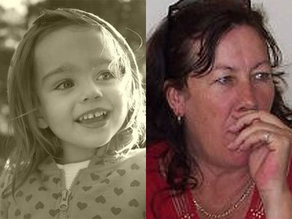
    missing-girl-annaleise-harris-edwards-and-her-grandmotherOn 8 October 2012 the Family Court of Australia ordered that 4 year old Annaleise Grace Harris-Edwards (DOB 20 December 2007) live with her father. When her father attended her preschool to pick her up Annaleise was not there and has not been seen since.

    The Family Court of Australia has now made orders for Annaleise’s recovery.

    The Court is of the belief that Annaleise is with her maternal grandmother, Bronwyn Edwards of Castle Hill. Mrs Edwards drives a red/pink Hyundai Excel, the car was captured on safety cameras in the Port Macquarie and Coffs Harbour areas in October.

    The Edwards family are originally from Queensland and have family members still living there. It is possible that Edwards is in Queensland or Northern NSW.

    Bronwyn Edwards is described as being in her mid 50’s, Caucasian and of average build with dark brown hair. Annaleise is described as Caucasian and petite with shoulder length light brown hair, blue eyes and a gap between her front upper teeth.

    This media release, prepared by Sarah Bevan Family Lawyers on behalf of the father, is the subject of a publication order made by the Family Court on 30 October 2012. This media release complies with the requirements of the section 121 publication order under the Family Law Act 1975.

    Anyone with any information about the whereabouts of Bronwyn Edwards or Annaleise should contact Crimestoppers on 1800 333 000.

    Information provided to Crimestoppers can be made anonymously.

    Important notes for media:
    1. Photographs of the grandmother and child are available from the Family Law Courts website at www.familylawcourts.gov.au under the Family Court missing children section.

    2. A Section 121 Publication Order under the Family Law Act 1975 has been made to allow publication and broadcast of the above information. To ensure that media outlets are not in breach of the provisions of the publication order details of this release should not be changed.

    Related Family Law Judgments