Grant Hackett to sue second law firm over pre-nuptial agreement with wife Candice Alley

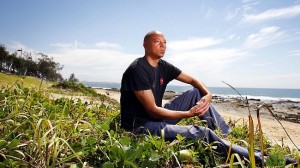
grant-hackett-suing-law-firm-over-botched-prenupSWIM star Grant Hackett is suing a second law firm over what he says was a botched pre-nuptial agreement with pop star wife Candice Alley.

Hackett, 32, has already launched a Supreme Court damages claim against a Queensland firm over the agreement, but has now filed a claim against Melbourne firm Nevile & Co.

In court documents, Hackett alleges that he sought advice from Nevile & Co around 2007 “in relation to the provision of legal advice to a party to a financial agreement”.

Financial agreements are Australia’s version of pre-nuptial agreements, but can be made during the marriage or after separation.

Hackett alleges he acted upon the advice he was given but has now been told the “representations were false”.

He claims to have suffered financial losses including legal costs because of Nevile & Co’s conduct.

“The representations were misleading or deceptive,” he alleges in court documents.

Hackett says Nevile & Co owed him a duty of care to “exercise reasonable care and skill” in the provision of legal advice.

He claims he was an “identifiable person” in a position of dependence to the law firm and that negligent advice would leave him “vulnerable”.

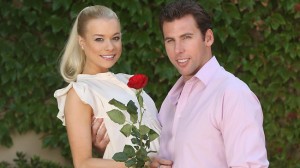
Hackett and Alley wed in a lavish ceremony in March 2007 and had twins in September 2009.

His claim against Brisbane-based Mullins Lawyers alleges a financial agreement they drafted before the marriage did not meet legal requirements.

It is further claimed the problem was not detected or rectified when the agreement was amended upon the birth of the couple’s children.

The marriage came to a dramatic end last May when he drunkenly trashed his Melbourne flat.

Related Family Law Judgments

Pharmaceutical Benefits Advisory Committee set to recommend abortion drug RU486

RU486ABORTION drugs are set to be made easily available for less than $12 under new recommendations.

The Pharmaceutical Benefits Advisory Committee is widely expected today to agree that controversial drug RU486 should be subsidised by the Federal Government.

This would mean that within months, the price will drop from up to $800 to as little as $5.90 for concession card holders for each of the two drugs needed for a medical abortion – a total of just $11.80.

The cost will be up to $36.10 each for non-concession holders.

The “abortion pill” RU486 is used in conjunction with another drug, misoprostol, and is for women who are up to seven weeks pregnant.

Reproductive healthcare organisation Marie Stopes International has been pushing for RU486 to be taxpayer-funded.

The drug was approved for use by the Therapeutic Goods Administration last year.

They have previously warned that without cheap and easily available abortions, women can be traumatised and may not be able to afford treatment.

Various sources confirmed last night they expected the advisory committee to today recommend the drugs be made available on the Pharmaceutical Benefits Scheme and subsidised by taxpayers.

Reproductive Choice Australia president Dr Leslie Cannold said she was thrilled the proper process had been followed and that women would “be able to make the decisions that are best for them” without financial barriers.

“When an evidence-based approach is followed, you get the right outcome,” she said.

“This means that women will have a choice about which procedure they choose and they won’t be constrained by a financial consideration.”

Medical as opposed to surgical abortions, cost from $300 to $800 and are not available from many doctors.

The price and the difficulty of finding a prescribing doctor has made access difficult for many women, particularly the poor and those living outside cities.

Doctors need to do an extra training course to get prescribing rights – so doctors who are morally opposed to dispensing it would simply not take the course – and if the drug is more affordable it will become more widely available.

The pill causes a miscarriage within a day. It is successful in more than 95 per cent of cases but can have complications; the latest figures show more than 830 adverse events have been associated with its use and one Australian woman died from infection in 2010.

However, the World Health Organisation says it is less invasive and there is less chance of death and infection than with a surgical abortion, and they believe it should be available to all women.

Critics of RU486 say it will increase the number of abortions in Australia and have likened it to a “human pesticide”.

The Right to Life Association of SA president Michael Hall said making the drug more available would make abortions more common.

Right to Life Australia president Margaret Tighe wrote to the Greens last year calling the pill a “human pesticide”.

“This serves to illustrate that the present government wishes to further entrench the practice of the killing of unborn children by not only continuing the scandalous funding through Medicare of surgical abortions, but to ensure that the practice of abortion increases by the seemingly easy use of RU486,” she said.

NSW Greens Senator Lee Rhiannon, a firm advocate, said a listing was “long overdue” and called on Health Minister Tanya Plibersek to hurry and get the drug over the last hurdle by accepting the recommendations.

“For almost two decades, roadblocks have been thrown in the way of giving Australian women the same access to affordable medical abortion as others have in around 50 nations around the world,” she said.

Australian Christian Lobby spokesman Lyle Shelton questioned the drug’s effects on women and said it was “a chemical designed to kill human embryos … it should not be encouraged, let alone subsidised by the taxpayer”.

Today he added: ”Obviously we are against abortion and the destruction of human life at all of its stages,” saying that was an ethical issue in itself.

If the PBAC recommends it should become taxpayer-funded, it will almost certainly be accepted by Ms Plibersek.

She has said in the past that RU486 meets safety, quality and efficacy standards and that she was “pleased that Marie Stopes is working to make this medicine, which is on the World Health Organisation list of essential medicines, more widely available to Australian women”.

RU486 hit the headlines in 2006 when Parliament voted to strip then-Health Minister Tony Abbott of his power of veto on the drug. Then, in 2009, a Queensland woman was charged with procuring her own abortion after she got RU486 from overseas relatives.

Earlier this year, The Advertiser revealed that women were buying RU486 online and having abortions at home because they could not afford to see a doctor or buy the pill through official channels.

Divorce fee ‘too high’ for poor

family-court-feesTHE federal government is facing a revolt over its $102.4 million increase in court fees, with solicitors warning that some of their poorest clients can no longer afford a divorce.

They believe the government’s new divorce fee is so high it will limit access to the justice system for women who rely on social security after the breakdown of their marriages.

The revolt has emerged at the Senate inquiry into government regulations that have almost doubled the standard court fee for divorce since 2010.

Those changes have been accompanied by new rules that prevent the courts from waiving divorce application fees in cases of financial hardship or for welfare recipients.

Solicitor Anne Lightowler, of Victoria’s Whittlesea Community Legal Service, told the inquiry several women who had experienced domestic violence had told her they could no longer afford a divorce.

“This is particularly difficult for my female clients who have been the victims of domestic violence and want finalisation over what has been a very distressing period in their lives,” Ms Lightowler said.

She told The Australian: “I’ve had a few clients tear up because they just can’t afford the fee.”

Since 2010, the government has introduced changes that have increased the cost of applying for a divorce from $432 to $800.

The most recent fee increases were unveiled last year by former attorney-general Nicola Roxon without consultation with the Law Council of Australia, the profession’s peak organisation.

Before 2010, those on welfare or experiencing financial hardship could be exempted from the fee imposed on applications for divorce but the government introduced a $60 fee in 2011 and increased it in January to $265.

“This represents almost the entire weekly Newstart allowance and over 80 per cent of the weekly single parent payment,” said Kirsty Irving, of the indigenous women’s legal program at Women’s Legal Services, NSW.

Unless a fee waiver was available for divorce applications, she believed the increased fee meant the choice of applying for a divorce would not be available to many of her clients.

“The prohibitive cost will disproportionately affect women who have primary responsibility for the care of children and who are also reliant on social security,” Ms Irving said.

Lesley Kirkwood of the Women’ s Law Centre of Western Australia fears some parents who are experiencing financial hardship will bypass the family law system and establish their own informal arrangements.

“In situations of family violence, it is important that women are able to formalise parenting arrangements so that if there are genuine concerns for a child’s safety, this may be brought to the court’s attention,” she said.

“An informal agreement can lead a perpetrator of violence to have significant control over parenting arrangements.”

Ms Kirkwood warned that the fee regime was so high it would have the unintended consequence of creating “a system of divorce that is only accessible to middle and high-income earners”.

The concerns of these solicitors are outlined in submissions to the inquiry into fee increases across the federal network of courts that is being conducted by the Senate’s legal and constitutional references committee.

However, the government believes applicants for divorce usually have enough time to prepare for the cost of the new fee.

“Divorce applications generally have long time requirements, so applicants have time to make allowance for the fee,” said a spokeswoman for Attorney-General Mark Dreyfus.

“When a divorce application is urgent, the fee can be deferred to allow the matter to proceed.

“These fee changes mean an additional $38m will be put into improving services for court users, particularly in regional areas.

“They have also allowed the government to bring back fee exemptions for disadvantaged litigants,” the spokeswoman said.

The inquiry, which is chaired by Greens senator Penny Wright, has been told that fee waivers are not available for divorce applications.

The government’s plan to spend $38m on the courts amounts to 37.1 per cent of the $102.4m in extra revenue that the Attorney-General’s Department believes will be generated from the fee increases over four years.

Australian Lawyers for Human Rights told the inquiry that unless fee waivers were available for all family law matters there was a risk the fee increases “will disproportionately impact upon victims of domestic violence seeking a divorce or nullity to assist them in ending a violent relationship”.

In the Federal Circuit Court, the standard $800 application fee for a divorce can be just the beginning for family law matters.

The cost of initiating an application for orders relating to children and financial matters has risen from $155 in 2010 to $500 this year. In the same period, the cost of filing a response has risen from $155 to $305.

In 2010 there was no additional fee for each extra hearing day, but from January this year, a daily fee of $560 was imposed.

In the Family Court, a daily fee of $765 has been imposed for each hearing day in defended matters, excluding the first day. Before 2010, that fee was $534.

The fee increases will have their biggest impact on those who use the Federal Circuit Court — which deals with most family law matters.

The government has required this court to impose an additional $63.3m in fees over four years, according to details provided to a Senate estimates hearing in February.

The concerns by community legal centres are in line with the views of the Law Council.

Its submission to the inquiry says the inequitable impact of the new system is particularly apparent in divorce proceedings where the standard fee of $800 is charged for hearings that last, on average, five to 10 minutes.

“It’s difficult to fathom how $800 could be considered ‘reasonable’ in the circumstances,” the submission says.

The Rule of Law Institute told the inquiry it was “antithetical to the principle of access to justice that divorce applications should be made financially inaccessible”.

“Often, divorce is accompanied by serious economic consequences for the parties and the filing fee may add to those difficulties by effectively penalising the person who makes the application for divorce.

“Access to justice should not be denied to people because of their financial vulnerability,” the institute’s submission says.

Father reunited with abducted daughter after 10 years

brozzi-lunettaA DESPERATE dad has been reunited with his abducted daughter after his decade-long search for her ended near Sydney yesterday.

But in a bizarre twist, American father Brozzi Lunetta has gone into hiding with the ex-wife who stole her from him.

Camilla Ellefsen Lunetta abducted their daughter Reya from the United States in 2002 amid a bitter custody dispute.

“Today we’re basically hiding from any kind of police action and trying to find some way to get them safely back to Norway and to get them into some sort of protection from the Norwegian Government,” he told news.com.au this morning.

“Right now we’re still in the Sydney area. They’re safe and very close by.

“(Camilla) is a Norwegian citizen who we’re trying to stop from going to prison in America (from where Reya was abducted) and have returned to her own country.”

The 40-year-old father, now based in Norway, returned to Australia last week after news.com.au revealed that Ms Ellefsen Lunetta and Reya were living in Sydney’s eastern suburbs.

Yesterday Mr Lunetta and a Today Tonight television crew confronted the pair at a property about an hour’s drive from Sydney after receiving a tip-off.

The pair had reportedly been hiding there for more than a week.

In a strange twist, mother and daughter are now holed up with Mr Lunetta. News.com.au is not aware of their exact location.

“Camilla’s very worried and fearful,” he said.

“She wants to just disappear with her people and have them try to get her out (of Australia) on a fake passport or something.

“It’s (been made) very clear to her that if she does a runner we’ll have no choice but to call the police.

“There will be complete absolute police action if she disappears from the custody we have.”

Mr Lunetta said his ex-wife could flee again.

“I’m close by but I’m not in the same room,” he said.

“They have their own bedroom and a shared bed. They’re together, they’re safe.”

Channel Seven, which has paid for Mr Lunetta’s flights and accommodation during this trip, has not responded to questions from news.com.au about whether the television station is also paying for Ms Ellefsen Lunetta’s accommodation.

“Nobody is being hidden, they are acting of their own free will,” a Seven spokeswoman said.

“We are under no obligation to report this matter to the authorities.

“Both parents have indicated to us they want to deal solely with the Norwegian Embassy.”

Mr Lunetta said they were trying to “keep very low key” until the consulate re-opened tomorrow.

“I’m absolutely completely hiding from (authorities) right now,” he said.

“No one knows where I’m at except Today Tonight.

“We’re praying the consulate will be open tomorrow because to hide for three or four days will be impossible.”

Mr Lunetta said he hoped the trio could leave Australia within days.

camilla-and-reya-2013“We just need to get through another 24 hours and tomorrow we can get the Norwegian Government and the Australian Government on the same page as to what’s best for the child,” he said.

“Hopefully by Saturday we can all be on a flight back to Norway.

“I’ve said all along, I don’t want Camilla to go to jail and that’s what she’s facing now.

“There’s an election coming up in Australia and does the government really want to see another kid taken away by the AFP screaming and crying? I don’t think so.”

An Australian Federal Police spokeswoman said they could not act on new information without orders from the Family Court.

The FBI recently confirmed its investigation was ongoing. A felony California state warrant was issued in 2002 for Camilla Lunetta for deprivation of child custody. A federal warrant for Unlawful Flight to Avoid Prosecution was issued in U.S. District Court (federal) in 2004 after the District Attorney requested assistance.

“Obviously, with good reason, Camilla’s very scared of the authorities, she doesn’t want to go to prison and she doesn’t want to be separated from her daughter for years,” Mr Lunetta said.

“I’ve offered her that if we can get them to Norway she will have primary custody.

“I don’t want my daughter to see her mum taken away in handcuffs. That’s what I’m trying to avoid.”

Ms Ellefsen Lunetta has been unlawfully in the country since 2003.

A NSW Police spokesperson said that under the Migration Act 1958 NSW Police Officers can detain an unlawful non-citizen.

“Police liaise with the Department of Immigration and Citizenship to determine whether or not a person is lawfully in Australia,” they said.

A Department of Immigration spokeswoman said they could not discuss individual cases for privacy reasons.

“Any person found to be in the country without a valid visa may be subject to compliance action.”

This morning Mr Lunetta updated his hundreds of Facebook followers.

“EVERYBODY PLEASE READ – I am with Camilla & Reya, literally hiding them from the potential arrest and extradition back to California for a prison sentence for felony kidnapping,” he wrote.

“We have been trying for hours to get the Norwegian government to intervene, work with the Aussies to deport back to Norway for the visa violation. But the Norwegian Government has been unwilling to do a f***ing thing.

“If you are in Norway PLEASE put pressure on the authorities to Help This Child, my daughter. –Brozzi”

Mr Lunetta told news.com.au that his ex-wife was cooperating.

“Absolutely, as much as she is capable,” he said.

“She’s been running this show underground for the last 10 years.

“She thought she’d be able to get out of here without me finding her but I’ve found her.

“Given the situation she’s in she knows she doesn’t have the leverage she used to have.”

He said his daughter was doing well considering her confusing ordeal.

“She’s OK. By bed time last night she was cool,” he said.

“For Reya it’s overwhelming. She’s not scared of me so I can tell there’s been no vilification.

“The possibility that my daughter will be with me in Norway in a month … this could have such a happy ending if we could just get off the rocks.”

Both mother and child remain listed as missing on the Family Court of Australia website.

Related Family Law Judgments
Neat freak husband was ‘a domestic tyrant’

Family-Violence-AmendmentsA WOMAN has claimed she was the victim of family violence because her husband was a neat freak.

The 40-year-old said her husband of 10 years was a “domestic tyrant” who forced her to meet oppressively high standards of housework.

This included not falling behind on the ironing, making sure their kids’ toys were packed up and putting her shoes, coat and handbag away in the right place.

The Federal Circuit Court heard claims the man’s behaviour “verged on the obsessional”.

The wife argued that now they were separated he should get less time with their children, aged 11 and 9, because his behaviour made them apprehensive. When the pair married they split household duties down “traditional” lines and the husband did not want his wife to work.

A judge heard claims the man made his wife feel devalued and inadequate for achieving little around the home.

 “They may be criticised as sexist or insensitive, but … they are not family violence.”

She told the court: “When the husband came home from work he would ask me what I had done that day. I would list all the things that I had done. He wouldn’t ask me how my day was. The husband would look at me in a stern way which would show his disappointment in me. I knew when he gave me that look that I would have to work really hard … ”

But she conceded her husband “never raised his hand to her”.

The husband said he had “old-fashioned values” and was simply a “very tidy person” who liked to put things “in the right place”.

He denied his behaviour was controlling, but admitted he made trivial complaints about the wife’s homemaking.

The man said disciplining their children had fallen to him.

Judge Stewart Brown said the husband was “an unusually tidy person who leads a structured and organised life”.

He said while some may describe the husband as a male chauvinist, he was not abusive. “These types of marital tensions fall well short of violent or threatening behaviour,” he said.

“They may be criticised as sexist or insensitive, but … they are not family violence.”

Changes to age pension payments outside of Australia

pensionIf age pensioners go overseas for more than six weeks and get the Pension Supplement in Australia, after six weeks this is reduced to Pension Supplement Basic Amount, but is reinstated as soon as they return to Australia.

Age Pensioners of the Greek community have not been affected by the new six week rule which reduces payments to people overseas for longer than that time. This new rule only applies to people receiving payments who are of working age.

This means you can go overseas indefinitely without having your Age Pension affected (subject to the Australian Life Working Residence Rules).

However, if age pensioners go overseas for more than six weeks and get the Pension Supplement in Australia, after six weeks this is reduced to Pension Supplement Basic Amount, but is reinstated as soon as you get back to Australia. This is because the supplement is specifically designed to help with Australian living costs.

Jenny Macklin, Minister for Families, Community Services and Indigenous Affairs, said that if you are an Age Pensioner you need to advise Centrelink of your travel dates to make sure you get the right amounts and so that you don’t get extra money that you would then need to pay back later on.

She also said that every Age Pensioner got an increase on 20 March 2013. The most recent increase was $35.80 per fortnight for singles and $54 per fortnight for couples combined.

“Under the increases, which have been brought in by Labor to help pensioners with the cost of living, single pensioners now get up to $5390 more per year ($207/week) and couples combined get up to $6129 more per year ($236/week) compared to when the Liberal party was in government. We think it is really important to help pensioners and that’s why we keep raising pensions. There will be another increase on 20 September 2013,” she said.

There is also a permanent extra payment of $351 per year for singles or $530 per year for couples combined which is the Clean Energy Supplement.

Support urged for paternity tests

dna-paternity-testA WAVE of almost 800 cases in which men were found to be financially supporting children they did not father has prompted calls for counselling to be compulsory, and partly subsidised, whenever family DNA tests are conducted.

The national council of single mothers and their children believes that children who find out the men they thought were their fathers were not are being damaged by a system that does not look after the emotional dimension of DNA testing results.

Since changes to child support laws six years ago, federal government figures show there have been 773 cases of men using DNA testing to show they were not biologically related to children they had been supporting.

In 679 of the cases, the courts have not forced mothers to pay back the money they have received. Since January 2007, the total combined amount of all orders received by the department was $750,552.48.

University of South Australia family researcher Elspeth McInnes, who is also policy spokeswoman for the national council of single mothers and their children, has called for compulsory counselling in all cases, because she fears that paternity tests are damaging children.

“It is as damaging as a child to learn that your father was tested to see if he was your father or not, as it is to learn that the person you thought was your father is not,” Dr McInnes said.

“The counselling should be partially funded by means-tested government subsidy for low-income earners and by each parent. It is a duty of care issue.”

She said when DNA testing was to be conducted by consent or court order, each parent should have mandatory counselling before proceeding and when results were delivered. She argued that pre-counselling should address the implications of possible outcomes and think through how each parent might deal with the outcomes and what that might mean for their child.

Since changes to child support laws six years ago, federal government figures show there have been 773 cases of men using DNA testing to show they were not biologically related to children they had been supporting.

“Post-counselling at the point of results delivery should include options for further referrals for psychological support to manage the potential fall-out of a father finding out he is the father after all, and the impact on the relationship between the parents and the father’s relationship with the child he wanted to think was not his,” Dr McInnes said.

“If he is not the father, then there is the issue of whether he terminates his relationship with the child and what that means for the child’s wellbeing and future”.

She revealed that while many men had used DNA to show they were not biologically related to children they had been supporting, data from Swinburne University had shown that about two in three men who get tested were the child’s biological father.

Lone Fathers Association spokesman Barry Williams said that, even though the laws had changed to give men court-ordered access to these tests, not all men were able to convince the court to allow them to get a paternity test. He backed the call for counselling for children going through this.

Human Services Minister Jan McLucas said the role of her department was to assist parents to transfer support payments. “My department has no role when challenges are made to paternity.”

Related Family Law Judgments

Underground networks help parents breach Family Court custody orders

child abduction networksCHURCH and domestic violence groups have been accused of aiding underground networks that help parents breach custody orders and go on the run with their children.

Parents, unhappy with Family Court custody decisions, are kidnapping their own children, and are using family, friends and other resources to stay under the radar.

The parents left behind, who are legally entitled to custody of their children, are having to dip into their own pockets to ask the courts to hear their applications for recovery orders.

The Family Court and Federal Circuit Court of Australia in Queensland are issuing about three recovery orders a week, with 156 of the “last resort” orders made in the last financial year – the most in the country.

Applications for them are considered urgent, but depending on how busy the court is, orders can take days or weeks to be heard.

Once granted, an order is sent to the Australian Federal Police, which can use state police to help find the children.

It is understood that once a recovery order is made most parents co-operate, however some continue to hide their children from authorities.

The parents hunting for their children can be up against church-associated groups or women’s centres, such as domestic violence groups, which can link parents to services that help keep them under the radar.

Family law experts claimed the Family Court was under-resourced and not able to help some parents, while lobby groups said some parents were forced to steal their children because the courts refused to acknowledge domestic violence or sex abuse.

Dan Bottrell of Jones Mitchell Lawyers, Queensland’s largest family law firm, said he suspected the large number of recovery orders being made in Queensland was because of southerners seeking tree or sea changes in the state.

Mr Bottrell said once relationships broke down, one parent often wanted to return home to their former state, causing some friction in relation to parenting arrangements.

One parent, who cannot be named by law, claimed a domestic violence group and others had helped a former spouse hide two children from the courts and investigating federal police.

When six officers finally found the children – who had been missing for a month – they had been given new SIM cards for their phones and had access to a number of different computers.

The parent who had illegally taken the children had limited funds at the time.

The aggrieved parent, who applied to the court for a recovery order, was told by the children they had been moved between a number of houses when the AFP were close to finding them.

The offending parent repeatedly denied knowledge of the children’s whereabouts to police.

New South Wales Victim Support Unit executive director Robyn Cotterell-Jones said she wouldn’t be surprised if some people tried to help hide some children.

“If the courts continue to fail parents’ expectations of keeping their children safe, people will be forced to take protective action in which, of course, breaching court orders is regarded as much more unlawful than failing to protect a child,” Ms Cotterell-Jones said.

A highly placed source associated with parental disputes acknowledged being told of anecdotal evidence that church groups had also helped some parents.

Griffith University’s Clinical Legal Education Program director Zoe Rathus, an expert in family law, said the courts had to deal with complex and emotive issues.

“These are highly discretionary issues, in how people (the courts) understand violence and abuse,” Ms Rathus said.

“I do think some of the experts who are used a lot in the courts don’t necessarily have the relative expertise in domestic violence.”

In a statement, the AFP told The Courier-Mail its role in the family law process was to act on specific orders of the court.

The industries cashing in on your heartbreak

910626-aussie-cashDIVORCE is a huge, costly and emotional expense, so it may come as no surprise that a number of companies out there are cashing in on your heartbreak.

Industries ranging from law to counselling and childcare services are all reaping the benefits of Australia’s growing divorce rate, according to data collected by business information analysts at IBISWorld.

Perhaps unsurprisingly, the legal industry is the biggest beneficiary in a divorce case but more ironically wedding services for remarriages as well as online dating services were also benefiting from couples undertaking the permanent break-up shuffle.

In the last five years, the number of divorces in Australia has jumped by 8.7 per cent, rising from 47,209 in 2008 to 51,311 in 2013.

And with the average cost of an Australian divorce ranging from $3600 up to $10,000, divorce has fast become big business with the total overall cost rising by 13.5 per cent to $184.1 million, and by 14.7 per cent to $155.5 million for contested cases.

Couples undertaking divorce were also likely to be hit with extra expenses such as unforeseen legal fees, relocation, child care and lost work costs.

IBISWorld General Manager (Australia), Karen Dobie said declining religious participation, greater individual independence, as well as increasing work pressures were all contributing factors to the nation’s rising divorce rate and costs.

“Generally speaking, a contested divorce requires more legal involvement than an uncontested one – resulting in a significantly higher cost”, Ms Dobie said.

IBISWorld senior analyst Jeremy Edwards said the data, taken over a five-year period, assessed a number of metrics including the numbers of divorces, legal services costs, ABS figures as well as divorce applications.

Mr Edwards said it was hardly surprising the legal industry benefited the most as both the growth and cost of services had increased as had online dating and wedding services.

“The reality is people do move on and will get remarried,” he said.

“There’s less stigma now surrounding divorce and lack of ties to religion does make it easier now for some people.”

Mr Edwards said other industries also benefited indirectly from divorce including retail as people brought extra furniture for new homes, relocation services, hotels and even real estate agents gained as people looked for short-term accommodation options.

The top industries benefiting from divorce:

Personal legal services

According to IBISWorld, divorce accounts for around 6.0 per cent of Australia’s personal legal services industry, which generates around $185 million in revenue each year. As divorce becomes more complex, so does the cost with advice, litigation, alternative dispute resolution and arbitration all costing big bucks.

Personal welfare services: counselling

Support services such as counselling are predicted to account for $1.9 billion, or 21.1 per cent, of the personal welfare services industry. Ms Dobie said couples often sought counselling before a divorce but that families also benefitted from support services post break-up as well.

Personal services: online dating

Online dating is another industry booming from our heartbreak, Ms Dobie says.

“Over the past five years, online dating has boomed in popularity, particularly among divorcees, resulting in a growing number of sites specialising in getting Aussies back in the game post-split,” she said.

Childcare and babysitting services

Couples with children were using more childcare services as some parents moved from a two-parent to a single parent household and juggled extra work demands and hours. According to the date, childcare and babysitting services, are set to generate revenue of $10.3 billion and $175.2 million respectively in 2012-13.

Wedding services

Ms Dobie said it was ironic that Australia’s wedding industry was benefiting as well with around 30 per cent of marriages now including at least one divorcee.

“Remarriages, particularly those involving two divorcees, tend to be more subdued affairs – with the big church wedding and sit-down reception often being replaced by a garden setting, celebrant and good-quality catering company”, Ms Dobie said.

She added that celebrants, food and beverage suppliers and photographers were also generating increased revenue as well.

Centrelink app helps seniors

express-plus-for-seniorsTecho savvy seniors can now avoid the dreaded Centrelink queues through a new smartphone and tablet app.

Federal human services minister Senator Jan McLucas visited Mount Druitt Senior Citizens and Welfare Association last week to demonstrate Centrelink’s new Express Plus Seniors App.

It has been launched 13,000 times since its launch in December.

The free app is for those who receive the age pension and allows them to view and upload details, claim an advance payment, subscribe to online letters, report income and take photos of documents they need to send to Centrelink.

Pensioners use a four digit pin after the first authentication while letters and documentation are stored in a secure ‘‘vault.’’

Seniors make up 10 per cent of the Chifley electorate population, according to MP Ed Husic.

North Queensland-based Senator McLucas told how her elderly father aged has become computer literate in the last year during her second Mount Druitt visit in as many months..

‘‘Age is not a barrier to use this, nor should seniors miss out on the opportunity,’’ she said.

Those who don’t have a smart phone or tablet can use Centrelink’s self-service screens.

‘‘It does not replace people’s ability to go to Centrelink,’’ Senator McLucas told the Star.

‘‘We still encourage people to come into Centrelink if that’s their preferred way.’’

Express apps are also available for families, students and job seekers on Centrelink benefits.

The visit was also a chance for Mr Husic to raise Mount Druitt Centrelink with the minister.

He wants to see a ticketing system installed to reduce waiting times and gets regular complaints from constituents.

St Marys-Mt Druitt Star Facebook fans agree.

‘‘It is a joke. You wait in the line for about 30mins to an hour most days just for them to tell you your next appointments and that’s it,’’ Naomi Feeney said.
Melanie Conway added:‘‘I had to use a day of annual leave and spent five hours and 20 mins waiting until someone could see me.’’

Download an Express Plus mobile app

You can download an Express Plus mobile app from the App Store and Google Play™.