
Mother wins High Court challenge against Centrelink welfare fraud conviction

centrelink-high-courtA HIGH Court ruling has put into doubt thousands of prosecutions against people on welfare who did not tell Centrelink their circumstances had changed.

The High Court this morning upheld a 2011 law which forces a welfare recipient to tell Centrelink within 14 days of changes to income. The Federal Government made the law retrospective to cover up to 15,000 prosecutions since 2000.

But the Court found the retrospective aspect of the law was not valid.

The test case was led by Victoria Legal Aid to overturn backdated welfare-fraud laws that could mean up to 15,000 people owe the federal government money.

The case will help thousands of people at risk of criminal charges for welfare fraud because they have made mistakes in dealing with Centrelink.

The case was brought on behalf of single mother Kelli Keating. Ms Keating has been charged with welfare fraud under backdated laws introduced by the federal government in July 2011.

She had received an alleged overpayment of $6942, due to what Centrelink says was a failure to declare her income.

Ms Keating, 36, was working casual shifts that varied from week to week and did not declare changes in her income to Centrelink between 2007 and 2009.

Victorian Legal Aid Director Civil Justice, Access and Equity Ms Kristen Hilton said the retrospective legislation had targeted vulnerable people who in many cases had made a genuine mistake in failing to tell Centrelink of changes to their circumstances, not the rorters who set out to deliberately defraud the system.

“Being overpaid is simply not the same thing as fraud. Centrelink can already reclaim mistaken overpayments through administrative processes so this retrospective legislation was about also trying to turn genuine mistakes into crimes.”

Ms Hilton said the Court’s judgment had also provided more clarity around the legal obligation imposed by the notices sent out by Centrelink to welfare recipients asking them to report changes in their circumstances.

“The Court has recognised that Centrelink just sending a notice to someone does not necessarily mean that person has done the wrong thing if they don’t respond, for example it matters whether they actually received the notices or were able to properly understand them.

“In our experience many of our clients who have a disability or don’t speak English well struggle to understand these notices and their obligations in a complex and confusing Centrelink system.

Ms Hilton said that taking on this case had been part of Victoria Legal Aid’s commitment to improving government decision making, which avoids time and worry down the track with reviews, appeals, criminal charges or court challenges.

“Preserving a person’s income is also a key aspect of Commonwealth legal aid policy as it ultimately saves the community money by preventing other problems such as reliance on social services, homelessness and family breakdown.”

Grandmother banned from challenging for custody of grandsons

court-judgmentA GRANDMOTHER has been banned from challenging for the custody of her two grandsons after a court heard details of her “bizarre” parenting style, that included threatening to have the boys’ father “bumped off” if she was left off a birthday invitation list.
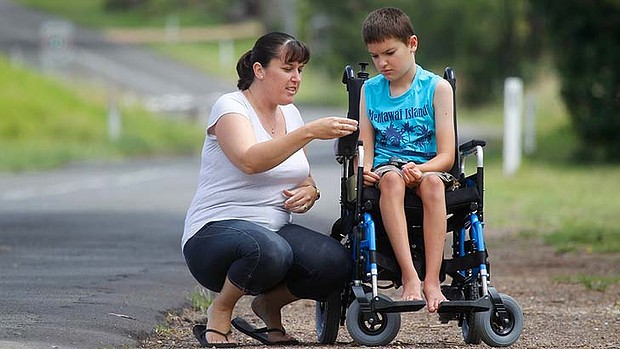

In the Queensland case from 2011, the Full Court of the Family Court of Australia upheld a no contact order against the 57-year-old grandmother, meaning that she is now banned from any further legal challenge.

She had launched 33 applications in various jurisdictions since 2008, including the 18-point appeal.

According to a lengthy appeal judgment, the grandmother threatened to have the boys’ father “bumped off” over not being invited to a birthday party, and the boys’ mother claimed her mother kicked her in the stomach and then tried to frame her by cutting herself in the face.

The daughter took out an apprehended violence order against her mother, but she was then accused of using cigarettes to burn her children.

At one stage, the grandmother had custody but DOCs removed the boys after they were witnessed hanging from a balcony.

The grandsons refused to go back after telling authorities that their grandmother hit them with a wooden spoon for wrestling.

In response, she alleged their mother had urged them to “jump” from a moving car that was being driven by the grandmother.

The Family Court finally banned contact with the grandmother after one of the boys’ became suicidal because she was telling them their mother was having “sexual relations with many men and aborting their babies”.

Family Court Justice Garry Watts said it was a “cry for help” in an “extremely conflict-ridden environment”.

IVF parents lose $10m wrongful birth case, hit with legal costs

Debbie Waller with her disabled son Keeden. Photo: Quentin Jones

Debbie and Keeden. Photo: Quentin Jones

The parents of a severely disabled NSW boy have lost their $10 million damages case against an IVF specialist who failed to properly warn them of the likelihood their son would inherit a rare blood clotting condition.

The couple now face the prospect of having to pay the doctor’s legal costs, which will almost certainly run to tens of thousands of dollars.

The plaintiffs suffered no harm consequent upon Keeden inheriting ATD. 

Just days after Debbie and Lawrence Waller gave birth to their son Keeden in August 2000, the infant suffered a massive stroke that caused severe brain damage and meant he was never able to walk, talk or go to the toilet.

The Waller’s claimed the stroke was the result of a rare blood clotting condition known as antithrombin deficiency [ATD] which Keeden inherited from his father.

The couple were not properly made aware there was a 50 per cent chance that Keeden would have the defective gene and sued the IVF specialist who oversaw his conception – Christopher James – in the NSW Supreme Court for what is known as “wrongful birth”.

They said that, had they been properly informed of the risk Keeden would inherit his father’s condition, they would not have gone ahead with the IVF treatment that resulted in his birth.

They sought compensation in the order of $10 million for the lifelong care of their handicapped son.

But on Monday – 15 months after the case was heard – Justice John Hislop rejected the Waller’s damages claim and ordered them to pay Dr James’ legal costs.

Crucially, Justice Hislop found that the Wallers had not proved that the stroke Keeden suffered was actually caused by the blood clotting condition he inherited.

“I find that, properly informed, the plaintiffs would have elected not to have Keeden,” Justice Hislop said in an 111-page judgement.

“[However] in my opinion the plaintiffs have failed to establish that the CSVT [stroke] was caused or materially contributed to by the ATD.”

“The plaintiffs suffered no harm consequent upon Keeden inheriting ATD.”

Dr James was, therefore, not liable for the harm Mr and Mrs Waller have suffered as a result of Keeden’s disability.

In accordance with standard practice in civil cases, the Wallers were ordered to pay Dr James’ legal costs. Given that the hearing ran for four weeks, these costs are likely to run to tens of thousands of dollars – a major blow to the struggling family.

It is not the first time the Wallers have been to court in relation to their son. In 2006, they launched an unsuccessful “wrongful life” case in the High Court on Keeden’s behalf, in which he sought compensation for future loss of earnings and opportunity.

NSW govt launches domestic violence app

Aurora, domestic violence mobile appThe New South Wales Government is looking to the latest in smartphone technology to help victims of domestic abuse.
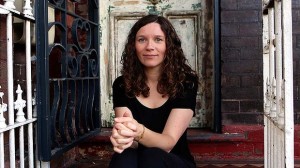

Working in conjunction with police and domestic violence experts, the Government has developed a world-first app that it says will save lives.

Called Aurora, the free app allows victims of domestic violence to quickly send an emergency message to a trusted friend or police for help.

NSW Minister for Women Pru Goward says the app is fast and discreet, and sends a message containing the user’s exact GPS location.

“That can all be done with four presses of their smartphone,” she said.

The Aurora domestic violence app has a “message friends” section allowing users to quickly send an SMS to a trusted friend or family member when they are feeling threatened.

It has a choice of three in-built messages – “call me”, “come and pick me up” and “call the police for me” – that can be instantly communicated in emergencies with three quick touches on a phone pad.

The app also allows users to customise texts to include a secret codeword shared only with a trusted friend or relative.

NSW Police Assistant Commissioner Mark Murdoch said the app had GPS-locating so police would know where the call was coming from.

“Given the prevalence of domestic violence within our community, particularly in NSW, this is an initiative that we strongly support,” Mr Murdoch said.

The NSW Domestic Violence Line received more than 22,000 calls from people seeking support in 2011/12.

An estimated 10 million Australians own smartphones.

Donor children kept in dark about origins

Geraldine Hewitt says donor-conceived children need more information. Photo: Dallas Kilponen

Geraldine Hewitt. Photo: Dallas Kilponen

A decision on whether to give people conceived from sperm donors clues about their genetic origin on a separate page of their birth certificate has been shelved by the NSW Premier Barry O’Farrell.

Donor-conception support groups said people had a right to know where they came from, and they were disappointed Mr O’Farrell had written to Parliament’s law and safety committee, which strongly supported the changes, to say the government would wait for the findings of a raft of other health and registry reviews before making any decision.

Caroline Lorbach, who has three donor-conceived children, said the government had put the issue into the ”too hard” basket because it didn’t want to spend money implementing the reforms.

”Donor-conceived people are the only group around that are actually denied information about their identity that is in most cases available and known by someone,” said Mrs Lorbach, who runs the Donor Conception Support Group of Australia. She said tens of thousands of children are affected.

”The same arguments were put forward about adoptions, but governments around Australia eventually decided it wasn’t in the best interests of the adoptees.”

She drew a parallel with recent government apologies for the past treatment of adopted children. ”My question to government is: How long before you have to apologise?”

The parliamentary committee in October found the rights of donor-conceived people to understand their identity ”were of a greater value” than the privacy rights of sperm donors or families who wanted to hide the sperm donation.

It recommended families could be protected from being ”outed” by only allowing adults to receive a separate page of their birth certificate, with more information about their birth. They could then apply to the donor register for details.

But the state government has said it won’t consider the issue until the completion of a separate inquiry into whether donor-conceived people should be able to obtain details kept about anonymous sperm donations made prior to 2010. This inquiry, which will hold hearings on Monday, is also examining whether counselling services should be offered to people accessing donor information.

The Victorian government is also stalling on the issue, after a committee recommended all donor-conceived people should have access to their donor records, regardless of when the donation was made.

Concord Hospital’s director of andrology, Professor David Handelsman, who was involved in the hospital’s anonymous sperm donation program for decades, is strongly opposed to any breaches of the men’s privacy.

He describes the sperm donor as the ”undefended minority” in the debate, and has urged the government not to ”forcibly out” men who donated altruistically before 2010. Anonymous sperm donation became illegal in NSW in 2010.

Professor Handelsman has told the committee the government should instead do more to promote the voluntary register, which was designed to encourage sperm donors to come forward.

Miranda Montrone, a psychologist who has worked with donors, is also against retrospective legislation, but wants these pre-2010 records kept safe so that in 50 years time, for example, future descendants could access the information.

 ‘They keep better records for dogs, cats and cattle’

Geraldine Hewitt was five when she was told by her parents that she was donor conceived. Now 30, Ms Hewitt has been unable to find out anything about the donor because the hospital destroyed her records.

Only one in 10 donor-conceived children are told the truth, she says. She believes this is why it is important for birth certificates to carry clues, so that when they reach adulthood, information vital to their identity and medical history can be traced.

”My birth certificate would look like anyone else’s, with no asterisk or addendum to indicate there is something more,” Ms Hewitt says.

”Its really important. I’ve got a chronic health condition that no one in my family has and it has a genetic origin. They keep better records for dogs, cats and cattle.”

Her young brother and sister were also conceived from donor sperm, but they know the donor and get birthday cards and travel advice from the men, whose wives are supportive of the contact.

She will tell politicians on Monday the information gap for donor-conceived children will have long-term generational consequences. ”I’m one of four live births. I have a half brother and two half sisters … I want to know if my brother was born in May 1983, for example, so I won’t date anyone born in that year.”

She believes DNA testing should be made available free for donor-conceived children, because the records have been so badly mismanaged.

Sharon Hunt, president of Solo Mums by Choice, has an eight-year-old son who was conceived by an anonymous donor. Ms Hunt says that at the time she was grateful to the donor, and respected his privacy.

”But when you have a little person in front of you, already wanting more information at the age of eight, it’s no longer about you,” she says. ”That desire to know more about the other half of your background just grows.”

Wife spent $170,000 on lover during affair

financial-abuseA MAN had a heart attack after discovering his wife had spent $170,000 on her lover during an affair, a court has heard.
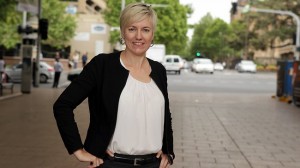
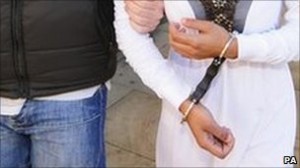
The 44-year-old has been forced to cut back his work after doctors said his “major heart attack” was brought on by “enormous emotional stress”.

The Federal Circuit Court heard the man had split from his wife of more than 10 years when he found her diary and read it.

“From this diary it became apparent to him that the wife had for some years been conducting an extramarital affair,” the court judgment said.

“Worse again … it was apparent that (the lover) Mr K had been given very substantial amounts of money by the wife during the currency of the marriage.”

The husband claimed his wife had spent $201,000 on the affair. He fought to have her made responsible for the missing money in their divorce settlement.

The court heard the husband’s continuing sense of outrage about the infidelity had led to “over-elaborate bickering” between the pair.

“This case has been fought with an intensity that reflects the distaste of the two parties for each other,” the judge said.

The wife, 39, admitted giving money to her lover but said it was closer to $100,000. She said he had paid some of the money back and was continuing to make payments on her credit card.

The court heard she took out a line of credit against one of the family’s properties to fund the expenditure.

The husband said although he had signed forms for the line of credit he thought it was going to be used to buy an investment property.

The wife and her lover are still in a relationship, but the judge criticised her evidence about him as “evasive and incomplete”.

She claimed to not know his address and professed a lack of understanding about his “circumstances”.

Judge Philip Burchardt said the wife had clearly underestimated the amounts she had spent on her lover.

He said while the figure was closer to $170,000 there was only enough evidence to support $120,000 being added back to the property pool.

NSW Parliament set to debate voluntary euthanasia legislation

greens-mp-cate-faehrmann

Greens MP Cate Faehrmann

HIGH profile supporters of voluntary euthanasia are expected to attend NSW parliament when the legislation is debated in the state’s Upper House.

Greens MP Cate Faehrmann says she will introduce a bill giving terminally ill people the right to die on Thursday.

She believes many members of pro-euthanasia lobby groups and some prominent individuals, including former NSW attorney general John Dowd, former NSW director of Public Prosecutions Nick Cowdery and former NT Chief Minister

Marshall Perron, the architect of Australia’s original right to die laws, will come to watch the debate.
Members of the NSW government and opposition are expected to get a conscience vote on the issue, making it more likely the laws will pass.

However Ms Faehrmann said while MPs were telling they supported the right of the terminally ill to die with dignity they were baulking at enshrining them in law because of concerns about the laws being abused.

She said she hoped to convince them that adequate safeguards existed in her bill, and if she succeeded she was hopeful the legislation would pass after “a couple of weeks worth of talking to people about it”.

“It’s going to be a very tight fight, its going to be a very hard fight but it’s time we did it and I think it’s time that MPs listen to the community about it,” she told the ABC.

Eighty-five per cent of Australians supported terminally ill people having the right to ask for assistance to die, Ms Faehrmann said.

Ms Faehrmann launched a photo book and online video in March promoting voluntary euthanasia part of her campaign for the Rights of the Terminally Ill Bill.

Sham Marriages Organised for Visas

sham-marriages-for-visaA MARRIAGE celebrant and a migration lawyer ran a visa wedding scam that bankrolled a multimillion-dollar property portfolio, the Australian Federal Police claim.
Divya Krishne Gowda is accused of conducting sham marriages for 80 Indian students paying $10,000 each in a racket that ran for two years before The Courier-Mail exposed it, court documents lodged in an AFP proceeds of crime application state.

The documents state her husband, Bombay-born Chetan Mashru, allegedly brokered the marriages, paying “recruiters” $1000 to source Australian brides who earned up to $15,000 to marry a stranger.

The couple have not been charged but, according to the court documents, an ongoing Immigration Department investigation has obtained at least 25 witness statements.

More than $2.2 million in property owned by Ms Gowda, along with $13,050 cash seized in a raid last November, has been temporarily frozen.

The couple, both 33, have not yet responded to the application. A further hearing is due to take place on May 22.

Court documents reveal the AFP suspects Ms Gowda “managed the financial side”, taking payments for the marriages through an account that cleared more than $1.1 million in deposits.

They allege Mr Mashru typically split up to half of his $10,000 fee with the bride, who would then be promised $1000 a month from the groom for two years.

Mr Mashru would then charge for preparing fraudulent visa applications, keeping his own name off the paperwork.

“The couples are told to have photographs taken together, open joint bank accounts and keep personal items and clothing at each other’s residence to make the marriage seem legitimate,” the AFP alleges.

One young woman described earning $15,000 for a “contract marriage” after a friend handed her Mr Mashru’s business card in February 2011.

Within days she was in his office marrying a taxi driver who used Mr Mashru’s iPad to put $2000 in her account.

The next day, she drove a friend to his office to be married and later earned $1000 for headhunting another friend who was “in financial trouble”.

Mortgage accounts – lodged with the application – show Ms Gowda built up $477,953 in equity in nine Brisbane properties during the alleged scam.

Tax records show she has declared an average of about $46,000 annual income since 2007, while Mr Mashru had declared an average of less than $15,000 a year.

If convicted, they each face up to 10 years in jail and fines of $100,000 for breaking migration laws.

Couples expecting girls ‘demand abortions’ because they want boys, say obstetricians

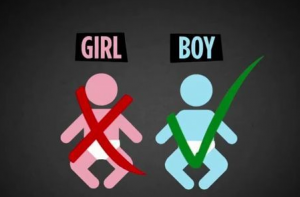
gender-selective-abortionsCOUPLES expecting baby girls have demanded abortions because they wanted a boy instead, doctors have revealed.
Obstetricians have proposed parents be banned from knowing the sex of unborn babies until it is too late to terminate, to prevent gender-based abortions.

One of Australia’s biggest abortion clinics has revealed that parents have requested abortions on gender grounds – although it is “extremely rare” and always refused.

But News Limited has discovered a couple in Melbourne aborted their baby after discovering at 19 weeks they were having a girl – when they wanted a boy.

The couple’s GP, Dr Mark Hobart, refused to give them a referral to an abortion clinic and reported the specialist who later terminated the pregnancy to the Medical Board.

“The parents were upfront and told me that was the reason for the abortion,” Dr Hobart said.

“I was dumbfounded.

“To get a request for an abortion for that reason, I just couldn’t believe it.

“It was the husband who did all the talking – he was so insistent.”

Despite being refused a referral by Dr Hobart, the mother had an abortion a few days later.

The Medical Board told Dr Hobart on Friday it would not pursue the matter because Victorian doctors are allowed to terminate pregnancies of up to 24 weeks.

A Senate committee is inquiring into draft legislation prepared by “pro-life” Democratic Labor Party senator John Madigan, which would ban Medicare rebates for gender-selective abortions.

    • Parents request abortions on gender grounds
    • Obstetricians want ban on parents knowing child’s sex
    • Senate inquiry to probe gender-based abortions

The inquiry is also investigating “the prevalence of gender selection – with preference for a male child – amongst some ethnic groups”.

Senator Madigan yesterday said that “we do know there are cultures where a boy is preferred over a girl”, although he did not have statistics on the prevalence in Australia.

The National Association of Specialist Obstetricians and Gynaecologists has suggested that laboratories which perform publicly-funded chromosomal tests during pregnancy be banned from revealing the sex of the embryo until after 20 weeks, except in cases of gender-based diseases such as Haemophilia.

“You don’t keep the test results secret, you just keep the sex secret,” association president Andrew Foote said.

Dr Foote said while he had no first-hand knowledge of gender-based abortion “I think it does happen.”

“The view among my colleagues is they’re definitely against it,” he said.

“But if (patients) were of a view they must have a baby of a particular sex, they could turn up at a termination clinic and say it is for social reasons.”

Dr Foote said that keeping the baby’s sex secret until 20 weeks would be a “reasonable safeguard”.

But Australian Medical Association president Steve Hambleton said women had the right to know everything about their pregnancy.

The Fertility Control Clinic – Victoria’s biggest abortion provider – told the Senate inquiry that 96 per cent of abortions are performed before 12 weeks’ gestation, when it is too early to know the sex.

“It is extremely rare for us to receive requests for gender selection abortion and we do not acquiesce to such requests,” the clinic’s submission states.

The clinic’s psychologist, Dr Susie Allanson, said patients only requested gender-based abortions “once in a blue moon”.

“It’s very rare, and we have to say (to the patient) we don’t provide abortion on the basis of gender,” she said.

“But there would be nothing to stop a woman from going elsewhere and giving a different reason.”

Royal Australian and New Zealand College of Obstetricians and Gynaecologists president Michael Permezel said there was no evidence that babies were being aborted because they were the wrong sex.

“I don’t think there is any doctor that would perform an abortion on those grounds,” he said.

A spokesman for Health Minister Tanya Plibersek said surgical termination of a pregnancy was a “clinical matter”.

“As with all other clinical matters, it is a matter for the professional clinical judgment of a doctor in consultation with a patient,” he said.

Greens back euthanasia call

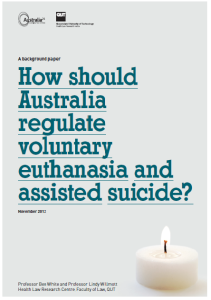
Australia21-assisted-suicide-euthanasiaThe Tasmanian Greens leader Nick McKim has welcomed a report that describes Australia’s euthanasia laws as broken and incoherent.

The report by non-profit group Australia 21 recommends state governments immediately legislate to permit and regulate voluntary euthanasia.

Mr McKim and the Premier Lara Giddings are co-sponsoring a private members bill to allow voluntary euthanasia.

But Mr McKim will not set a date for the legislation’s introduction to parliament.

“We had a strong level of interest in the discussion paper that Lara Giddings and I put out,” Mr McKim said.

“And we’re working through some of the issues that have been raised as a result of that consultation.”

“And we have certainly both committed to tabling a bill and bringing it on for debate later this year in the House of Assembly,” he said.